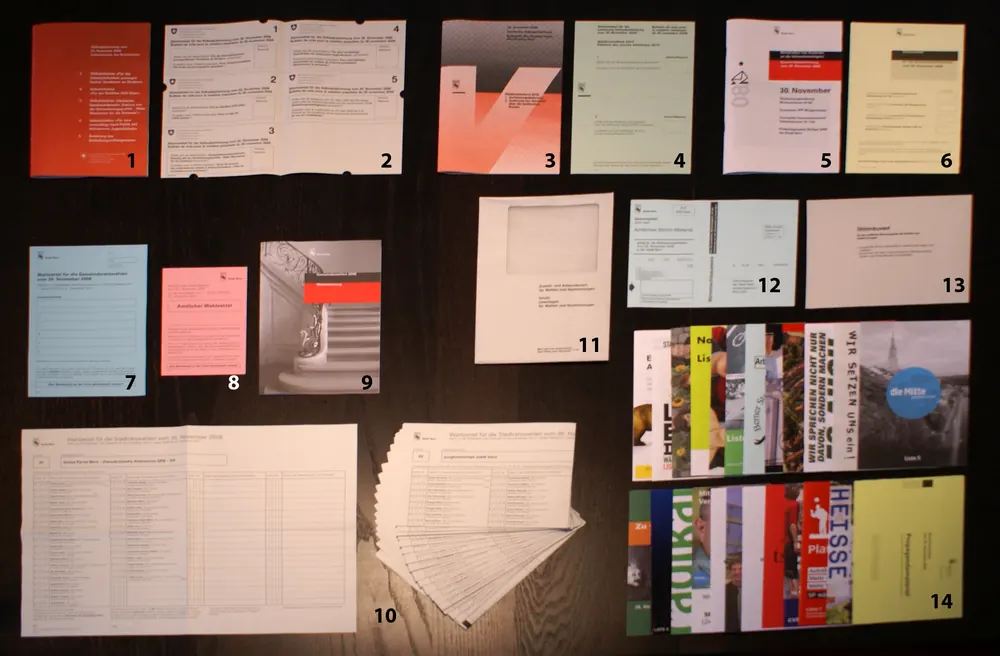
The proposal, vote date and legal safeguards are checked against the Swiss government's English referendum page and State Secretariat for Economic Affairs explainer. Reuters provides independent reporting on the political and industrial debate, the 36-state group, the treatment of Ukraine, employment and export figures, and the assessment that polling is close. This is a pending referendum, not an enacted change or a vote result. The government pages use a Keystone campaign photograph whose reuse rights are not granted, while Reuters' current-event images require a commercial licence. A bounded actual-event search found no other reusable Nov. 29 campaign photographs. The two images used are dated real archive/context photographs: Swiss voting material from November 2008 (Sandstein, CC BY 3.0) and a Swiss Army Mowag Piranha vehicle photographed in Chur on Feb. 20, 2014 (Kecko, CC BY 2.0). Neither depicts the 2026 referendum campaign, current voting papers or a proposed export. Full-resolution originals are retained in public/newsroom/source-originals/swiss-arms-referendum-20261109/; deployable derivatives are in public/newsroom/swiss-arms-referendum-20261109/. They were proportionally resized to 1,000 pixels wide, converted to WebP at quality 78 and stripped of metadata, with no crop or retouching.
The amendment creates a 36-country exception
Swiss voters will decide on Nov. 29 whether to accept Parliament's amendment to the War Materiel Act, which would widen the government's discretion over arms exports. The current law generally blocks a licence when the destination is involved in an armed conflict; the proposed rule would create an exception for 36 partner states with export-control systems aligned with Switzerland's.
A sale to one of those states could be approved during a conflict only if it remained compatible with Swiss neutrality and the country's foreign- and security-policy interests. Human-rights rules and other international obligations would still apply. The vote is therefore about conditional authority, not an automatic permit for every proposed shipment.
Re-export controls would become selective
Buyers now generally promise not to pass Swiss equipment to another country without Bern's consent. Under the amendment, the Federal Council could decide when that declaration is required for foreign-policy, neutrality or security reasons rather than demanding it in every case.
Existing non-re-export commitments would remain valid, the government says. The new rules would also not cover weapons bought under earlier terms or equipment acquired for immediate transfer to a third state. Reuters reports that those limits mean the amendment would not by itself open a route for Swiss-made weapons to Ukraine.
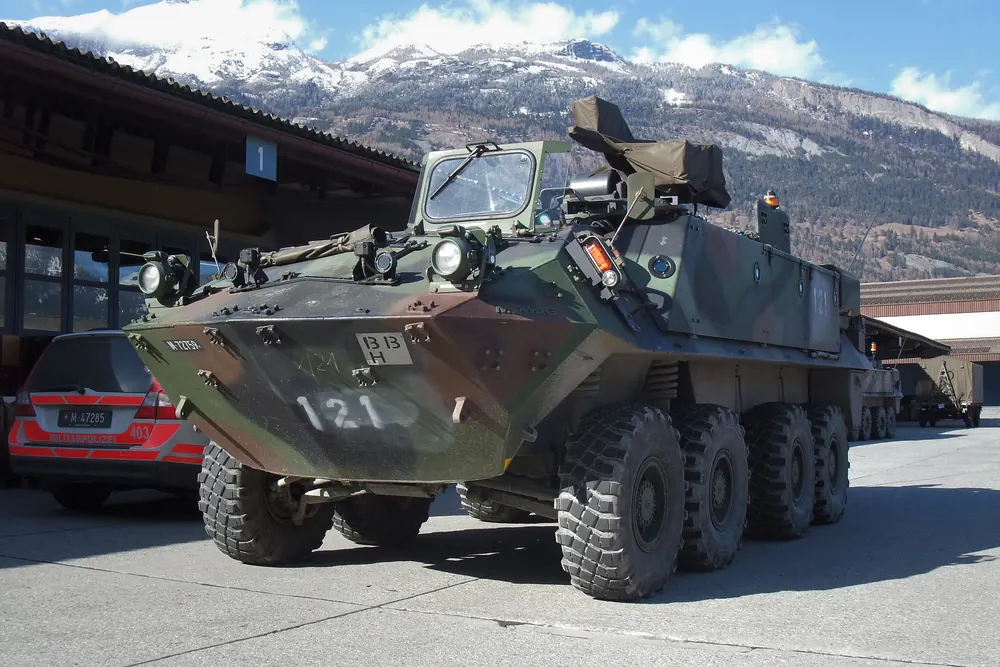
Industry access and neutral status pull in opposite directions
Supporters argue that tight export rules have made Swiss suppliers less attractive to European customers that want freedom to share equipment in a crisis. Reuters reported that Germany excluded Swiss companies from some procurement and that Denmark and the Netherlands halted orders after Bern blocked re-exports of previously purchased equipment to Ukraine.
The defence sector employs about 14,000 people and exported arms worth roughly $1.15 billion last year, Reuters reported. Manufacturers say access to international supply chains is necessary to maintain domestic production and technical capacity; opponents say looser controls could allow Swiss weapons to reach abusive governments or civil wars.
The referendum follows voters' rejection in September of a separate initiative that would have written a stricter version of neutrality into the constitution. Polls cited by Reuters suggest the arms-export vote could be close. Until ballots are counted, the parliamentary amendment cannot take effect, and the competing claims about jobs, security and neutrality remain campaign arguments rather than settled outcomes.
Sources
5 references
- Swiss Federal CouncilAmendment to the War Materiel ActOfficial English referendum explainer; source for the Nov. 29 vote, the legal changes, continuing neutrality and human-rights checks, and the effect on re-export assurances. · 2026-11-09
- SECOVote on the amendment to the War Material ActOfficial State Secretariat for Economic Affairs summary of the enacted parliamentary amendment now subject to referendum, including exceptions and existing non-re-export commitments. · 2026-11-09
- ReutersSwiss neutrality proponents challenge arms firms in vote on easing of exportsIndependent reporting on the referendum debate, affected industries, Ukraine-related limits, export value, employment and polling. · 2026-11-09
- Wikimedia CommonsSwiss voting material.jpg — file record and CC BY 3.0 termsArchive photograph by Sandstein of Swiss voting material from 2008, licensed CC BY 3.0; voting-process context only. · 2008-11
- Wikimedia CommonsSwiss Army - Mowag Piranha 8x8.jpg — file record and CC BY 2.0 termsArchive photograph by Kecko of a Swiss Army Mowag Piranha vehicle in Chur, licensed CC BY 2.0; defence-industry context only. · 2014-02-20