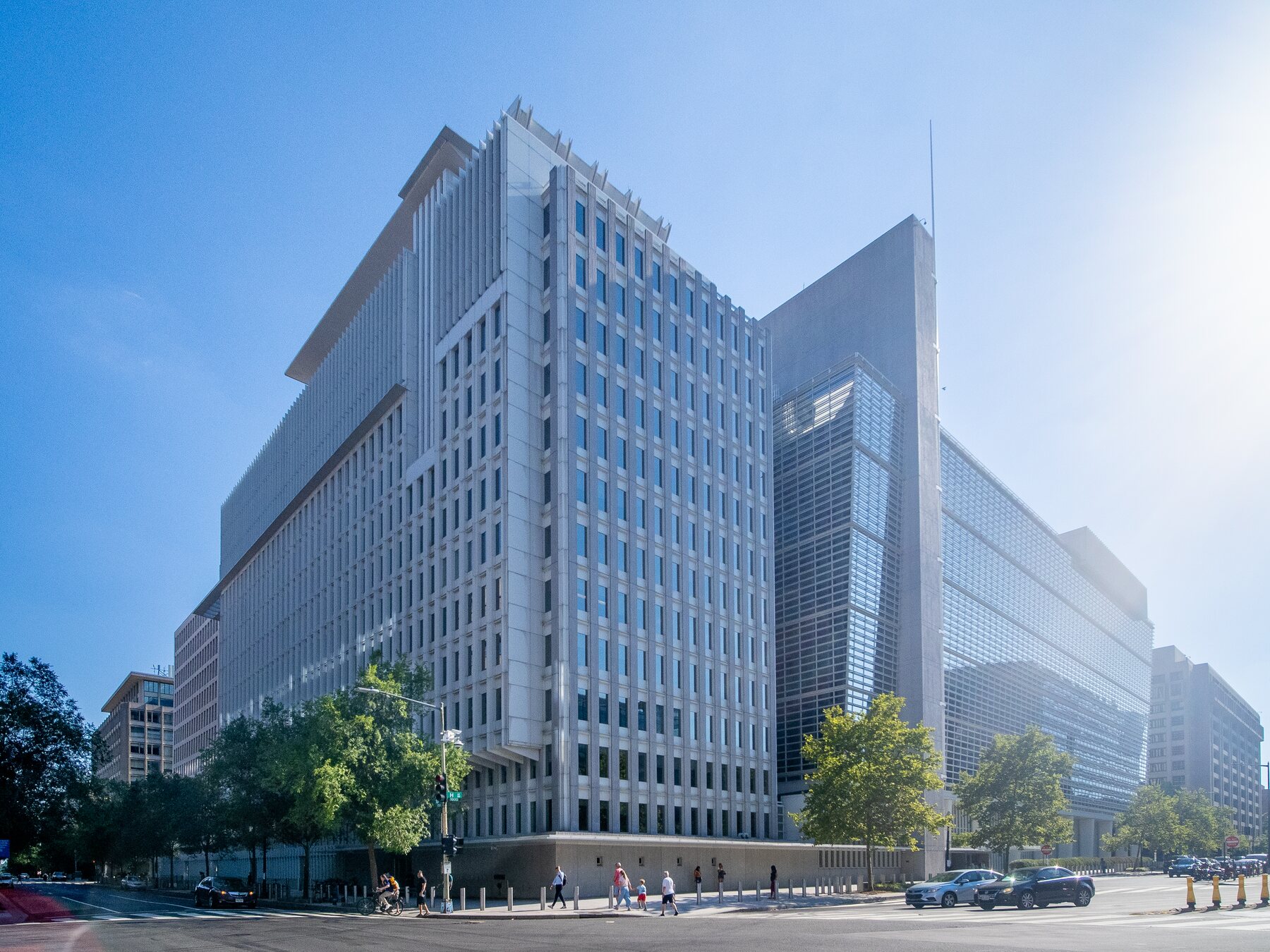
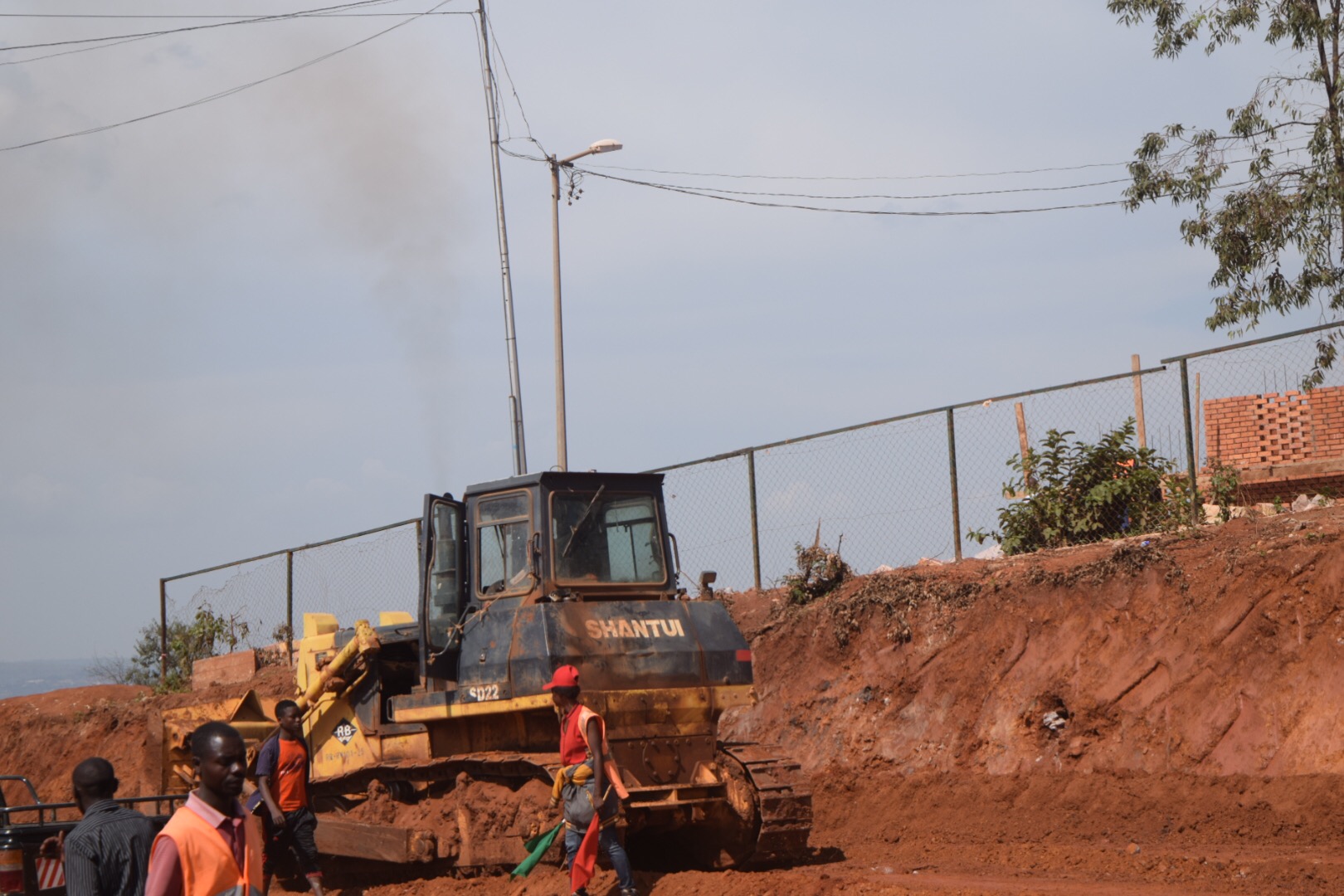
The World Bank Group’s International Debt Report 2026 and Nov. 5 release are the primary source for the figures; Reuters separately reported on the release but also relies on the Bank for the aggregate estimates. “External debt” refers to obligations owed to nonresidents and is not government debt alone. IDA eligibility is a defined concessional-financing category; it does not include every country described as poor. The $436 billion comparison covers debt service against new financing from 2022 through 2025; the Bank reports a $45 billion net inflow in 2025 after a $118 billion net outflow in 2024. The World Bank describes potential pressure on public investment, not verified budget cuts across all countries. The lead is an archive photograph of the World Bank Group headquarters in Washington, D.C., by Ajay Suresh on June 21, 2024; it is not a photograph of the report launch or an endorsement. A bounded search of the Nov. 5 Reuters article found its Vietnam road-repair photo marked “Purchase Licensing Rights”; the World Bank’s release and accompanying data blog supplied no reusable photograph of a current event. The inline photograph shows a road-construction site in Rwanda on Feb. 29, 2020, by Alex shema. It is contextual only and does not depict a project financed by the debt discussed here. Both originals are retained in public/newsroom/source-originals/developing-debt-record-2025-20261106. The lead display copy will be proportionally resized and compressed for web delivery without cropping or retouching; the inline original is used without modification.
A record stock, not one government bill
External debt owed by low- and middle-income countries rose 5.5% to $9.4 trillion at the end of 2025, the World Bank Group said on Nov. 5. It was the fastest annual increase since 2021 and roughly four times the average increase in 2022–24. The figure covers obligations to creditors outside the borrowing country; it is not a measure of government debt alone.
The increase was not spread evenly. Debt in countries eligible for the World Bank’s International Development Association (IDA), which provides concessional finance to poorer economies, rose 8.1% to $1.3 trillion. Those countries’ new private-creditor commitments carried an average 8.2% interest rate in 2025, the highest since 1989.
Markets reopened, but at a higher price
Private lenders returned and public entities issued $251 billion in international bonds, nearly 35% more than a year earlier and the most in five years, according to the report. The reopening gave more governments access to international capital, but not necessarily cheaper financing: IDA-eligible countries paid an average 9.4% on new bonds. By comparison, countries eligible for the World Bank’s non-concessional IBRD lending paid 5.5%.
Some governments used new bonds to buy back maturing debt and spread repayments over a longer period. The Bank said this could smooth repayment schedules without materially lowering the debt stock and often at higher rates. Bond-market access therefore does not by itself show that a country’s debt burden has become easier to manage.
Debt service is still drawing money out
Low- and middle-income countries paid $1.4 trillion in principal and interest in 2025, up 1.9% and the fifth consecutive annual increase. Over 2022–25, developing countries paid $436 billion more in debt service than they received in new financing, although the direction changed in 2025: long-term flows recorded a $45 billion net inflow after a $118 billion outflow in 2024.
The World Bank warned that debt payments could crowd out investment in health, education, infrastructure and jobs. That is a risk flagged by the lender, not a finding that every government has cut those budgets. The report also found that a weaker U.S. dollar explained more than a quarter of the $303 billion rise in public and publicly guaranteed debt, showing that exchange-rate valuation—not just new borrowing—also affected the total.
What the headline leaves unresolved
The numbers combine countries with different incomes, creditor mixes, currencies and repayment schedules. IDA-eligible borrowers are a defined group, not a synonym for every low-income economy, and external debt includes private as well as public obligations. A single aggregate cannot determine whether an individual country can meet payments or how much room it has for public services.
The report documents a widening cost gap between the poorest borrowers and richer developing economies. It does not establish that borrowing has stopped or that the 2025 increase will automatically trigger a crisis. The immediate policy question is how to finance development without refinancing existing obligations at costs that leave less room for future investment.
Sources
3 references
- World Bank GroupInternational Debt Report 2026Primary report on external debt stocks, debt service and borrowing costs. · 2026-11-05
- World Bank GroupDeveloping Countries’ External Debt Surges to Record $9.4 TrillionPrimary summary of the report and its headline figures. · 2026-11-05
- ReutersDeveloping countries’ external debt hit record $9.4 trillion in 2025, World Bank saysIndependent reporting on the release, borrowing costs, debt service and the World Bank’s caveats. · 2026-11-05