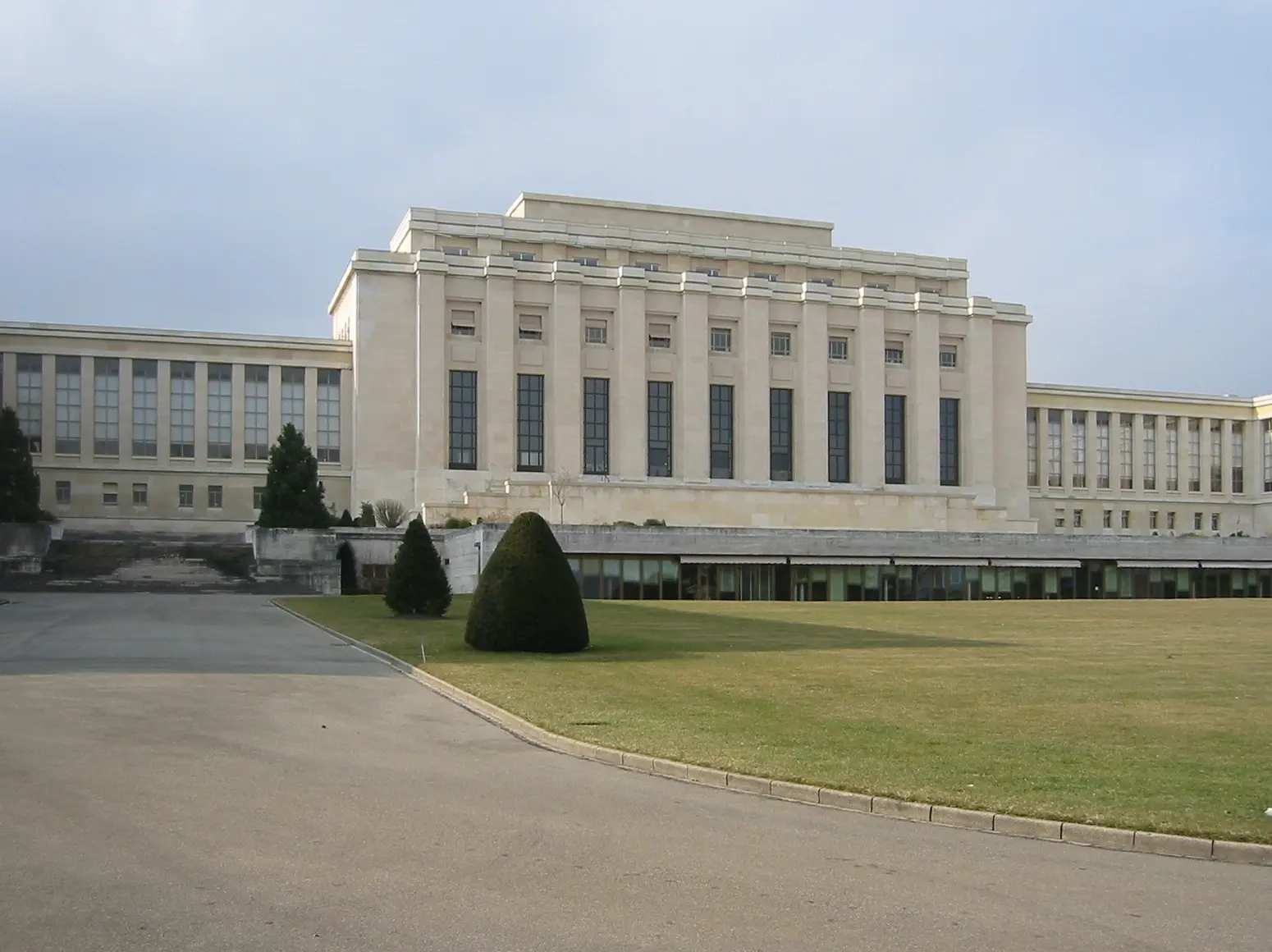
The UN Office for Disarmament Affairs and Geneva meeting schedule identify the 16–20 Nov. 2026 Review Conference, the 128 states party to the Convention on Certain Conventional Weapons, and its role in deciding future work. The 2024–26 Group of Governmental Experts report was adopted by consensus on 4 Sept. and presents elements of a possible instrument without prejudging its legal form. Ireland’s 22 Oct. statement on behalf of 50 states says those elements provide a basis for negotiations and calls for an ambitious mandate. The Guardian’s original reporting on 6 Nov. describes opposition by Russia and the United States to a timetable for binding rules; the article distinguishes that report from the formal decisions already taken. Russia’s September statement to the UN supports another expert forum and rejects preventive prohibitions. No binding treaty has been agreed: the November conference may decide only to continue expert discussion. The UN and ICRC are advocates for a binding instrument; their concerns are attributed, not presented as a treaty finding. A bounded search of the Guardian/Reuters, AP and UN photo galleries did not establish open reuse rights for relevant current-event photographs. These two real archive/context photographs are used instead; neither depicts the conference or establishes the capabilities of a weapon. Lead: Palais des Nations, Geneva, photographed in 2005 by Yann Forget; original 1,550 × 1,160 JPEG retained at public/newsroom/source-originals/ccw-autonomous-weapons-20261106/palais-des-nations-geneva-2005-original.jpg. Converted to WebP at quality 86 with metadata stripped; no crop or retouching. Credit: © Yann Forget / Wikimedia Commons. CC BY-SA 3.0 applies, with attribution, license link, modification notice and share-alike terms. Inline: a remotely piloted MQ-9 Reaper being checked before a mission at March Air Reserve Base, California, on 1 Aug. 2018; it is not a system shown at the UN talks and the image does not show autonomous target selection. Photograph by Airman First Class Michelle J. Ulber / U.S. Air National Guard; original 4,560 × 3,105 JPEG retained at public/newsroom/source-originals/ccw-autonomous-weapons-20261106/mq9-preflight-2018-original.jpg. Proportionally resized to 1,762 × 1,200 and converted to WebP at quality 86, metadata stripped, no crop or retouching. The U.S. government original is public domain in the United States; credit retained. Both images were decoded and visually inspected; source and license details are recorded below.
The decision belongs to the November conference
States party to the Convention on Certain Conventional Weapons will meet at the Palais des Nations in Geneva from Nov. 16 to 20 for the treaty’s seventh Review Conference. The UN says 128 states are parties. The conference can decide whether to open negotiations, renew an expert group or take another course; no new rules have yet been adopted.
The issue is how international law should address weapons that can select and engage targets without further human intervention. Governments use different definitions and the technology varies, so proposals focus on preserving human control and setting legal limits rather than treating every automated function as the same thing.
Fifty states want talks to begin
A Group of Governmental Experts worked on the issue from 2024 to 2026 and adopted a report by consensus on Sept. 4. It lists elements of a possible instrument while expressly leaving its legal form open. In an Oct. 22 joint statement, Ireland said on behalf of 50 states that the work provides a basis for negotiations and called for an ambitious mandate at the review conference.
That call is a proposal by the group of states, not a decision by all treaty members. The Guardian reported on Nov. 6 that Russia and the United States oppose a timetable for binding rules. Their positions do not determine the conference’s outcome, and the states party have yet to agree on whether to negotiate a protocol.
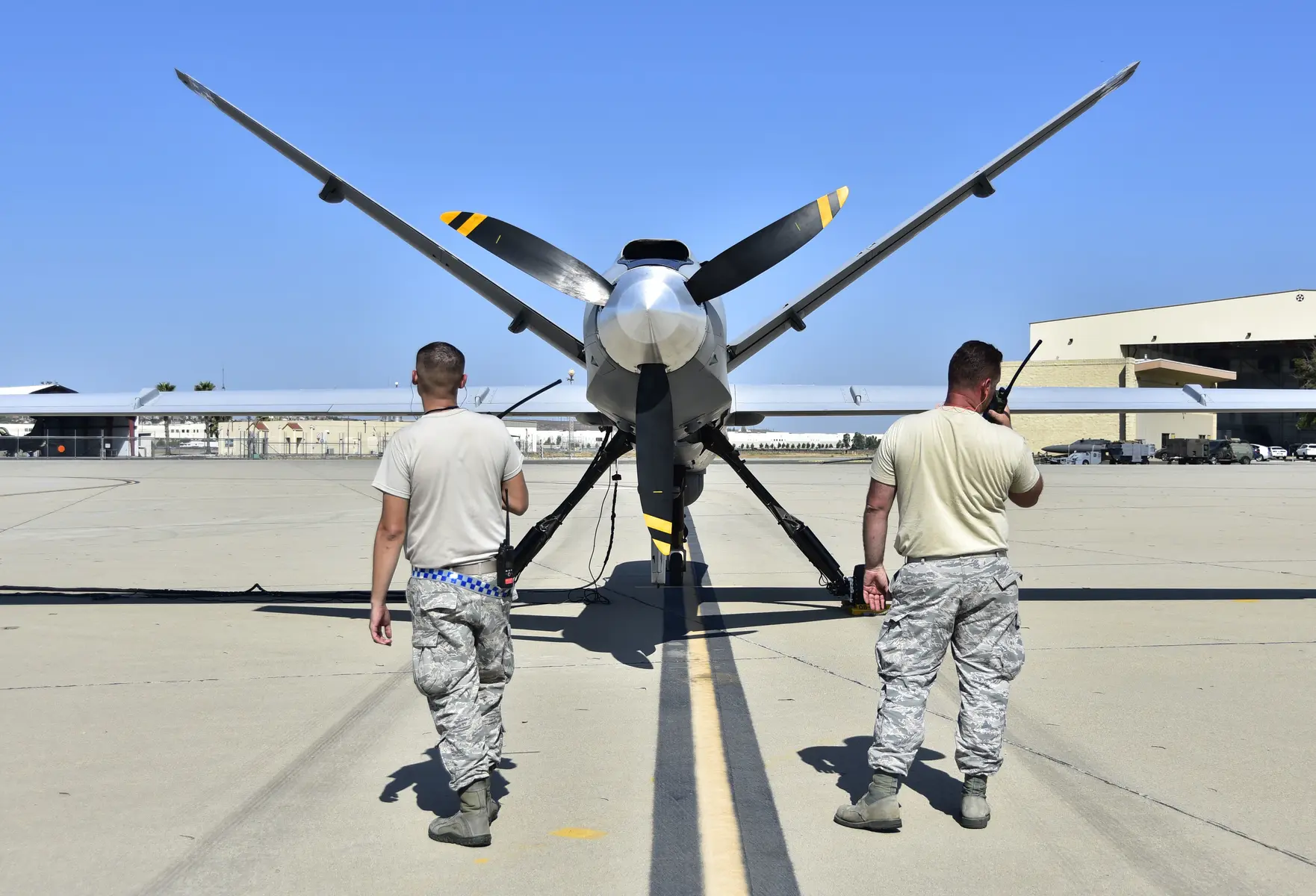
The legal question is still unresolved
Russia told a UN preparatory meeting in September that it favored another expert discussion forum and opposed preventive restrictions or prohibitions. The UN record shows other states pressing for negotiations. The disagreement is partly about whether existing international humanitarian law is sufficient and partly about whether a new instrument should be legally binding.
The UN Secretary-General and the International Committee of the Red Cross have separately urged states to establish binding rules. Their appeal reflects their assessment of the humanitarian risks; it is not evidence that an agreement already exists. The November meeting could endorse expert work and schedule more talks without settling the content or legal form of future rules.
Sources
8 references
- United Nations Office at GenevaSeventh Review Conference of the Convention on Certain Conventional WeaponsOfficial meeting listing: dates, venue, 128 states party, agenda and authority of the conference to decide future work. · 2026-11-06
- The GuardianRussia and US seek to block plan for binding rules on autonomous weaponsOriginal reporting on positions ahead of the review conference and Ireland-led proposals for further work. Positions are attributed to the reporting; no treaty has been adopted. · 2026-11-06
- New Zealand Ministry of Foreign Affairs and TradeJoint statement on lethal autonomous weapon systems, delivered by IrelandPrimary text of a statement delivered for 50 states; it says the consensus expert report provides a basis to negotiate and asks for an ambitious mandate. · 2026-10-22
- United Nations Office for Disarmament AffairsGroup of Governmental Experts on Lethal Autonomous Weapons Systems: 2026 reportPrimary report adopted by consensus, with elements of a possible instrument while leaving its legal nature undecided. · 2026-09-04
- United Nations meeting transcriptPreparatory Committee for the 2026 Review Conference: statements on autonomous weaponsOfficial record documenting different state positions, including Russia’s support for further expert discussion and opposition to preventive restrictions. · 2026-09-07
- United Nations and International Committee of the Red CrossUN Secretary-General and Red Cross chief call for rules on autonomous weapon systemsJoint appeal for a legally binding instrument; advocacy position, not an adopted treaty or conference decision. · 2026-08-25
- Wikimedia CommonsPalais des Nations, Geneva — archive context photographPhotograph by Yann Forget, CC BY-SA 3.0. Original: https://upload.wikimedia.org/wikipedia/commons/7/73/Palais_des_nations.jpg. · 2005-02-24
- U.S. Air National Guard / Wikimedia CommonsMQ-9 Reaper unmanned aerial vehicle — archive context photographPhotograph by Airman First Class Michelle J. Ulber; U.S. government work in the public domain in the United States. Original: https://media.defense.gov/2018/Aug/16/2001955021/-1/-1/0/180801-Z-SF462-1004A.JPG. · 2018-08-01