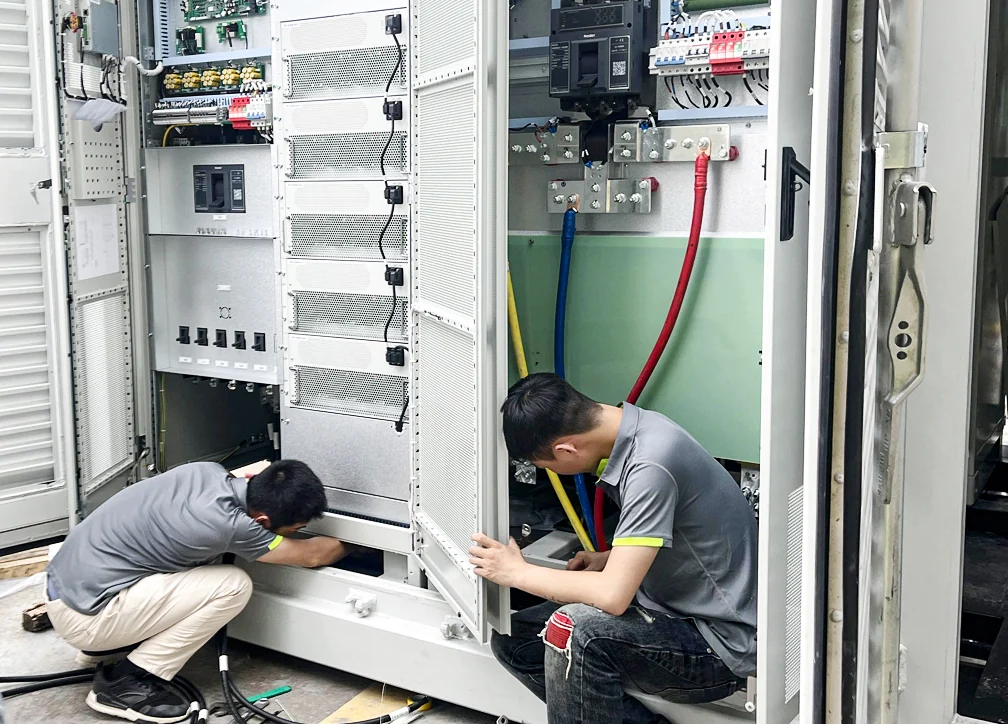
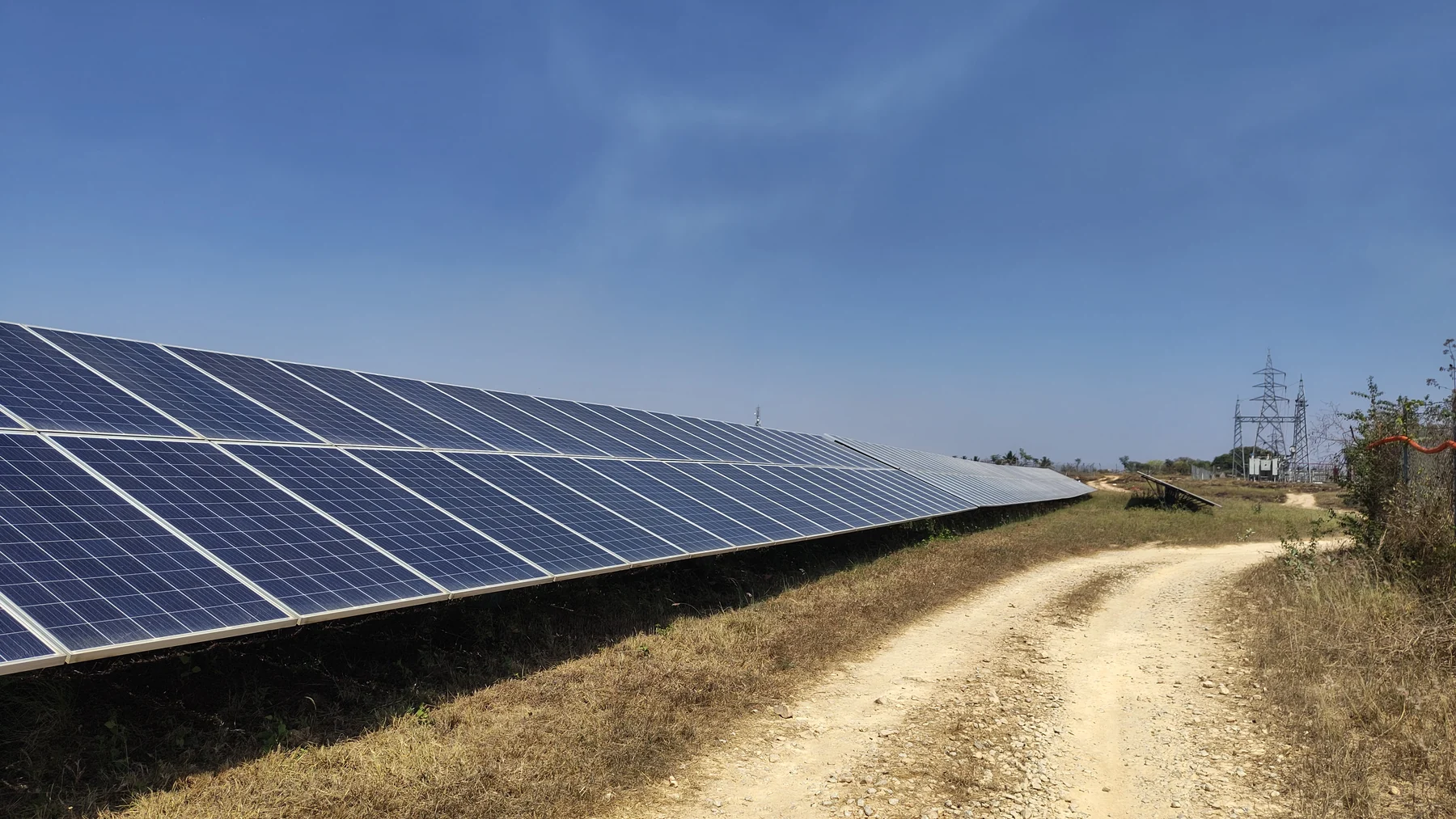
India’s Cabinet approved the scheme on Nov. 4, according to the government’s Press Information Bureau release; Reuters independently reported the approval and rupee-to-dollar amount. Detailed allocations, eligibility, estimated project investment, the 40% domestic-content requirement and the 411 GWh planning figure are government-reported programme terms or projections, not audited costs or completed projects. The 92 GWh refers to planned stored-energy capacity, not instantaneous output or electricity already delivered. A bounded search for photos of the Nov. 4 announcement found Reuters’ solar-field image marked for purchase licensing; no official announcement image with explicit reusable terms was identified. The lead shows workers commissioning a container-based storage system on Mar. 21, 2024. The inline image shows solar panels and grid infrastructure in India on Mar. 10, 2026. Neither depicts a project funded by this scheme. Photo creators, dates, sources, licences, modifications and original files are recorded below.
A financing pool, not a completed build
India’s Cabinet approved ₹14,500 crore (about $1.53 billion) in viability-gap funding for grid-scale energy storage projects on Nov. 4. The programme covers five financial years, from 2026–27 through 2030–31, and is intended to support 92 gigawatt-hours of capacity that has not yet been commissioned.
Viability-gap funding is public support designed to make projects financeable when expected revenues may not cover costs. It is not a government purchase of all the equipment, and it does not mean the planned storage has been built. The Cabinet release estimates total investment of ₹97,600 crore across the projects, with the public contribution intended to close part of the financing gap.
Pumped hydro accounts for most of the target
The programme divides the planned 92 GWh into 60 GWh from pumped-storage hydropower, 30 GWh from batteries and 2 GWh from other storage technologies, according to the government. Pumped-storage plants use electricity to move water uphill, then release it through turbines when power is needed. Batteries charge and discharge electricity directly.
Storage can shift some electricity from periods of high renewable output to later hours, helping balance a grid where wind and solar production varies. GWh measures stored energy; it is not the same as a plant’s instantaneous power rating, usually stated in gigawatts, or the amount of electricity it will actually deliver over a year.
Competitive bids will determine what gets built
The government says storage projects will be allocated through tariff-based competitive bidding. Public and private electricity distribution companies can seek support for battery and pumped-hydro projects, while public and private entities can implement projects using other storage technologies. Battery projects must meet a minimum 40% domestic-content requirement under the scheme.
The Cabinet says the new capacity is intended to help meet a national requirement of 411 GWh by 2031–32. That is a government planning figure. The practical result will depend on which projects win bids, secure financing and are completed; the approval itself adds no operating storage to the grid.
Sources
2 references
- Press Information Bureau, Government of IndiaCabinet approves Rs.14,500 crore Viability Gap Funding Scheme for development of 92 GWh Grid-Scale Energy Storage SystemsPrimary Cabinet release for the approved funding, five-year period, 92 GWh target, technology split, bidding framework and domestic-content requirement. · 2026-11-04
- ReutersIndia cabinet clears $1.53 billion programme for energy storage projectsIndependent reporting on the Cabinet’s approval and the funding amount, based on a statement by Information Minister Ashwini Vaishnaw. · 2026-11-04