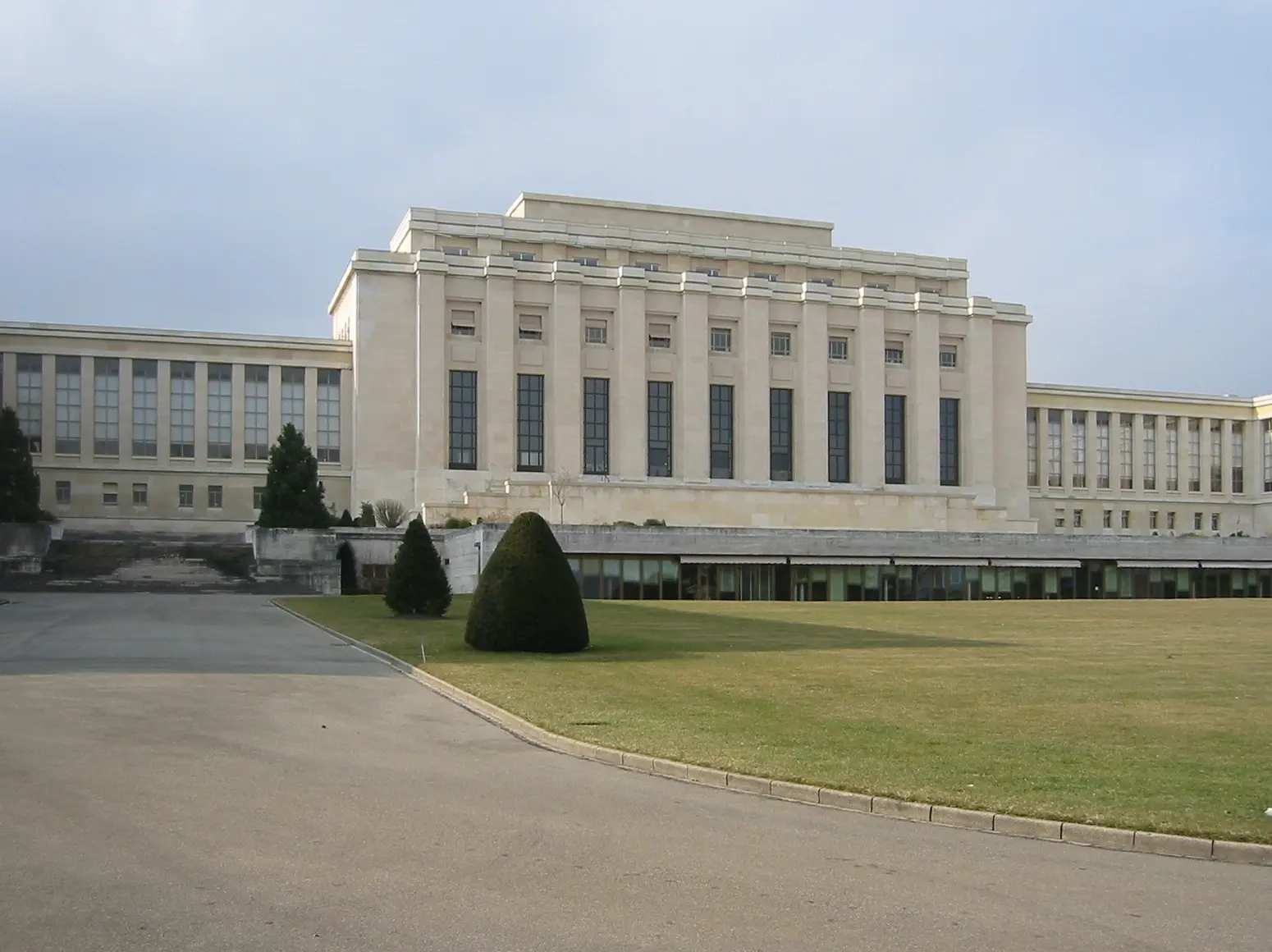
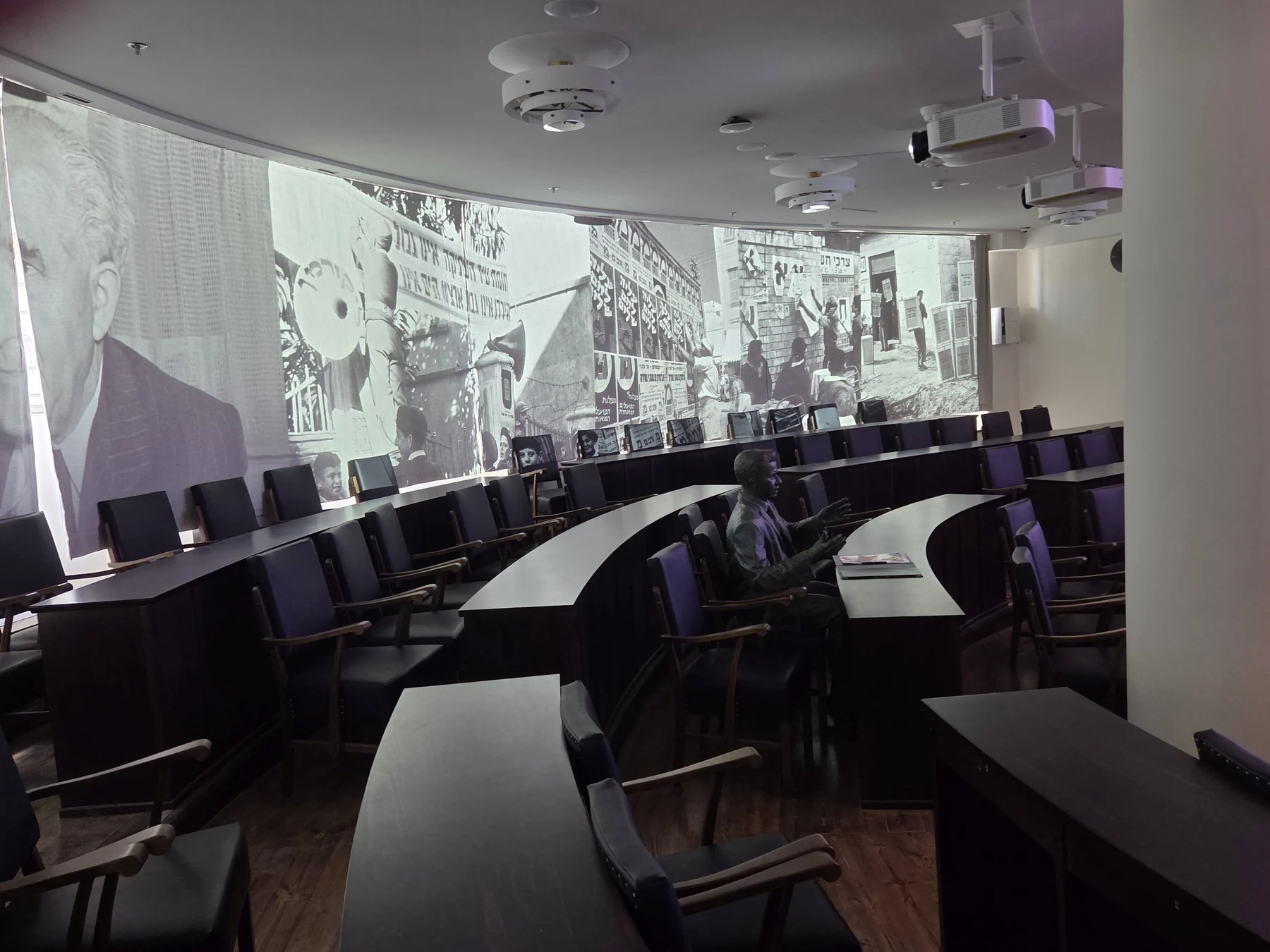
Herzog’s 5 Nov statement gives the 67 and 46 recommendation totals and the Sunday timetable; Reuters independently reports the seat arithmetic and caretaker status, while AP reports Ahmad Tibi’s offer of external support. Recommendations are not a coalition agreement or Knesset confidence vote, and no government had formed by publication. The President’s Nov. 5 event photo names Yigal Slavin but publishes no reuse licence; Reuters and AP event images are licensable, so none is used. The two licensed archive images show the Knesset exterior (2007) and a display in the former assembly hall (Jan. 2026), not the consultations or current chamber. Originals are retained under public/newsroom/source-originals/israel-government-formation-20261106; derivatives were resized or re-encoded without cropping or retouching.
A clear tally, an unresolved choice
Israel’s President Isaac Herzog said on Thursday that he would ask a member of the Knesset to try to form the next government on Sunday. At the end of consultations with factions elected to the 26th Knesset, representatives covering 67 seats recommended Gadi Eisenkot, leader of the Yashar party. Representatives covering 46 seats recommended Prime Minister Benjamin Netanyahu.
Herzog said those figures did not settle his decision. He is responsible for choosing the lawmaker he believes can assemble a government, and said mutual vetoes between and within the blocs made that judgment unclear. United Torah Judaism, a seven-seat party and longtime Netanyahu ally, declined to recommend either candidate.
Recommendations do not add up to a coalition
The Knesset has 120 seats, so a government normally needs support from at least 61 lawmakers. Netanyahu’s wider bloc has 53 seats. Parties that campaigned against him hold 48, while the two Arab-led lists won a record 19 between them. The 67 recommendations for Eisenkot combine those groups’ endorsements, but do not show that they have agreed to govern together.
Reuters reported that Eisenkot had ruled out forming a formal coalition with the Arab-led parties. The Associated Press, meanwhile, reported that Joint List leader Ahmad Tibi was offering outside support for an anti-Netanyahu government. That distinction matters: backing a government in a confidence vote is different from taking cabinet posts, and the terms of any arrangement remain unsettled.
The mandate starts a short negotiating window
The person Herzog appoints will have 28 days to build a coalition, with the president able to grant up to 14 additional days. Netanyahu remains caretaker prime minister while the process continues. If the nominee cannot form a government, negotiations could move to another lawmaker or eventually return the country to an election.
Sunday’s decision will therefore give one politician the first formal chance, not immediately make him prime minister. The gap between a parliamentary recommendation and a coalition able to command a confidence vote is still the central obstacle.
Sources
4 references
- President of IsraelPresident Herzog concludes round of consultations with Knesset factionsPrimary statement: faction representatives covering 67 seats recommended Gadi Eisenkot and those covering 46 recommended Benjamin Netanyahu; Herzog said he would appoint a lawmaker on Sunday and that mutual vetoes left the choice unclear. · 2026-11-05
- ReutersIsrael’s president pledges to pick candidate on Sunday to form governmentIndependent reporting on the election deadlock, bloc seat totals, caretaker government, United Torah Judaism’s decision and the 28-day mandate with a possible extension. · 2026-11-05
- The Associated PressArab parties extend a hand to try to topple Netanyahu but challenges remainIndependent reporting on Arab-led parties’ possible outside support, including Ahmad Tibi’s account of the Joint List’s position; it describes political conditions and unresolved coalition negotiations. · 2026-11-05
- Israel Ministry of Foreign AffairsPresident Herzog to begin consultations with Knesset factionsOfficial description of the government-formation procedure, including the 28-day period and a possible extension of up to 14 days. · 2026-11-02