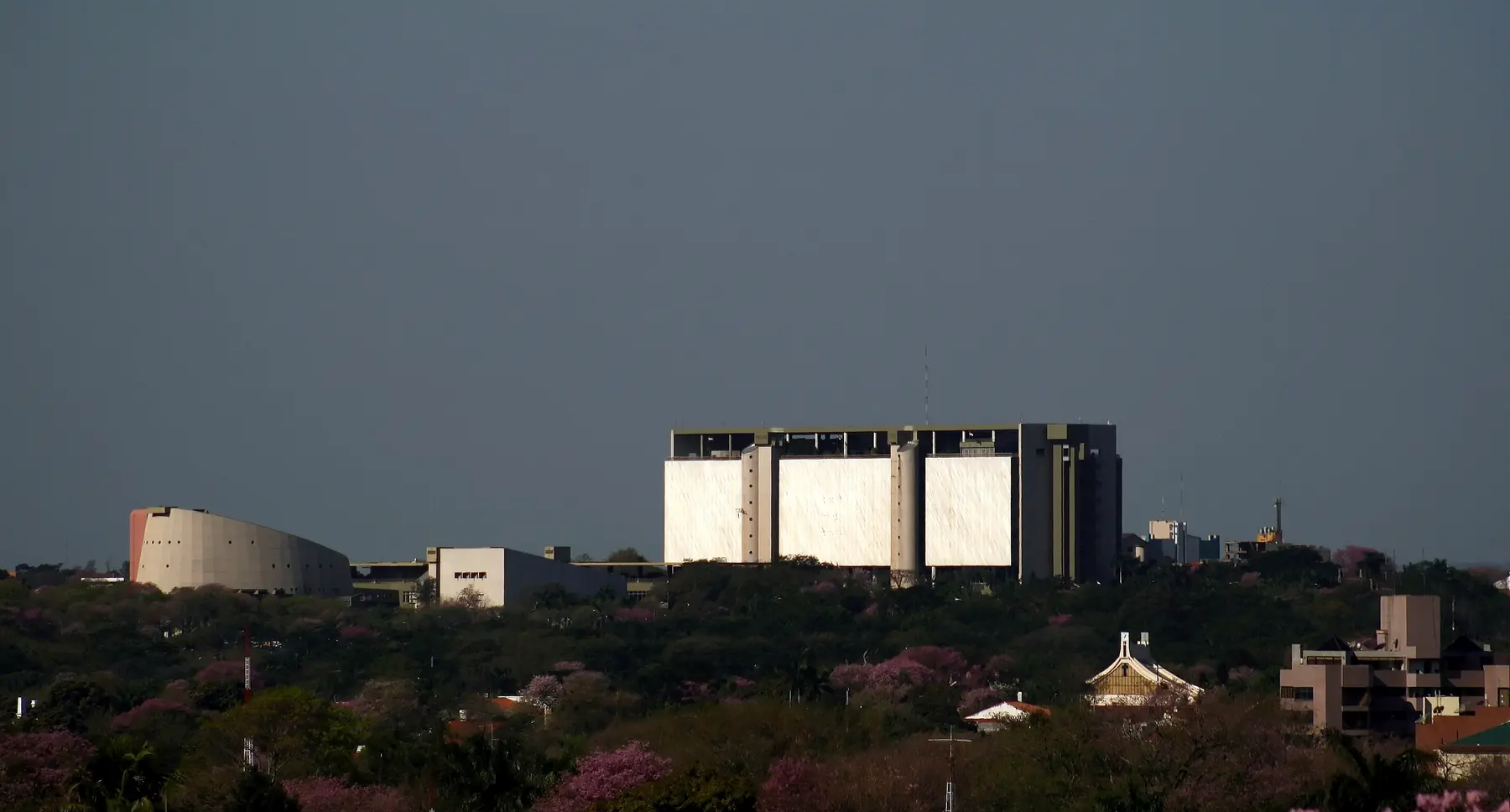
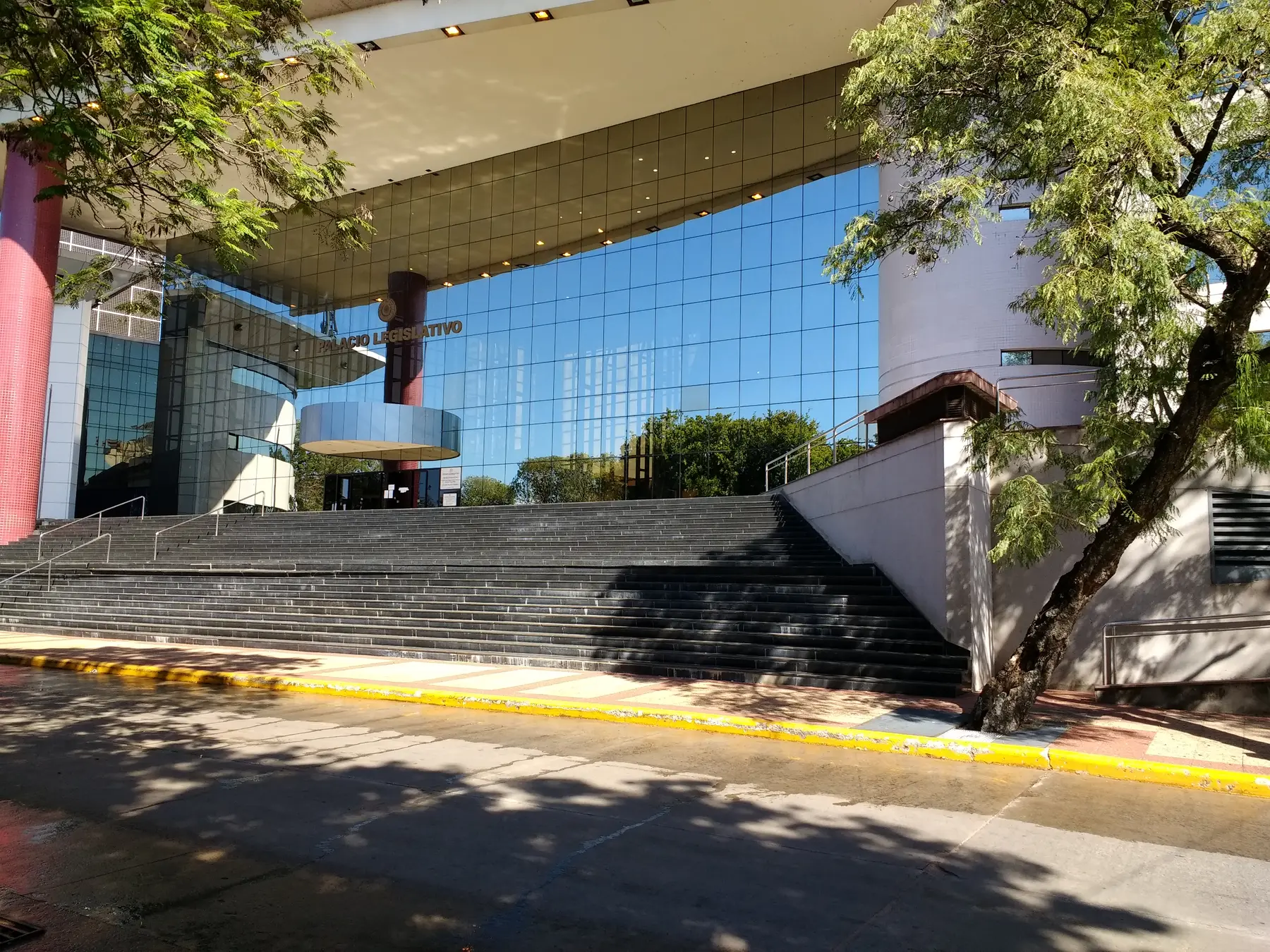
Reuters and The Associated Press independently reported Peña’s Nov. 5 resignation announcement and the constitutional requirement that Congress accept or reject it. At publication, that decision had not been confirmed in the sources reviewed, so this story describes a submitted resignation and not a completed transfer of power. Paraguay’s central bank (BCP) primary notices establish the resolution process, the solvency threshold it cited and the eligibility rules for its initial payment group. Reuters reported Ueno had about 3 million customers and administered close to $850 million in public funds. The Chamber of Deputies’ Nov. 4 notice confirms that 35 lawmakers filed impeachment articles; their allegations are not findings of fact, and Peña has rejected impropriety. AP and Reuters photos of the current political and bank events are offered through agency licensing and were not reused. The lead image shows the BCP building on Sept. 1, 2009, not Ueno Bank or a scene from the 2026 crisis; the inline image shows Paraguay’s Congress building, photographed May 21, 2017, not the current proceedings. Original files are retained in public/newsroom/source-originals/paraguay-pena-ueno-crisis-2026. The first image was proportionally resized to 1,800 × 968 and converted to WebP at quality 84; the second was proportionally resized to 1,800 × 1,350 and converted at quality 84. No cropping or content retouching was applied. The first derivative is distributed under the same CC BY-SA 4.0 terms as its source.
A resignation still subject to Congress
President Santiago Peña said on Thursday, Nov. 5, that he had submitted his resignation, as his governing Colorado Party’s support weakened after the failure of digital lender Ueno Bank. In a recorded address, Peña said he was acting to preserve stability and democratic institutions.
Submitting a resignation does not by itself complete the transfer of power. Reuters and The Associated Press reported that Congress must accept or reject the president’s decision. Vice President Pedro Alliana is next in line if lawmakers accept it; as of this report, the reviewed sources had not confirmed that vote or a handover.
The announcement came as legislators prepared impeachment proceedings and public protests demanded accountability for the bank’s collapse. The central question for depositors is separate from the succession question: the bank has entered a resolution process, but access to savings depends on the regulator’s staged arrangements.
Depositors face a staged recovery
The Central Bank of Paraguay said its board unanimously approved the start of Ueno Bank’s resolution on Nov. 2, after adjustments left the lender’s solvency measure below half the legal minimum. The regulator said the procedure was intended to protect depositors and financial stability. It is a bank-specific intervention; the notice does not establish a systemwide banking failure.
Reuters reported that Ueno had roughly 3 million customers in a country of about 6.5 million people and administered close to $850 million in public funds. The lender’s problems left customers unable to access accounts, according to Reuters and AP.
On Nov. 5 the central bank said the first deposit-guarantee payments would cover a limited group: depositors with up to ₲10 million, no outstanding debt to Ueno and an account at another financial institution. The notice said further groups would be announced later. That first tranche is not a promise that every account will be reimbursed immediately or in full.
Political accusations remain unproven
The Chamber of Deputies said 35 lawmakers formally filed impeachment articles against Peña and Alliana on Nov. 4. The filings accused Peña of conflicts of interest and other misconduct connected to Ueno. Those claims are allegations in a political proceeding, not judicial findings; Reuters reported that Peña has rejected impropriety.
Reuters reported that Peña had held a stake in Ueno’s holding company until March 2025, and that the bank’s growth involved significant public-sector deposits. Those reported connections sharpen questions about oversight and political accountability, but do not by themselves establish that Peña caused the bank’s failure or broke the law.
Congress’s decision on the resignation and the regulator’s next payment groups will determine what happens next for the presidency and for customers still waiting to reach their money.
Sources
7 references
- ReutersParaguay President Peña resigns under mounting pressure from bank collapseIndependent reporting on Peña’s announcement, the congressional process required before a transition, Ueno’s customers and public-fund exposure, and unproven allegations. · 2026-11-05
- The Associated PressParaguay President Peña resigns following bank collapseIndependent reporting on the resignation announcement, parliamentary pressure, depositor access and the bank regulator’s stated reasons for intervention. · 2026-11-05
- Central Bank of ParaguayCentral bank begins resolution procedure for Ueno BankPrimary regulatory notice: the board’s Nov. 2 resolution and the solvency measure cited when initiating bank resolution. · 2026-11-03
- Central Bank of ParaguayNotice on start of guarantee payments to Ueno Bank depositorsPrimary notice describing the first payment group: eligible deposits up to ₲10 million for people with no debt to Ueno and an account at another financial institution. · 2026-11-05
- Paraguay Chamber of DeputiesThirty-five deputies file impeachment articles against executive officialsPrimary legislative notice confirming formal impeachment filings against Peña and Alliana; the filing’s allegations are not proof of misconduct. · 2026-11-04
- Wikimedia CommonsBanco Central del Paraguay 4567 filtered.jpgArchive photograph by Cmasi of the central bank building; source page documents CC BY-SA 4.0 terms. · 2009-09-01
- Wikimedia CommonsPalacio legislativo en Asunción.jpgContext photograph by Mx. Granger of Paraguay’s Congress building; source page documents the CC0 1.0 dedication. · 2017-05-21