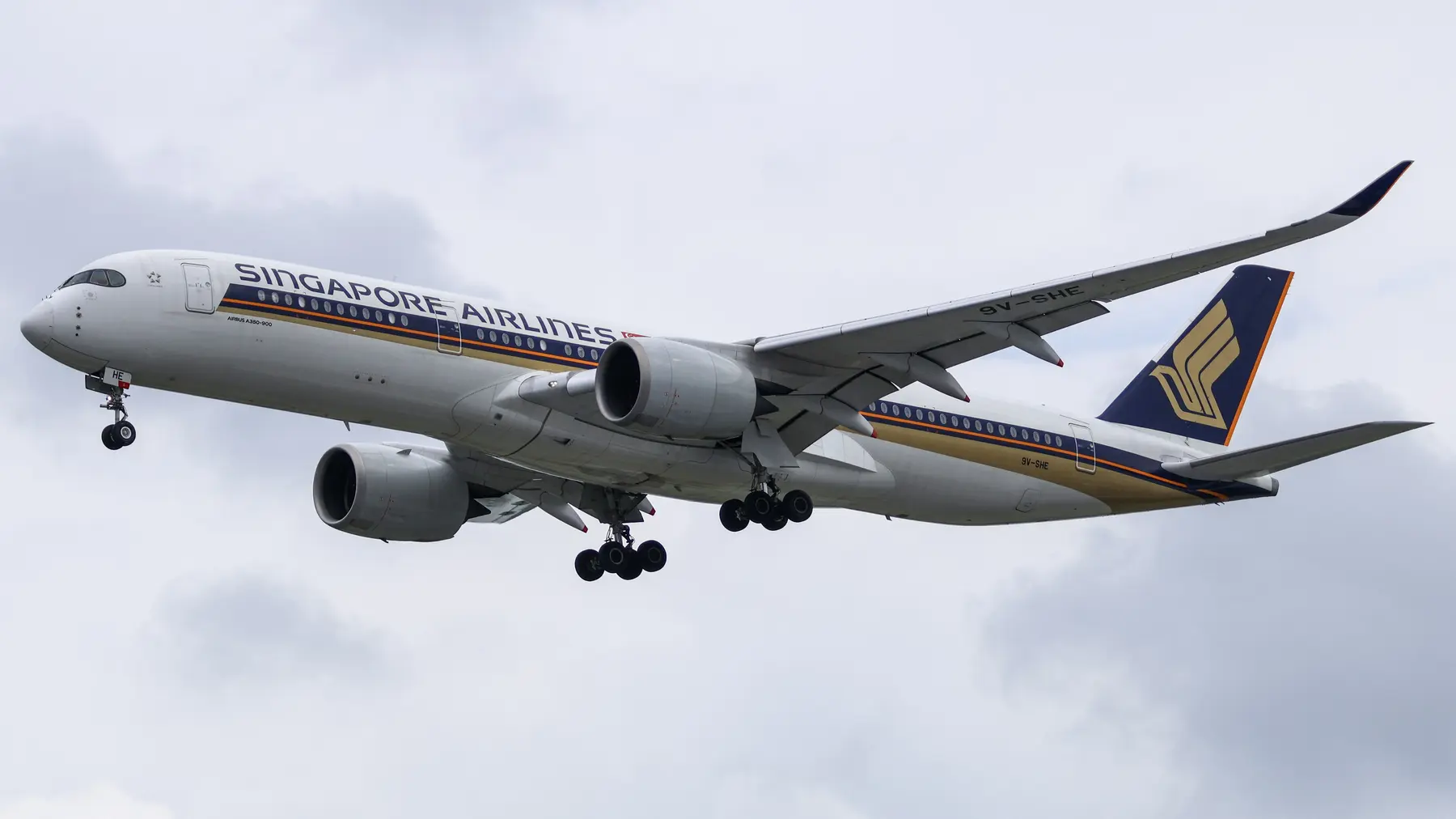
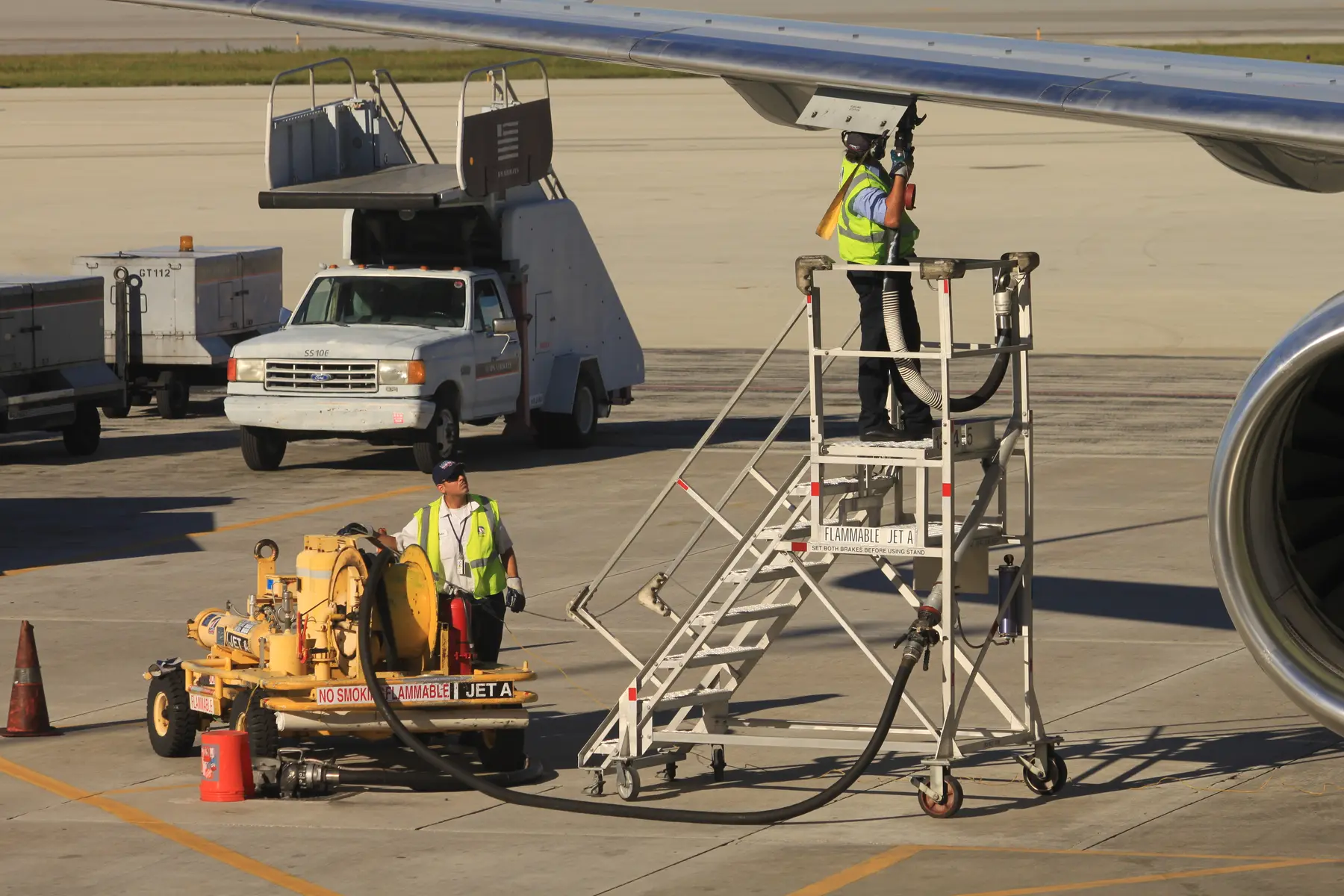
The specific tender conditions, timetable, volume and assessment criteria are from the Civil Aviation Authority of Singapore’s 5 November release; no independent report of those new conditions was available during this check. CNA’s earlier report provides independent background on the passenger levy, while ICAO’s published criteria confirm the 10% lifecycle-emissions minimum for CORSIA-eligible SAF. The 40% figure is a fuel lifecycle threshold, not a claim that flights or Singapore’s aviation sector will emit 40% less overall. A bounded search of original publisher and official event imagery found Reuters/other publisher photos under licensing or without clear reuse terms, so they are not used. Both images are dated archive context: a Singapore Airlines A350 photographed at Changi on 29 January 2026 (CC BY 4.0), and an aircraft being refueled in a 2009 file photograph (public domain dedication); the latter does not show SAF or Singapore. Original files are retained in public/newsroom/source-originals/singapore-saf-criteria-20261105. The lead was proportionally resized to 1,800 × 1,012 and converted to WebP at quality 86; the inline image was proportionally resized to 1,800 × 1,200 and converted to WebP at quality 86. Neither was cropped or retouched.
A national tender sets the first fuel test
Singapore’s Civil Aviation Authority on Nov. 5 set eligibility rules for the first sustainable aviation fuel purchase financed through its aviation levy. The Singapore Sustainable Aviation Fuel Company, or SAFCo, plans to call the tender by mid-December for 20,000 to 30,000 tonnes, with delivery in blended form from June 2027. The agency said 15 companies attended a supplier briefing; no contract has yet been awarded.
Fuel offered must qualify under the International Civil Aviation Organization’s CORSIA scheme and show at least a 40% reduction in lifecycle emissions against conventional jet fuel. CORSIA is the global aviation emissions-offsetting program. Singapore’s purchase will use Changi Airport’s existing fuel infrastructure, subject to technical and sustainability checks.
A tougher threshold than the global baseline
ICAO’s CORSIA criteria set a minimum lifecycle greenhouse-gas reduction of 10% for eligible sustainable aviation fuel. Singapore’s 40% tender threshold is higher. CAAS says it is intended to secure more substantial reductions while retaining several production routes, including HEFA fuel made from used cooking oil or animal fats.
Lifecycle emissions measure a fuel’s emissions across its production and use rather than only at the aircraft engine. The 40% requirement applies to the fuel pathway; it does not mean Singapore’s flights, or its aviation sector as a whole, will emit 40% less.
Price and delivery will shape the program’s reach
SAFCo says it will compare bids on price, supply-chain resilience, delivery certainty, sustainability documentation and support for Singapore’s fuel ecosystem. It may award the first contract to one or more suppliers and expects further tenders as procurement grows. The June 2027 delivery date is a target in the tender plan, not fuel already secured.
The levy is scheduled to apply to eligible tickets or services sold from Oct. 1, 2026, for flights departing Singapore from Jan. 1, 2027; CAAS says proceeds will fund SAF purchases and related administration. The scale of any emissions benefit will depend on the winning bids, the verified fuel pathways and deliveries. The new criteria define the first purchasing test, but the market response is still unknown.
Sources
6 references
- Civil Aviation Authority of SingaporeCriteria for sustainable aviation fuel to be procured and uplifted on flights from SingaporePrimary release setting the 40% lifecycle-emissions threshold, the 20–30 kilotonne first tender, tender timing, delivery, and bid criteria. · 2026-11-05
- Civil Aviation Authority of SingaporeSAF levy schedule and procurement framework updatePrimary source for the revised timetable: levy sales from 1 October 2026 and flights from 1 January 2027. · 2026-09-03
- International Civil Aviation OrganizationCORSIA Sustainability Criteria for CORSIA Eligible FuelsPrimary technical standard: CORSIA SAF must meet at least a 10% lifecycle greenhouse-gas emissions-reduction criterion and other sustainability requirements. · 2025-06-27
- Channel NewsAsiaAir travellers departing Singapore to pay sustainable aviation fuel levy of S$1 to S$41.60 per ticketIndependent reporting on the passenger levy and Singapore’s central SAF procurement plan; it predates the 5 November 2026 tender criteria. · 2025-11-10
- Wikimedia Commons / S5A-0043Singapore Airlines Airbus A350-941 9V-SHE at Changi, photographed 29 January 2026Archive-context photograph, licensed CC BY 4.0; does not depict the November tender or SAF use. · 2026-01-29
- Wikimedia Commons / Jelson25Aircraft being fueled, photographed 28 November 2009Archive-context photograph released under the CC0 1.0 Public Domain Dedication; it shows conventional refueling, not SAF or Singapore. · 2009-11-28