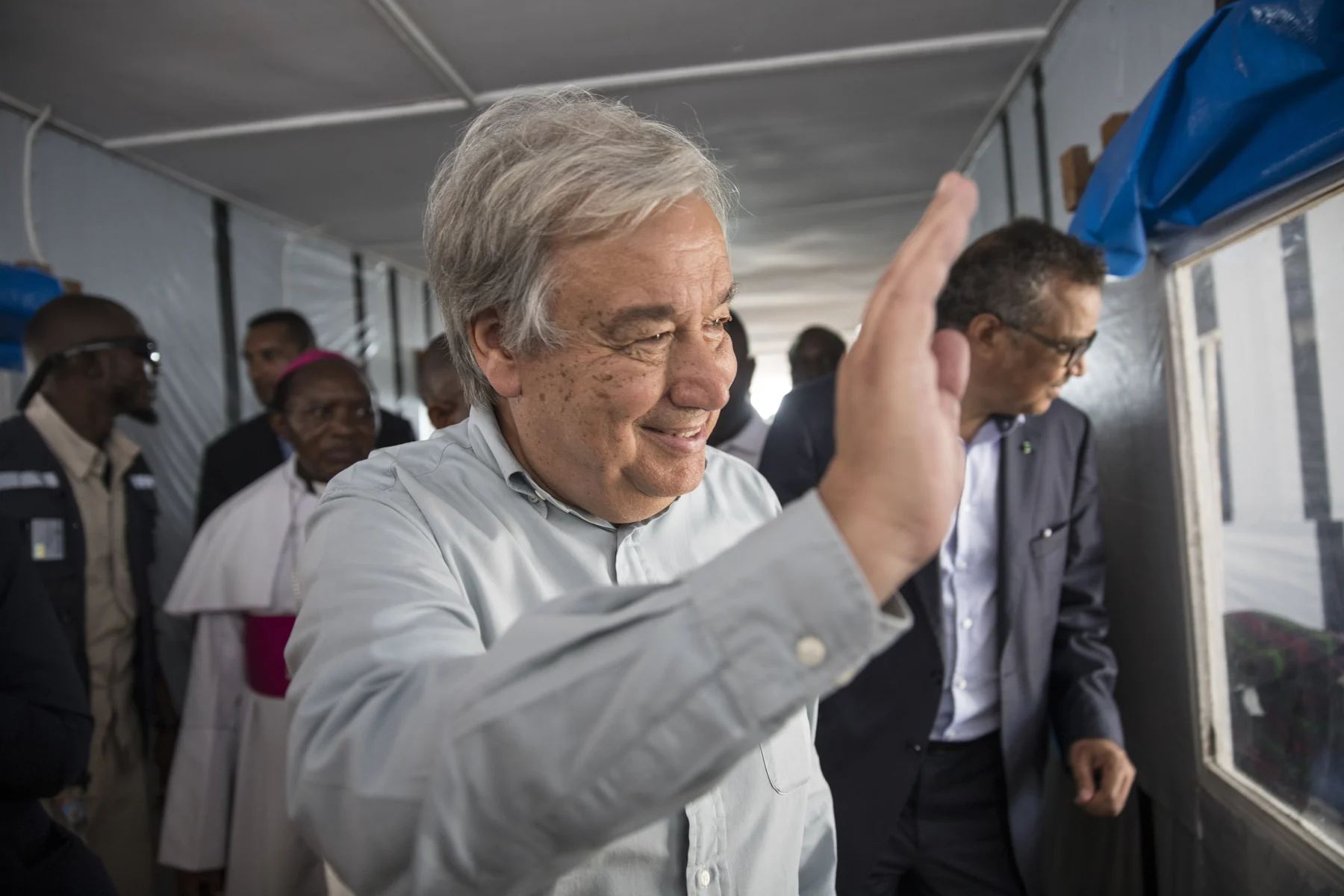
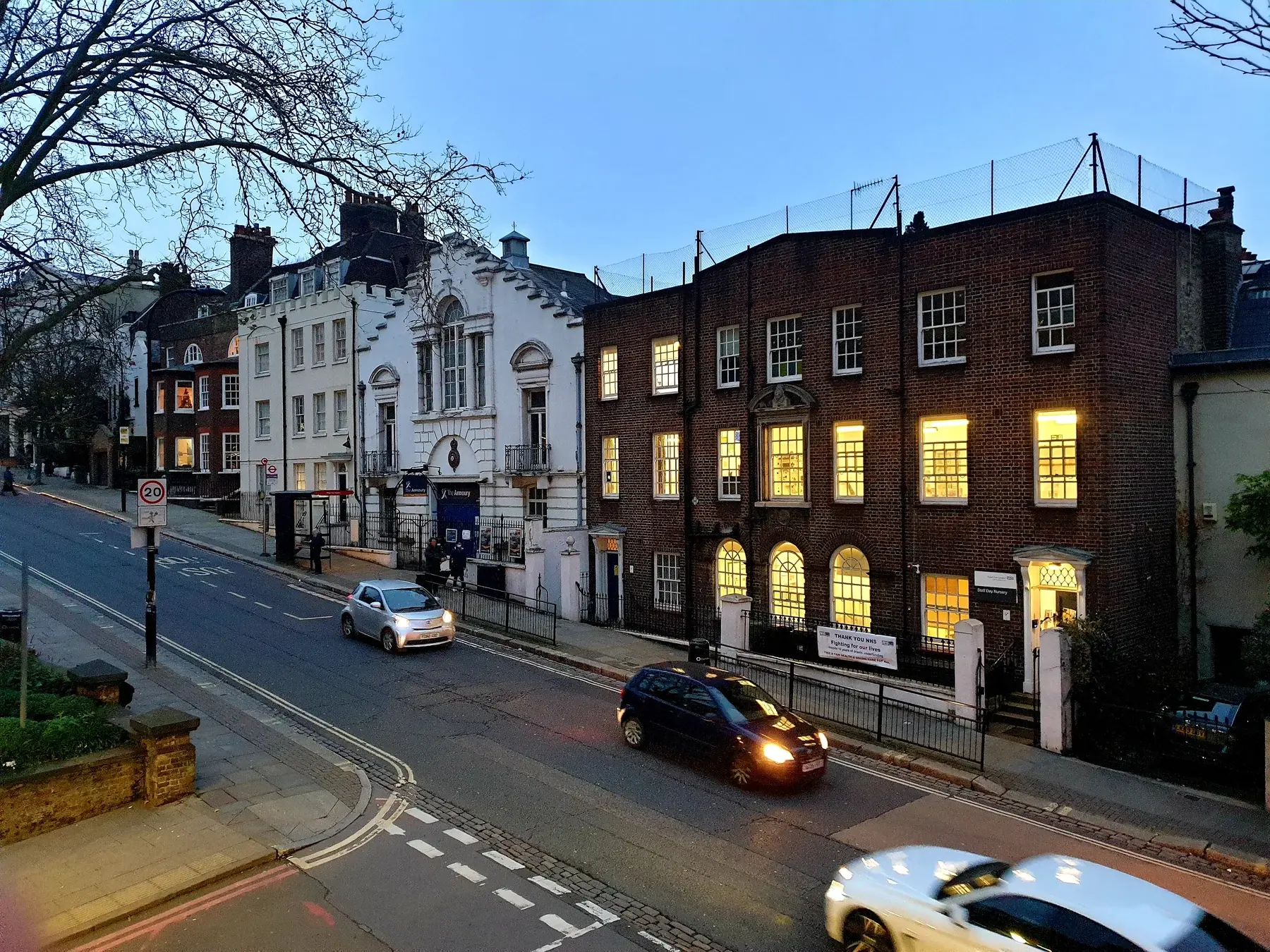
The Department of Health and Social Care and UKHSA provide the patient, treatment and public-risk details; AP and Reuters independently report the transfer. The ECDC’s 5 November update gives the precise DRC totals based on data through 3 November; news reports round these to more than 10,000 cases and 5,000 deaths. A London School of Hygiene & Tropical Medicine expert explains healthcare-worker exposure and transmission, not the individual patient’s circumstances. The patient is not named in the cited reports. A bounded search found current-event images from Reuters/AP that require licensing and official images without clear third-party reuse permission. These archive-context photographs are MONUSCO Photos’ image from the Mangina Ebola Treatment Centre on 1 September 2019 (CC BY-SA 2.0) and beareye2010’s Royal Free Hospital exterior from 16 November 2020 (CC0); neither depicts the 2026 case. Originals are retained under public/newsroom/source-originals/ebola-uk-evac-20261106. The lead was resized proportionally from 6,720 × 4,480 to 1,800 × 1,200 and converted to WebP at quality 86; the inline image was resized from 4,032 × 3,024 to 1,800 × 1,350 and converted at quality 86. Neither image was cropped or retouched.
A controlled transfer to specialist isolation
The UK Department of Health and Social Care said on 5 November that a British medical doctor working on the Ebola response in the Democratic Republic of the Congo had tested positive and returned to the UK on a medical evacuation flight. The patient was admitted to the Royal Free Hospital in London, where a high-level isolation unit is designed to care for people with serious infectious diseases.
The patient has not been named in the cited reports. UK health authorities say infection-control procedures were followed during the flight and treatment, and that the risk to the wider UK public remains low. Ebola is not airborne: it spreads through direct contact with the bodily fluids of a person who is sick. UKHSA says the public does not need to take extra precautions.
The outbreak’s main burden remains in the DRC
The case comes amid a large Bundibugyo-virus outbreak concentrated in the DRC. In its 5 November assessment, the European Centre for Disease Prevention and Control reported 10,668 confirmed cases and 5,198 related deaths in the country, using data through 3 November. Eight provinces had been affected.
Those figures describe the DRC outbreak, not infections in Britain. The UK patient is an evacuated response worker receiving specialist care; the UKHSA’s low-risk assessment concerns the public beyond the isolation and care teams.
A reminder of the risks faced by response workers
A London School of Hygiene & Tropical Medicine infectious-disease expert said healthcare workers can be exposed while caring for severely ill patients, even when protective procedures are used. The expert said the case does not show that the virus has become more transmissible or that the threat to the UK public has increased.
That distinction matters: a planned transfer to an isolation unit is a containment measure for an individual case. The wider response depends on identifying infections, protecting staff and interrupting transmission in affected communities.
Sources
8 references
- UK Department of Health and Social CareUK citizen returned from DRC for specialist Ebola carePrimary statement on the positive test, medical evacuation, Royal Free treatment and UK public-risk assessment. · 2026-11-05
- European Centre for Disease Prevention and ControlEbola disease outbreak caused by Bundibugyo virus – Multi-country – 2026Public-health situation report; DRC case and death totals are based on data through 3 November. · 2026-11-05
- Associated PressBritish doctor who tested positive for Ebola in Congo is evacuated to London hospitalIndependent reporting on the evacuation, isolation arrangements and outbreak context. · 2026-11-05
- ReutersUK doctor with Ebola returns from Congo to London for treatmentIndependent reporting on the first British case linked to the outbreak and the hospital transfer. · 2026-11-05
- UK Health Security AgencyUK providing specialist care to aid worker with EbolaPrimary public-health explanation of isolation, evacuation precautions, transmission and UK risk. · 2026-11-05
- London School of Hygiene & Tropical MedicineRapid reaction: British healthcare worker with Ebola flown back to UKExpert commentary on occupational exposure, transmission and the limits of what this case indicates. · 2026-11-04
- Wikimedia Commons / MONUSCO PhotosUN Secretary-General visits Mangina Ebola Treatment Centre, photographed 1 September 2019Archive-context photograph of the Mangina centre; CC BY-SA 2.0. · 2019-09-01
- Wikimedia Commons / beareye2010Royal Free Hospital, Pond Street, London, photographed 16 November 2020Archive-context exterior photograph; CC0. · 2020-11-16