
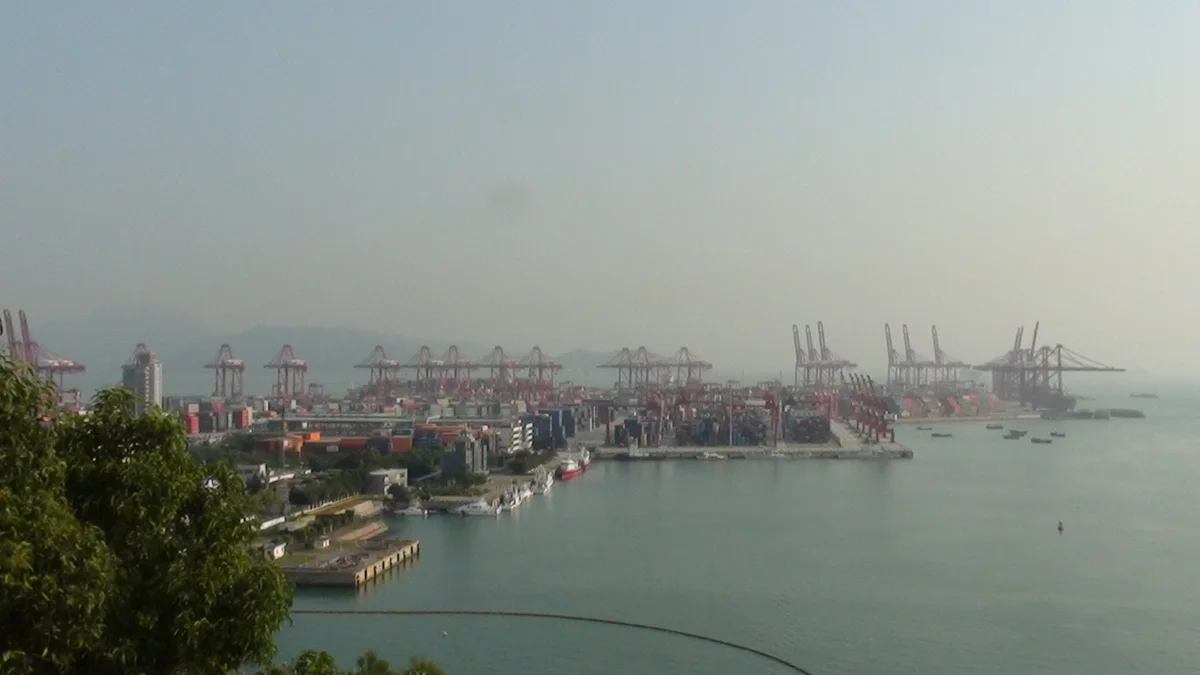
INCE NEWS read the final APEC leaders' declaration and the full 2027–2030 Trade Digitalization Cooperation Framework, and checked their context against Reuters and AP reporting from Shenzhen. The framework was adopted by all 21 APEC economies, but APEC decisions are voluntary, non-binding and consensus-based. Its language generally encourages alignment and cooperation rather than imposing domestic legal changes or a delivery timetable. Current-event AFP, Reuters and Getty photographs were visible only under commercial agency licences; APEC's own reuse terms are limited to non-profit use. Dated Creative Commons photographs of Shenzhen's Futian skyline and Chiwan container port are used as context and do not depict the Nov. 18–19 leaders' meeting.
A shared direction for the documents and data behind trade
The 21 APEC economies have adopted a four-year framework intended to make cross-border commerce less dependent on paper and incompatible national systems. The plan covers electronic signatures and authentication, digital customs forms, electronic invoicing and payments, data governance and electronically delivered services.
Leaders endorsed the framework in Shenzhen after meetings on Nov. 18 and 19. The practical goal is to let firms and border agencies create, exchange and recognize more trade documents electronically, reducing the time and cost attached to manual processing.
The framework backs open digital channels but creates no binding rules
APEC members supported the existing moratorium on customs duties for electronic transmissions and encouraged trade agreements to prevent such duties. They also called for cooperation on cross-border data flows, compatible privacy protections and secure digital transactions.
Those positions do not amount to a treaty. APEC works by consensus, and the framework repeatedly describes participation and legal alignment as voluntary. Governments keep control over domestic law, security policy and the pace of implementation.
Electronic records and customs are the most concrete work programme
The framework encourages economies to give electronic signatures legal effect, recognize electronic versions of trade forms and consider aligning their laws with United Nations model rules for electronic commerce and transferable records. It also promotes interoperable e-invoicing and payment systems and the use of technology in customs procedures.
APEC's Committee on Trade and Investment is responsible for carrying the programme through 2030 and reporting progress in its annual report. The document does not set economy-by-economy deadlines or penalties, so its value will depend on domestic reforms and whether systems can work across borders.
Consensus survived a summit shaped by strategic rivalry
The agreement was reached as the United States and China remained in an uneasy trade truce and members faced disputes over advanced technology, export controls and supply-chain dependence. Reuters reported before the summit that all 21 economies had raised concerns about unnecessary trade restrictions even as they differed over what fair trade required.
The declaration also calls for open trade corridors and resilient supply chains for essential goods. For exporters, logistics firms and smaller businesses, the immediate result is a common policy map rather than a new right: savings will appear only where member economies change laws, connect systems and make digital records usable in practice.
Sources
6 references
- APEC2026 APEC Leaders' DeclarationPrimary record of the leaders' consensus and its non-binding institutional setting. · 2026-11-21
- APECAPEC Trade Digitalization Cooperation Framework (2027–2030)Primary text setting out the three pillars, policy areas and implementation mechanism. · 2026-11-21
- ReutersAPEC members expected to look past trade differences to agree summit text, official saysIndependent reporting on the trade tensions and negotiations behind the consensus. · 2026-11-17
- Associated PressAPEC serves as a backdrop as big power politics eclipse talk of open trade, AIIndependent reporting from Shenzhen on the summit's trade and technology agenda. · 2026-11-19
- Wikimedia CommonsShenzhen Skyline from Futian District2Lead-photo provenance and CC BY 3.0 licence. · 2016-10-01
- Wikimedia CommonsChiwan Port in ShenzhenInline-photo provenance and CC BY-SA 3.0 licence. · 2011-10-16








