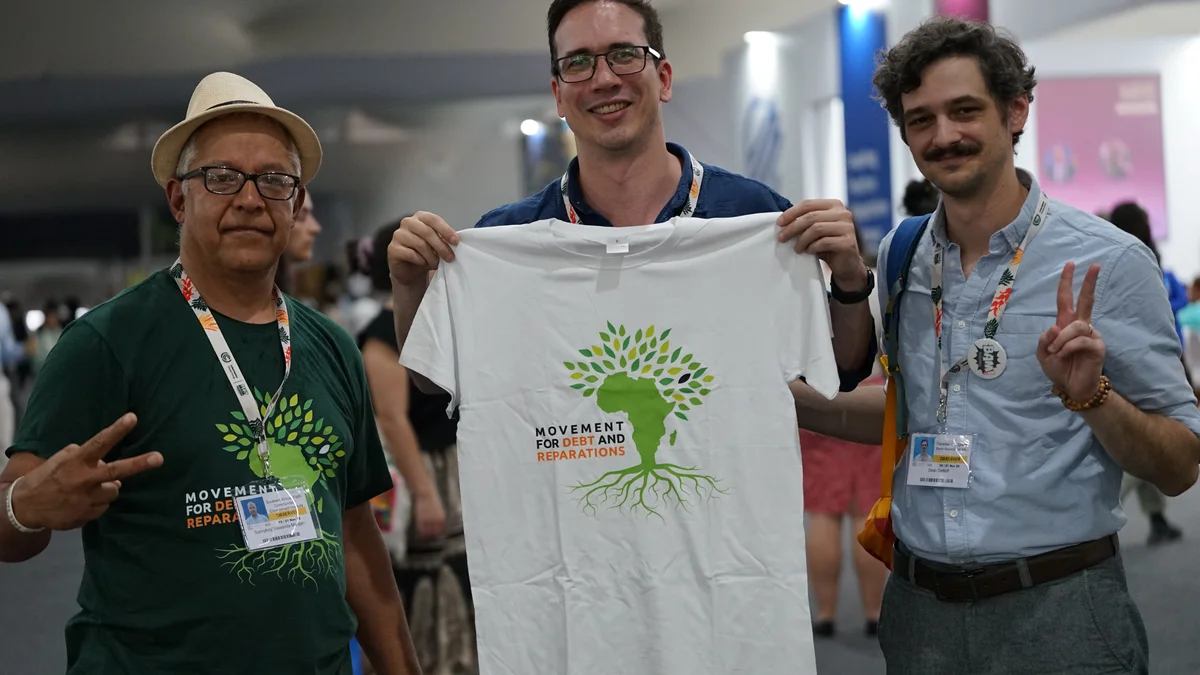
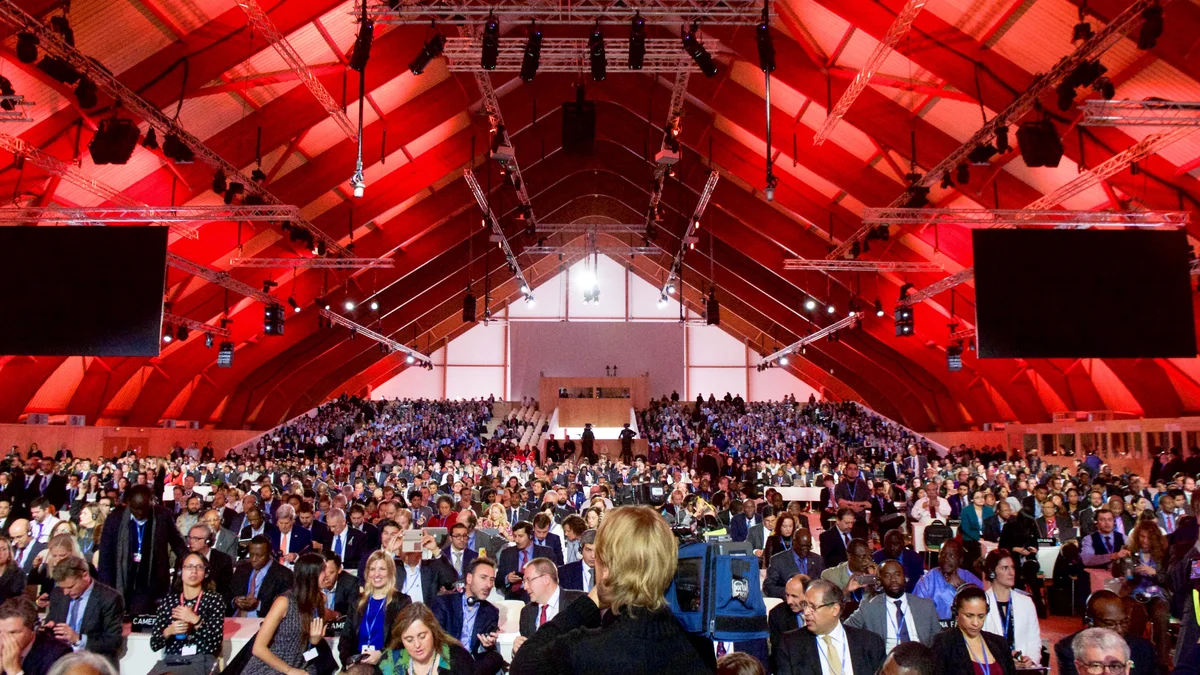
INCE NEWS checked UN Climate Change's closing statement and conference record against Reuters, Associated Press and Guardian reporting from the final plenary. The failure concerned COP31's overarching cover decision; negotiators still adopted several narrower decisions, and the Paris Agreement and previous COP commitments remain in force. Reuters and AP differed slightly in their descriptions of the overtime period, so this report uses the common, conservative formulation of more than two days. Actual COP31 photographs were available from the official UN Climate Change Flickr account only under CC BY-NC-SA 4.0, which does not permit commercial reuse; Reuters' same-day image required a paid licence. The article therefore uses two clearly dated archive/context photographs from earlier UN climate conferences. The lead, photographed by Xuthoria at COP30 on November 17, 2025, is CC BY-SA 4.0. The inline COP21 plenary photograph, made by the U.S. Department of State on December 12, 2015, is public domain. Both were cropped to the site's 16:9 frame without retouching.
A summit closes without its political centrepiece
COP31 ended in Antalya on Sunday without the overarching political decision that normally records the annual summit's central bargains, after negotiations ran more than two days beyond their scheduled finish.
The breakdown was the first failure to adopt a COP cover decision since the Copenhagen summit in 2009. It does not cancel the Paris Agreement, national climate plans or commitments adopted at earlier conferences, but it leaves governments without a new shared signal on how to accelerate implementation this year.
UN Climate Change chief Simon Stiell told the closing plenary that parties had been unable to agree on the two presidency-led decisions. He also warned that the world could not afford a repeat of the outcome.
Fossil fuels became the decisive fault line
The European Union, small island states and other governments said the proposed text was too weak because it did not set out a credible path away from fossil fuels. More than 100 countries had pressed for stronger transition language during the summit.
Saudi Arabia, Russia and other producers opposed language they viewed as targeting oil, gas and coal. COP decisions are adopted by consensus, giving a relatively small group the ability to block text that lacks broad acceptance.
The dispute was not simply about whether fossil fuels contribute to warming. It concerned whether COP31 should translate the 2023 call to transition away from them into new timelines, implementation steps or accountability language.
Finance divisions made compromise harder
Developing countries also argued that the package did not provide enough predictable finance for adaptation or for a fair energy transition. Wealthier states resisted wording they feared would create open-ended commitments without clear delivery rules.
The draft discussed a goal to triple adaptation finance but did not settle a baseline, making the promised scale difficult to measure. That ambiguity deepened mistrust between countries facing immediate climate damage and governments being asked to provide more funding.
The result leaves those questions for future negotiating sessions and COP32, where the political cost of rebuilding confidence will compete with the need to raise ambition before the next round of national plans.
Technical work survived the political collapse
The conference did not end empty-handed. Parties adopted several narrower decisions, including work connected to a just transition, while technical negotiations continued across adaptation, transparency and implementation tracks.
Those outcomes matter because the UN climate process also sets reporting rules, funds programmes and coordinates work that continues between annual summits. Their adoption prevents the failure of the cover decision from becoming a complete institutional shutdown.
The central consequence is therefore a weaker political mandate, not the disappearance of international climate law. Governments still face the same emissions gap and finance obligations, but they leave Antalya without an agreed 2026 roadmap for closing them.
Sources
7 references
- UN Climate ChangeRemarks at the closing plenary of COP31Primary closing statement confirming that the presidency-led decisions were not agreed and identifying decisions that did pass. · 2026-11-22
- UN Climate ChangeUN Climate Change Conference — Antalya, November 2026Official conference record and dates for COP31. · 2026-11-22
- ReutersCOP31 climate talks close without final deal, summit president saysIndependent reporting from the closing session on the failed cover decision, fossil-fuel dispute and surviving technical decisions. · 2026-11-22
- Associated PressUN climate talks end without a sweeping agreement after divisions over fossil fuelsIndependent reporting on the final plenary, consensus rules and positions of negotiating blocs. · 2026-11-22
- The GuardianCOP31 climate talks end in deep division as key deal is rejectedIndependent account of the final negotiations and opposition to the proposed text. · 2026-11-22
- Wikimedia CommonsCOP30 - Delegates 02Lead archive photograph by Xuthoria, licensed CC BY-SA 4.0. · 2025-11-17
- Wikimedia CommonsCOP21 delegates assemble in the plenary hallInline archive photograph by the U.S. Department of State, public domain as a U.S. federal government work. · 2015-12-12