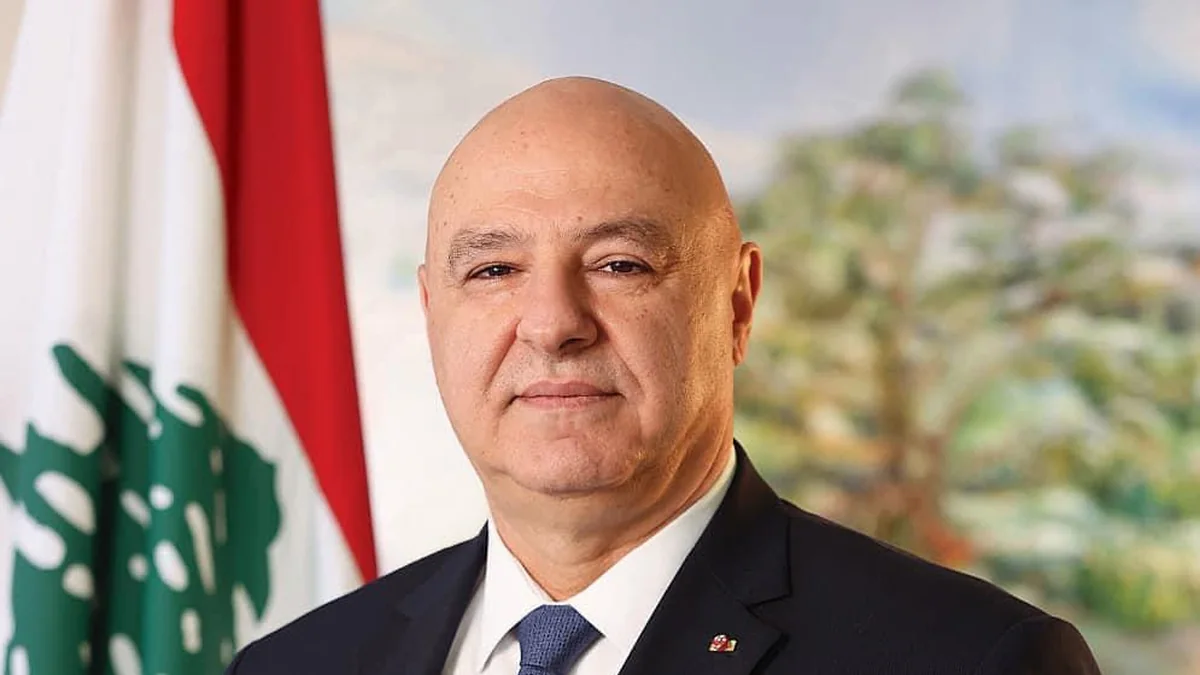
INCE NEWS read the Lebanese presidency’s Arabic summary and a full English transcript of President Joseph Aoun’s November 21 Independence Day address, then compared them with Associated Press, LBCI and Xinhua reports. Aoun explicitly described Israeli occupation and Iranian interference through weapons and decision-making outside the state as linked obstacles. He did not announce a completed disarmament agreement or withdrawal timetable. His reference to weapons outside state control was widely understood to concern Hezbollah, but the quoted passage did not name the group. Actual-event photographs published with same-day coverage were presidency or agency images without a sufficiently clear republication licence. The lead is the presidency’s 2025 official portrait of Aoun, licensed CC BY 4.0; the inline image is a 2008 Beirut skyline photograph licensed CC BY 4.0 and carrying a Lebanese freedom-of-panorama caution. It is used only as broad city context, without isolating a protected building. Neither depicts the November 21 ceremony.
Aoun defines sovereignty as a two-front problem
Lebanese President Joseph Aoun has called for Israel to leave occupied Lebanese territory while demanding an end to weapons and political decisions outside state authority, presenting the two issues as inseparable tests of the country’s independence.
In an address marking Lebanon’s 83rd Independence Day, Aoun said the country faced two linked obstacles: Israeli occupation of parts of its land and foreign interference, specifically by influential actors within Iran’s establishment operating through armed power and decision-making beyond the Lebanese state.
The formulation places pressure on opposing sides at once. It rejects Israel’s continuing military presence and attacks, while challenging the autonomy of Iran-backed Hezbollah and other armed actors inside Lebanon.
The speech makes a demand, not a disarmament agreement
Aoun said Lebanon’s national project required “no occupation whatsoever” and “no weapons outside the state” that receive foreign orders. He argued that each problem gives the other a justification and leaves southern Lebanon paying the cost.
The address did not announce that Hezbollah had agreed to disarm, identify a mechanism for collecting weapons or set a timetable. AP reported that Hezbollah has refused to surrender its arsenal while Israel occupies parts of southern Lebanon.
That distinction is central: the president stated the state’s desired monopoly over force, but implementation still depends on domestic consent, army capacity and the course of conflict with Israel.
Diplomacy is presented as the route to Israeli withdrawal
Aoun called on Israel to withdraw from Lebanese land, halt attacks and return Lebanese detainees. He defended negotiation as a means of recovering rights, saying diplomacy was not surrender and peace was not the opposite of dignity.
The speech rejected the idea that military power alone could build a durable settlement. It instead linked international support, a unified Lebanese position and stronger state institutions to the effort to restore sovereignty.
There was no Israeli withdrawal commitment in the address. Aoun’s words set a negotiating position rather than documenting a completed agreement.
The army is assigned the role armed factions have claimed
Aoun asked Lebanese citizens whom they rely on in moments of danger and answered: the Lebanese Army. He described it as the force for all regions and sects and said security could not rest on multiple weapons and competing command structures.
That argument goes beyond symbolism. Hezbollah has long justified its arms as necessary resistance to Israel, while critics say an independent military structure weakens the state and exposes Lebanon to wars decided elsewhere.
Aoun’s Independence Day message therefore raises the political cost of preserving the status quo. It does not resolve the contest, but it states that Lebanese sovereignty requires Israel’s withdrawal and a single national authority over war, peace and weapons.
Sources
6 references
- Presidency of the Lebanese RepublicPresident Aoun addresses the Lebanese on Independence Day and raises the flag at Nahr al-KalbPrimary Arabic summary of the address and its state-sovereignty themes. · 2026-11-21
- Presidency transcript / Dearborn.orgVerbatim Text of President Aoun’s Speech at the Independence Day and Flag-Raising CeremonyFull English transcript used to check the wording and distinguish demands from completed policy. · 2026-11-21
- Associated PressLebanon’s president calls on Israel to withdraw, Hezbollah to disarmIndependent reporting on the regional context and Hezbollah’s position. · 2026-11-21
- LBCI LebanonIn Independence Day speech, Aoun demands Israeli withdrawal, end to foreign influence and exclusive state control over weaponsLebanese reporting on the speech and its two-track sovereignty demand. · 2026-11-21
- Wikimedia Commons / Presidency of LebanonOfficial Portrait of the President of the Republic of Lebanon.jpgLead-photo provenance and CC BY 4.0 licence. · 2025
- Wikimedia CommonsBeirut skyline, Beirut, Lebanon.jpgInline-photo provenance, CC BY 4.0 licence and freedom-of-panorama caution. · 2008-09-21








