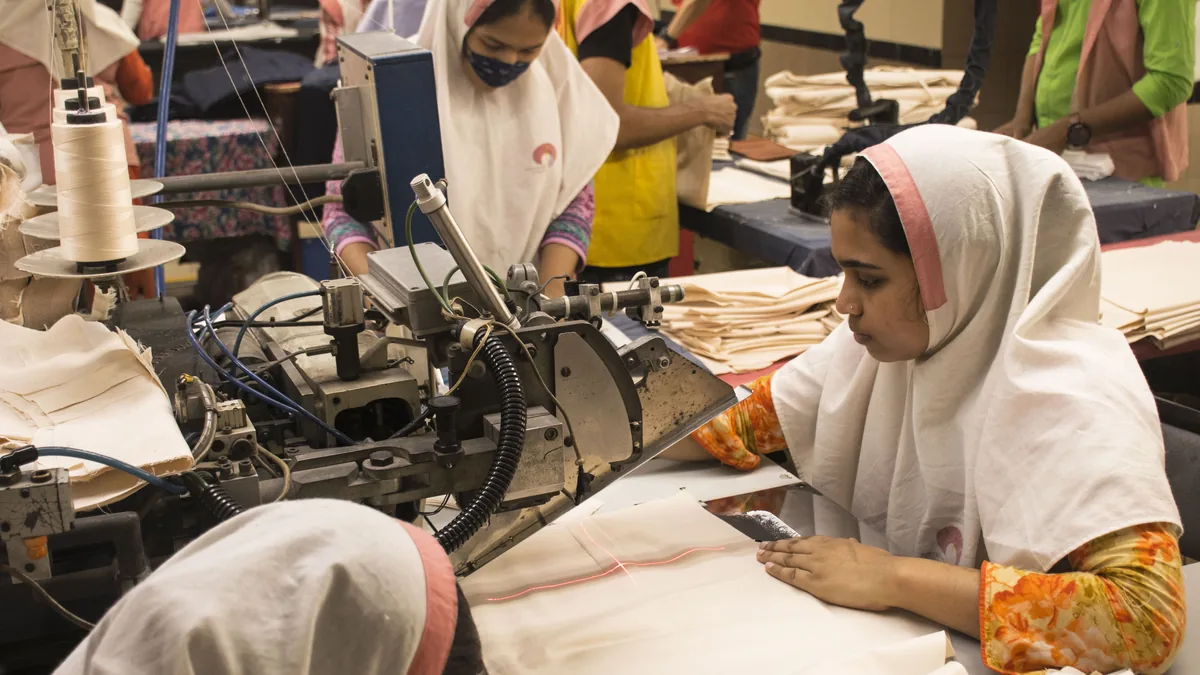
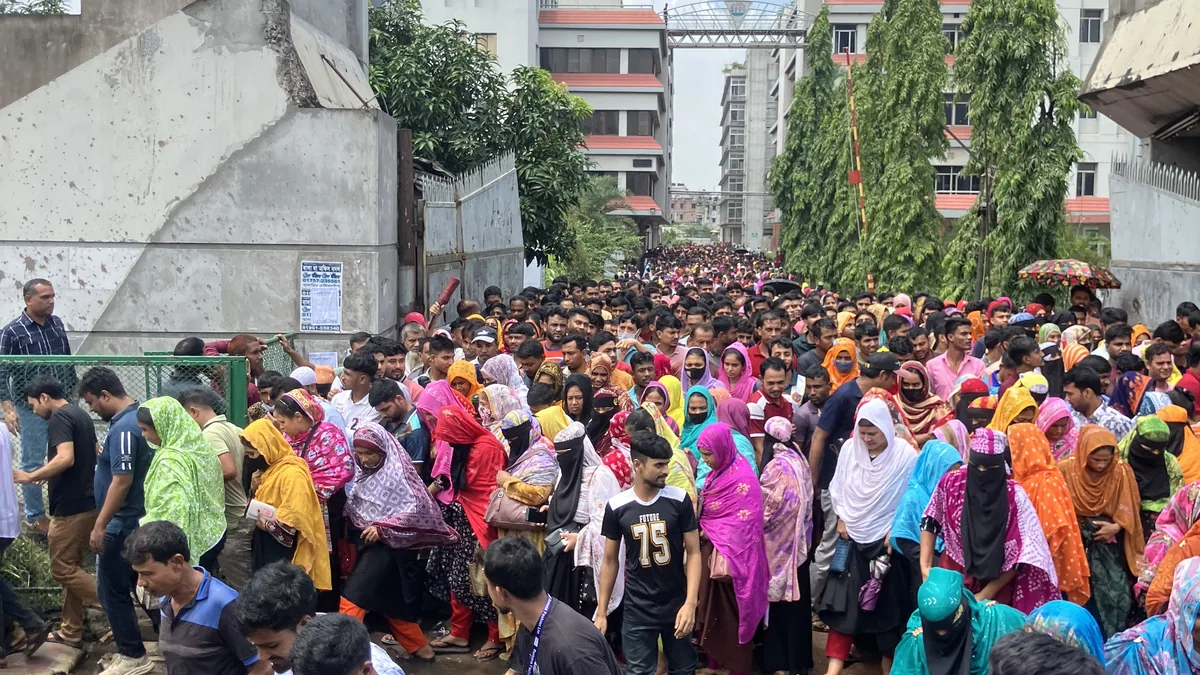
The workers' household pressures, current minimum, 30,000-taka demand, recent factory disruption and employer arguments were checked against Reuters reporting published Nov. 11 and an accessible Reuters syndication by The Business Standard. The wage-board timetable and the fact that no increase had yet been set were cross-checked against Reuters' Nov. 4 report, Bangladesh Sangbad Sangstha and the Labour Ministry's Nov. 1 board-formation notice. Export values were checked against BGMEA's current performance table; its figures are industry data and are identified as such. Individual workers' circumstances were reported by Reuters and were not independently interviewed by INCE NEWS. A bounded search found Reuters actual-event photographs offered through news publication channels without open reuse terms. The lead is a Feb. 11, 2020 garment-factory photograph by Fahad Faisal and the inline image shows workers leaving a factory during a break on Aug. 8, 2026 by Nahid Sultan. Both are archive context, CC BY-SA 4.0, and do not depict the current wage protests or the workers interviewed by Reuters. Visible people are used only in editorial context. Originals are retained in source. The lead was centre-cropped and the inline image was auto-rotated from EXIF then centre-cropped; both were converted to 1,200 × 675 WebP at quality 82 with no retouching.
A pay decision follows factory shutdowns
Bangladesh's garment wage board has agreed that a revised pay structure will take effect on Dec. 1, with workers due to receive the new rate in January. The board has not yet decided how large the increase will be. Workers are demanding that the monthly minimum rise to 30,000 taka from 12,500 taka.
The timetable followed days of protests in Gazipur, Savar and other manufacturing districts. Hundreds of factories temporarily closed, and police used tear gas and sound grenades during clashes, according to Reuters. The government formed the six-member board on Nov. 1 with worker, employer and neutral representatives.
Current wages force choices over food and health
Reuters interviewed workers who described cutting meals, postponing medical care and withdrawing children from school as rent and food costs rose. Shilpi Khatun, a 27-year-old worker and sole household earner in Gazipur, said her base pay had reached 13,500 taka and about 16,000 with overtime, but still did not cover the month. Reuters reported that she had not seen a doctor in three years despite health problems.
Another worker, Roksana Parveen, told Reuters that her family often relied on rice and vegetables and that one daughter had left school because of the cost. Their circumstances are individual accounts, but they illustrate the pressure created by inflation that Reuters said has averaged about 9% since 2022.
Export competitiveness collides with living costs
Low labour costs helped Bangladesh become the world's second-largest apparel exporter after China. The industry employs more than four million people and produces more than 80% of the country's export earnings. BGMEA data show garment exports of about $7.50 billion in July and August of the current fiscal year, 5.1% above the same two months a year earlier.
Factory owners argue that a sharp wage rise would narrow Bangladesh's advantage over India and Vietnam while energy costs and buyer pressure already compress margins. Workers counter that the current floor no longer meets basic needs. The board's unresolved number will decide how those costs are divided among workers, factories and global brands; its December start date alone does not settle the dispute.
Sources
7 references
- ReutersBehind Bangladesh's garment boom, workers cut food, healthcare as wages fall shortCurrent independent reporting from Gazipur and Ashulia on household pressures, protests and the wage dispute. · 2026-11-11
- The Business Standard / ReutersBehind Bangladesh's garment boom, workers cut food, healthcare as wages fall shortAccessible syndication of the Reuters report used to check details and attribution. · 2026-11-11
- Bangladesh Ministry of Labour and EmploymentNotification on formation of the Minimum Wage BoardPrimary notice establishing the garment-sector wage board. · 2026-11-01
- Bangladesh Sangbad SangsthaNew RMG wage structure to take effect from Dec 1State news agency report of the board's first meeting and agreed timetable. · 2026-11-04
- BGMEAExport PerformanceIndustry export table used for current apparel shipment values. · 2026-11-11
- Wikimedia CommonsRMG Bangladesh.jpgArchive context photograph by Fahad Faisal, licensed CC BY-SA 4.0. · 2020-02-11
- Wikimedia CommonsGarment workers in Bangladesh exiting a factory during break.jpgArchive context photograph by Nahid Sultan, licensed CC BY-SA 4.0. · 2026-08-08








