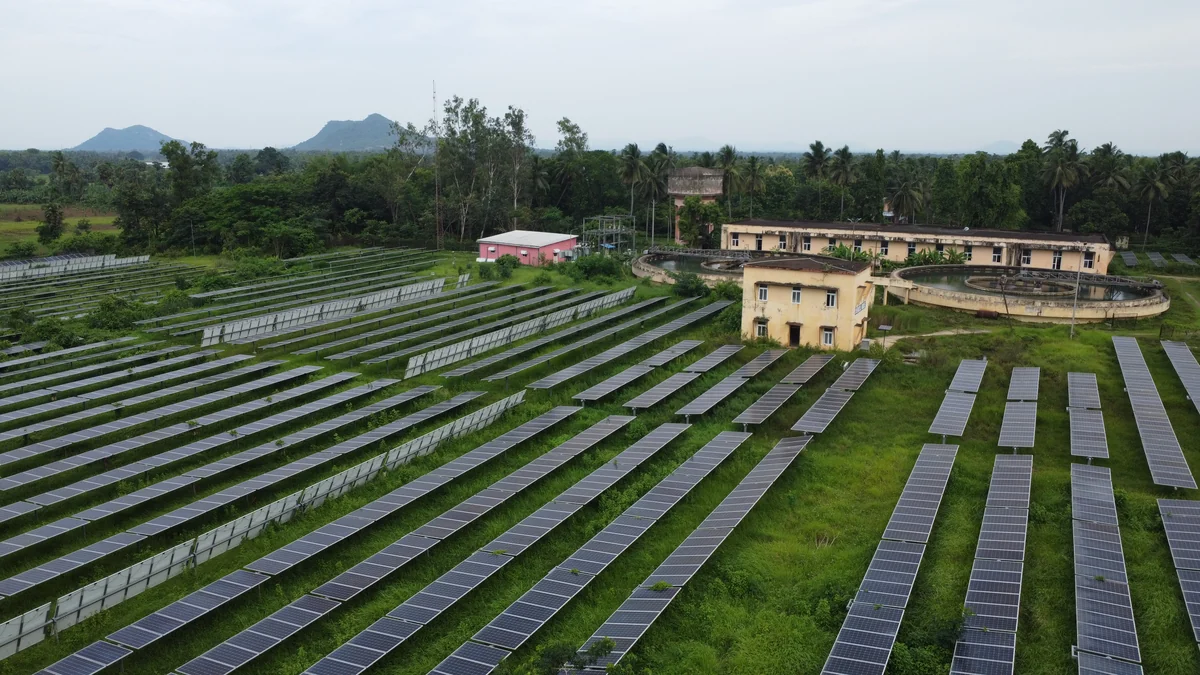
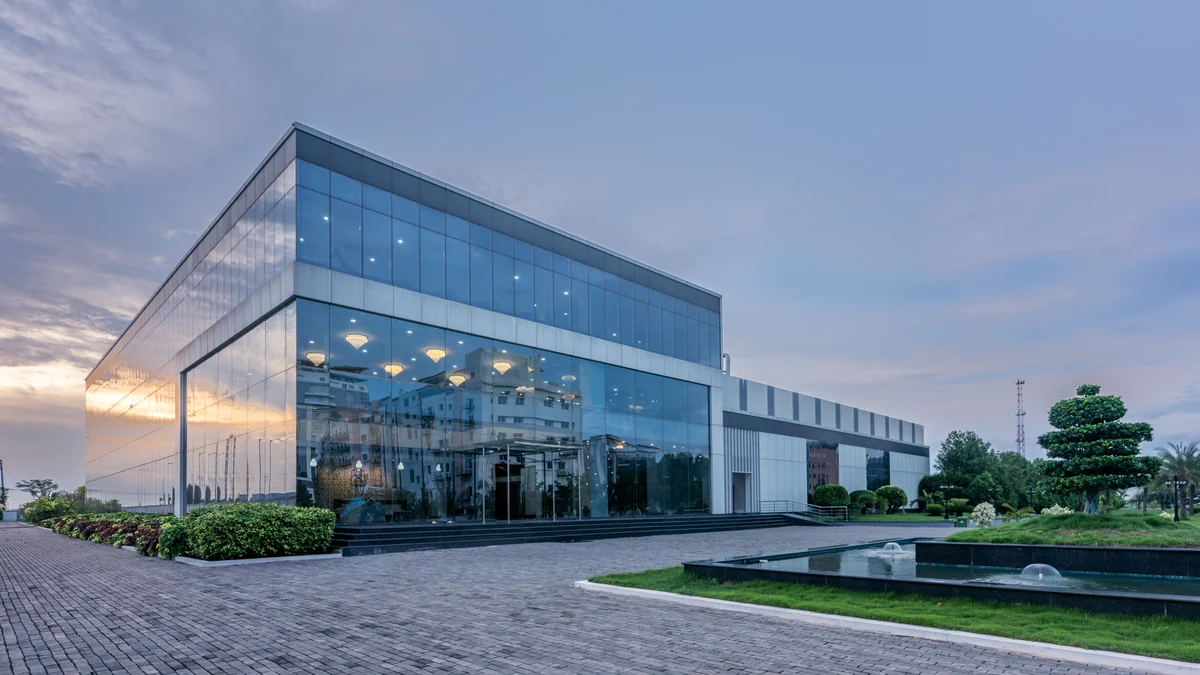
Reuters' report was reviewed for the proposed ₹500 billion investment, capacity figures, five-year development window, Neysa relationship and CleanMax's customer mix. The company announcement, reproduced in full by Business News Week and summarized by Capital Market, supplies the project structure, distribution-licence requirement, 2029 milestone and claims about cooling and water use. Moneycontrol independently reported from the memorandum that the separate compute-factory proposal is non-binding for 12 months, that land and incentives remain subject to government procedures, and that its estimated ₹80 billion investment is distinct from CleanMax's ₹500 billion energy proposal. The article therefore describes plans and proposals, not committed construction or operating capacity. A bounded actual-event search found summit coverage and company material without established reusable photo rights. Two dated CC BY-SA 4.0 archive/context photographs from Andhra Pradesh are used instead: a 2025 solar installation at Krishnapuram Tatipudi Water Works and a 2021 Pi Data Center facility in Vijayawada. Neither depicts CleanMax, Neysa, Kurnool or the proposed complex. Originals are retained; the solar original already had a 16:9 frame, while the data-centre original was centre-cropped to 16:9. Both were resized to 1,200 × 675 and converted to WebP quality 86 without retouching.
The power plan is larger than the computing commitment
Clean Max Enviro Energy Solutions signed a memorandum with the Andhra Pradesh Economic Development Board proposing nearly ₹500 billion in wind, solar, storage and distribution infrastructure over five years. The system is intended to supply a separate 2-gigawatt computing campus planned in Kurnool district with AI cloud company Neysa.
The ₹500 billion figure—about $5.34 billion at the exchange rate used by Reuters—belongs to CleanMax’s energy proposal. Moneycontrol separately reported an estimated ₹80 billion investment for the computing facility. Those figures describe different parts of the plan and should not be added or treated as money already spent.
Wind, solar and storage are meant to work as one system
CleanMax proposes 3 GW of wind and solar generation and 1 GW of pumped-hydro capacity, alongside battery storage and a dedicated distribution network. Wind and solar output varies with weather and time of day; pumped storage and batteries can shift electricity to periods when generation is lower.
Gigawatts measure power capacity, not the amount of electricity delivered over a year. The announcement does not publish the final wind-to-solar split, battery energy capacity, storage duration or a completed power-flow design. Those details will determine how closely the system can match the campus’s round-the-clock demand.
Neysa would anchor half of the proposed computing load
Blackstone-backed Neysa is expected to anchor 1 GW of information-technology load inside the planned 2-GW campus. CleanMax says at least 1.5 GW of renewable capacity could be developed by 2029, while Moneycontrol reported a March 2028 target for commissioning the compute facility.
The schedules are targets in early-stage agreements, not proof that all generation, storage or computing capacity will be ready by those dates. The compute memorandum is non-binding for 12 months, and state support is limited to facilitation; land allotment, incentives and other approvals remain with the relevant authorities.
Licences, land and water remain execution tests
CleanMax plans to establish a special-purpose company that would seek a distribution licence from the Andhra Pradesh Electricity Regulatory Commission. The project will also require sites for generation and transmission, pumped-storage approvals, grid connections and commercial contracts that the announcement does not document as completed.
The company says direct-to-chip cooling would limit water use and that the campus would draw from industrial allocations. That is a design claim, not measured performance. Actual consumption will depend on the final equipment, climate, operating intensity and water-supply arrangements.
AI demand is reshaping renewable procurement
CleanMax told Reuters that data-centre and AI infrastructure customers represented 41% of its contracted renewable-power sales portfolio as of September. The proposed complex illustrates how large computing loads are moving from ordinary grid connections toward dedicated generation, storage and private networks.
That model could add new clean capacity if construction and licensing proceed, but it also concentrates land, capital and power infrastructure around a single class of customer. The public test will be whether the project adds reliable supply on its stated timetable without shifting grid, water or permitting costs onto surrounding communities.
Sources
5 references
- ReutersIndia's Clean Max plans $5.3 billion clean energy investment to power AI computing facilityIndependent reporting on the proposed investment, generation and storage capacities, timetable and Neysa relationship. · 2026-11-12
- CleanMax / Business News WeekCleanMax signs MoU with Andhra Pradesh to invest about ₹50,000 crore in an integrated clean energy complexCompany announcement reproduced by a publisher; primary source for the proposal’s structure, milestones, licensing plan and company claims. · 2026-11-12
- MoneycontrolCleanMax, Blackstone-backed Neysa to invest ₹8,000 crore in 2-GW AI data centre park in AndhraIndependent reporting on the separate compute-factory proposal, site, target date and the memorandum’s non-binding and facilitation limits. · 2026-11-12
- Wikimedia CommonsSolar farm at Krishnapuram Tatipudi Water Works aerial view 01.jpgArchive photograph by Saiphani02, licensed CC BY-SA 4.0. · 2025-06-15
- Wikimedia CommonsPi Data Center.jpgArchive photograph supplied by PiDatacenters, licensed CC BY-SA 4.0. · 2021-08-17