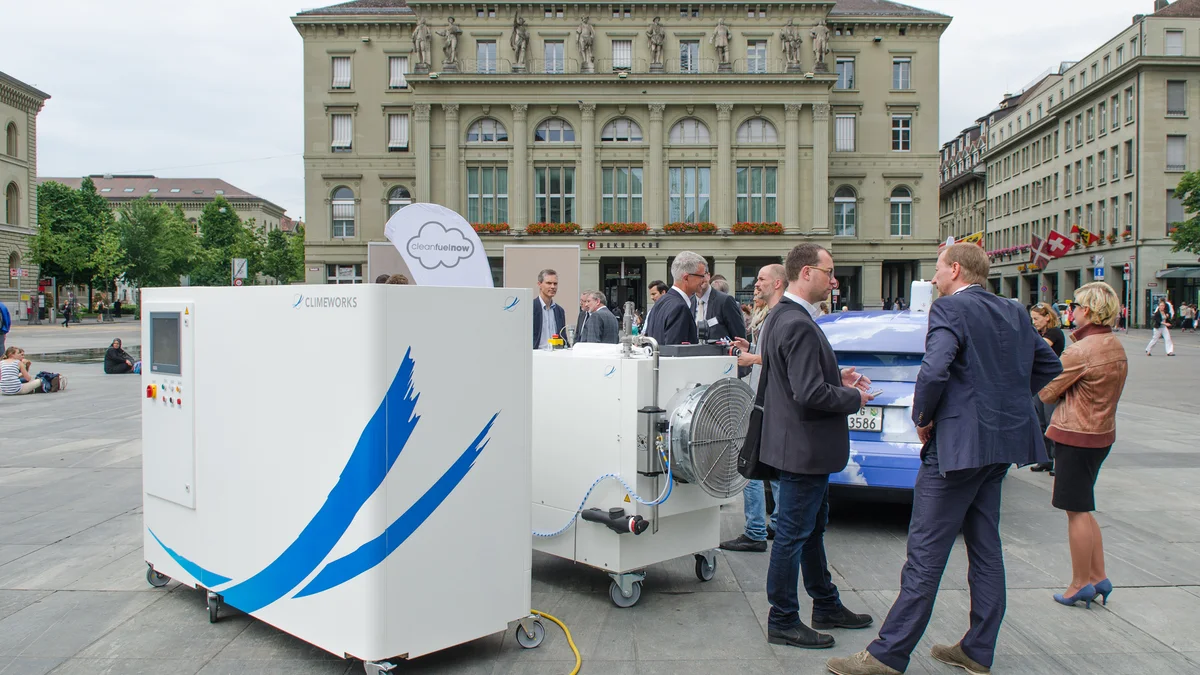
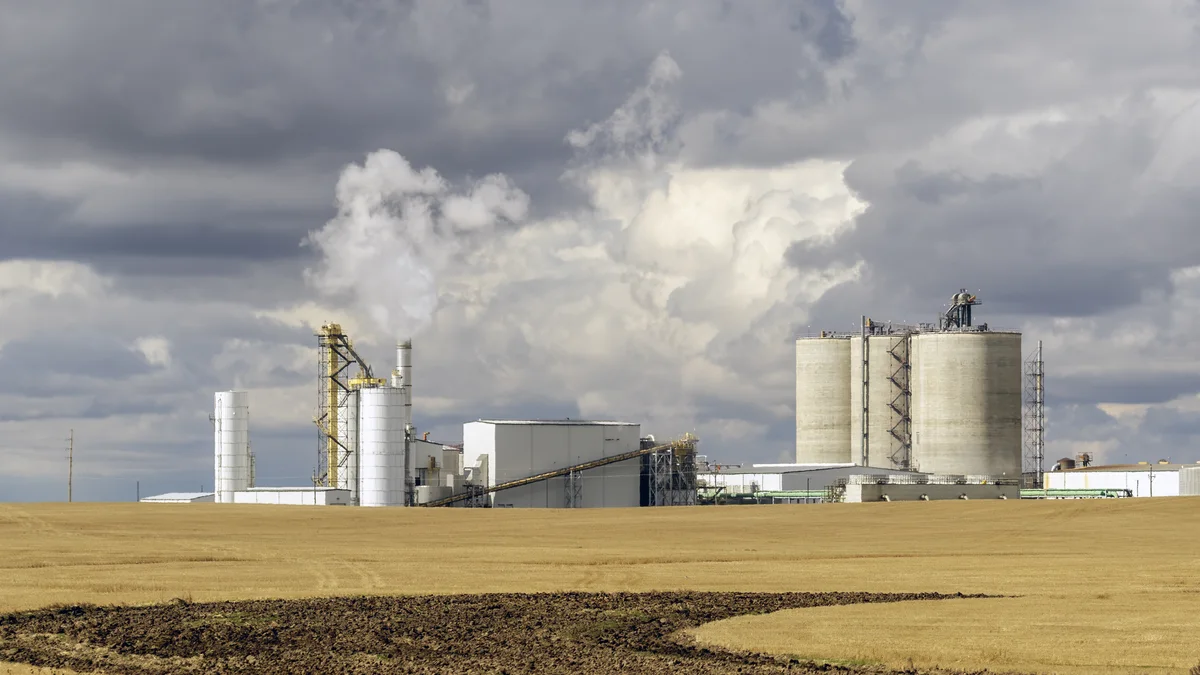
INCE NEWS read the Nov. 19 UNFCCC presidency draft, its consultation page, UNEP’s 2026 Emissions Gap Report and overshoot speech, Climate Action Tracker’s COP31 update and AP’s reporting from Antalya. The presidency text is explicitly an unedited negotiating draft and does not represent consensus or a final COP31 decision. UNEP’s 320-gigatonne removal requirement describes its lowest-possible overshoot pathway, not a binding national allocation or forecast of delivered capacity. AP’s $22 trillion per 0.1°C estimate is a scientist’s scenario calculation and is labelled as such. A bounded current-event image search found COP31 and commercial-agency photographs without a reusable licence. The article uses dated context photographs of a direct-air-capture demonstration and a point-source carbon-capture plant; neither depicts COP31.
The draft moves overshoot into the centre of negotiations
A COP31 presidency draft published Thursday expressed “deep concern” that peak global warming is projected to exceed 1.5°C above pre-industrial levels. It also recognized that every increment and year of overshoot increases loss, damage and the risk of irreversible changes.
That wording is politically significant, but it is not a final conference outcome. The document is an unedited negotiating text prepared through presidency consultations; governments can amend or remove language before consensus is reached.
UNEP’s lowest-overshoot pathway needs cuts and removals together
UNEP’s 2026 Emissions Gap Report says the chance of holding warming below 1.5°C with no or limited overshoot has gone. Its lowest-possible pathway peaks around 1.7°C to 1.8°C near mid-century and returns to 1.5°C or below by 2100 with roughly a 50% probability.
Reaching that pathway would require greenhouse-gas emissions to fall 18% by 2030, 45% by 2035 and 69% by 2040 from 2025 levels. Even after those cuts, UNEP estimates about 320 gigatonnes of carbon dioxide must be removed and permanently stored during this century—roughly eight years of 2024 global CO2 emissions.
Removal cannot substitute for stopping new emissions
Carbon dioxide removal includes biological approaches such as restoring forests and technological methods such as direct air capture with permanent geological storage. Capturing carbon from a factory exhaust prevents some new emissions; it becomes removal only when carbon originating in the atmosphere is durably stored.
Current removal capacity is tiny compared with the scale in UNEP’s pathway. AP reported that direct-air-capture facilities remove in a year roughly what fossil-fuel plants emit in about half an hour. Land-based methods face limits from fire, drought, competing land uses and the possibility that stored carbon returns to the atmosphere.
The cost estimate shows the size of the policy gap
Berkeley Earth scientist Zeke Hausfather calculated that lowering global temperature by 0.1°C through removal could cost about $22 trillion. Returning from a 0.2°C to 0.3°C overshoot could therefore cost $44 trillion to $66 trillion by 2100 under his assumptions. These are scenario estimates, not an agreed COP31 bill.
The comparison explains why delay is expensive. UNEP says current policies point to about 2.8°C of warming this century, while full implementation of national pledges would limit warming to about 2.6°C. Removal is now part of a credible return pathway, but faster emissions cuts determine how much removal is needed and whether the task remains physically and financially possible.
Sources
7 references
- UNFCCCDraft text prepared under COP31 presidency consultations on the cover decisionPrimary unedited negotiating text; not a final decision. · 2026-11-19
- UN Environment ProgrammeEmissions Gap Report 2026: The Point of ReturnPrimary assessment of overshoot, emissions cuts and carbon-removal needs. · 2026-10-21
- UN Environment ProgrammeIn climate overshoot, negative has become a positivePrimary explanation of the 320-gigatonne removal figure and its limits. · 2026-11-19
- Climate Action TrackerWithout rapid action, the world is heading to irrecoverable overshootIndependent projection of warming under current national targets. · 2026-11-12
- Associated PressWarming has gotten so out of hand, nations call for sucking carbon out of air somehowIndependent reporting from COP31 and expert cost and capacity estimates. · 2026-11-19
- Wikimedia CommonsClimeworks-AnlageLead-photo provenance and CC BY-SA 4.0 terms. · 2015-06-18
- Wikimedia CommonsRed Trail Energy ethanol CO2 capture plant Richardton ND1Inline-photo provenance and CC BY-SA 4.0 terms. · 2018-09-25








