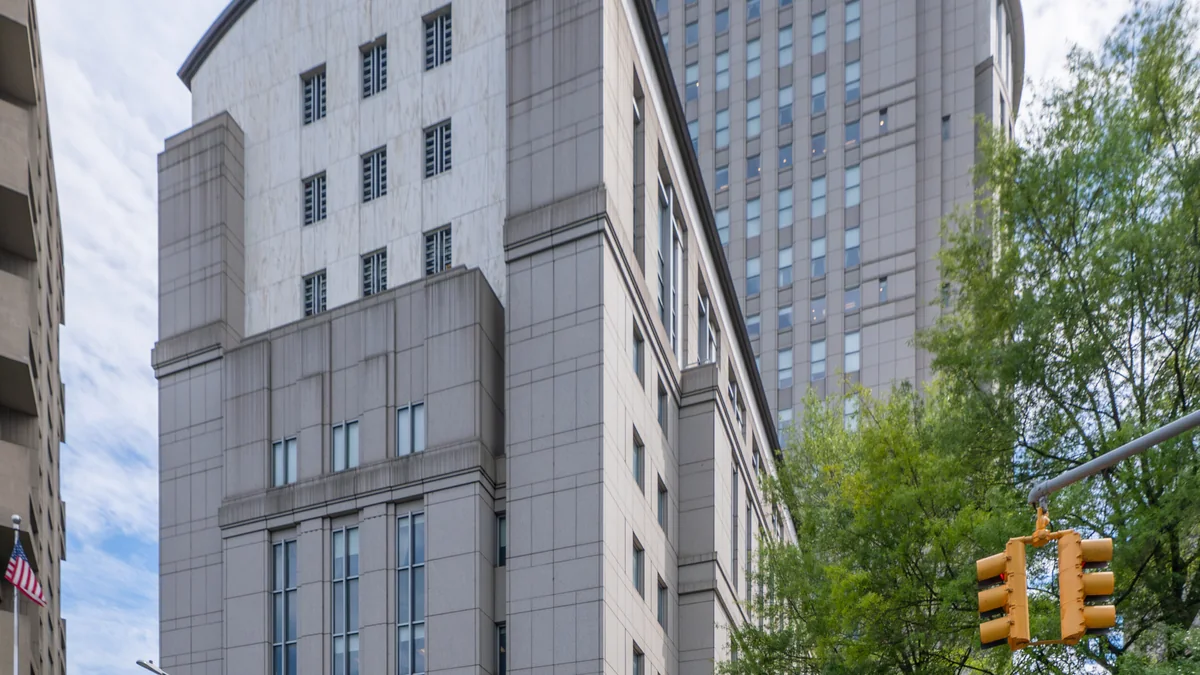
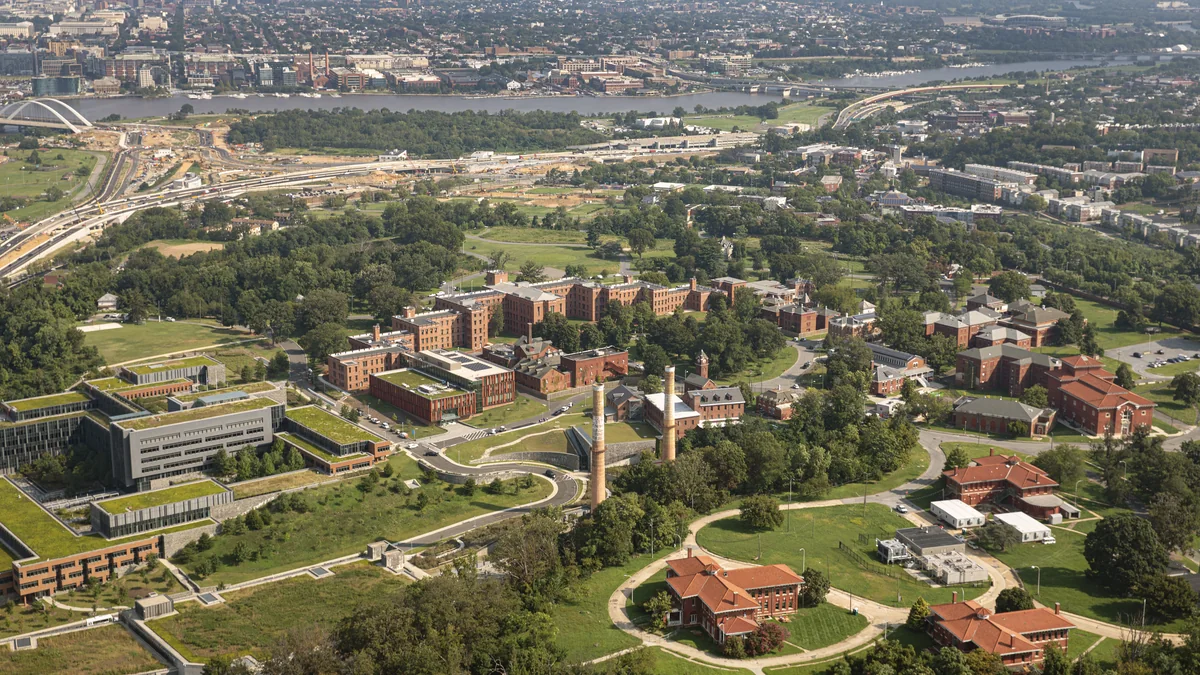
INCE NEWS read Judge Jennifer L. Rochon’s November 20 opinion and order, then compared it with Associated Press reporting and the public dockets maintained by Democracy Docket for both the New York and parallel Washington cases. The court denied a preliminary injunction for lack of imminent irreparable harm after the election; it did not rule that the advertisements or their funding were lawful, and it said the claims were not moot. The separate DNC case remained active. Actual-event and same-day press photographs were agency images without established reuse permission. Two dated archive-context photographs are used instead: the Southern District of New York courthouse under CC BY 4.0 and an aerial DHS headquarters photograph in the U.S. public domain. Neither depicts the November 20 ruling or the advertisements.
The temporary election-period block does not become a long-term order
A federal judge in New York has refused to extend an election-period ban on taxpayer-funded advertisements that praised President Donald Trump and criticized Democrats, finding that the challengers did not show imminent and irreparable harm after the November 3 midterms.
U.S. District Judge Jennifer L. Rochon denied a preliminary injunction on Friday. The earlier temporary restraining orders had required the administration to remove three advertisements from government websites and social media and to direct authorized third parties not to air them.
The new ruling ends that longer-term request in this case. It does not itself order the advertisements back on air, and a separate case in Washington remains capable of producing its own restrictions.
The judge leaves the legality question unanswered
Rochon found that the plaintiffs had standing and that their claims were not moot because similar disputes could recur too quickly for full judicial review. She nevertheless said they had not made the strong showing of immediate harm required for the extraordinary remedy of a preliminary injunction.
The distinction is decisive. A court can refuse emergency relief because the threat is no longer imminent without deciding whether the underlying conduct was lawful. The opinion does not approve the use of public funds for the advertisements or reject the challengers’ constitutional and statutory arguments.
The plaintiffs include the watchdog group Common Cause, a service workers’ union and political committee, and an Alabama state legislative candidate. They said the campaign used government resources to influence voters; the administration defended the spots as public-service messaging.
The campaign mixed government funding with electoral language
The disputed television and social-media spots were financed at least partly through a $20 million Department of Homeland Security contract, according to AP. Some promoted tax cuts and law-enforcement policies, while one reused campaign imagery of Trump warning of a “final battle.”
Before the election, Rochon concluded that the timing and content justified short-term restraints. The court also expanded the order after some material appeared through MAGA Inc. and on official government channels.
Those temporary orders were designed for a rapidly approaching election. Once voting ended, the plaintiffs’ evidence of future injury depended on what the administration might do in later races, which the judge regarded as too uncertain for a continuing injunction.
A parallel Washington case keeps the broader dispute alive
The Democratic National Committee brought a separate challenge in Washington, D.C., where another judge had issued temporary relief and held a hearing on a preliminary injunction. The parties filed a joint status report on November 20, according to the public docket.
That parallel case means the New York ruling does not create a nationwide resolution. Different plaintiffs, factual records and requested remedies can produce a separate order even when the advertising campaign overlaps.
The immediate consequence is narrow but material: the Common Cause plaintiffs did not secure a long-term block in New York. Whether the advertisements may resume, and whether their financing violated federal law, depends on the Washington case and later merits proceedings rather than Friday’s decision alone.
Sources
6 references
- U.S. District Court for the Southern District of New York / JustiaCommon Cause et al. v. Department of Homeland Security et al., Document 118Primary opinion and order denying the preliminary injunction. · 2026-11-20
- Associated PressJudge declines long-term ban on Trump's taxpayer-funded ads that aired during the midterm electionsIndependent reporting on the decision and the parallel litigation. · 2026-11-20
- Democracy DocketTrump Administration Taxpayer Funded Political Ads Challenge (Common Cause)Case timeline and linked filings for the New York action. · 2026-11-20
- Democracy DocketTrump Administration Taxpayer Funded Political Ads Challenge (DNC)Separate case timeline showing the Washington action remained active. · 2026-11-20
- Wikimedia CommonsDaniel Patrick Moynihan United States Courthouse (55314001073).jpgLead-photo provenance and CC BY 4.0 licence. · 2026-05-26
- Wikimedia Commons / U.S. Customs and Border Protection210908-H-NI589-089.jpgInline-photo provenance and U.S. government public-domain status. · 2021-09-08








