
INCE NEWS compared Reuters and Associated Press accounts with Alaska Public Media’s report on the Justice Department filing and Alaska’s public election-results guidance. The completed development is the federal government’s request to have its appeal treated as moot and dismissed; the Ninth Circuit’s procedural disposition is a separate step. Claims that the namesake candidacy confused voters were allegations in the Justice Department’s lawsuit, not findings, and Alaska’s Republican-led state government opposed the case. A bounded search found campaign and election-night photographs without clear republication rights; the lead is a dated 2022 congressional-office portrait in the U.S. public domain, and the inline image is a 2010 CC BY 2.0 photograph of the Alaska State Capitol. Neither depicts the 2026 filing or vote count.
A federal challenge ends after the vote is decided
The U.S. Justice Department has moved to end its attempt to block certification of Alaska’s Senate election after Democrat Mary Peltola won an outright majority, removing a federal challenge that had threatened to delay the state’s result.
In a filing on Thursday, government lawyers asked the Ninth U.S. Circuit Court of Appeals to treat the dispute as moot, vacate the lower court’s dismissal and send the case back for dismissal on that procedural ground. The request means the department no longer seeks an order stopping certification.
Peltola’s margin exceeded the votes received by a second candidate named Dan Sullivan, eliminating the mathematical premise for investigating whether ballots intended for Republican incumbent Sen. Dan S. Sullivan had gone to the namesake candidate.
The lawsuit alleged confusion without a way to inspect secret ballots
The Justice Department filed the case before the November 3 election at President Donald Trump’s direction. It argued that the presence of Daniel J. Sullivan Jr., a retired schoolteacher running without a party label, could confuse voters looking for the incumbent.
Federal lawyers wanted Alaska to delay certification if the race was close enough for the namesake candidate’s votes to change the outcome. The administration did not identify a method for determining voter intent while preserving ballot secrecy.
Those claims remained allegations. The Alaska Supreme Court had allowed the second Sullivan to remain on the ballot, and a federal judge dismissed the later Justice Department case before Election Day.
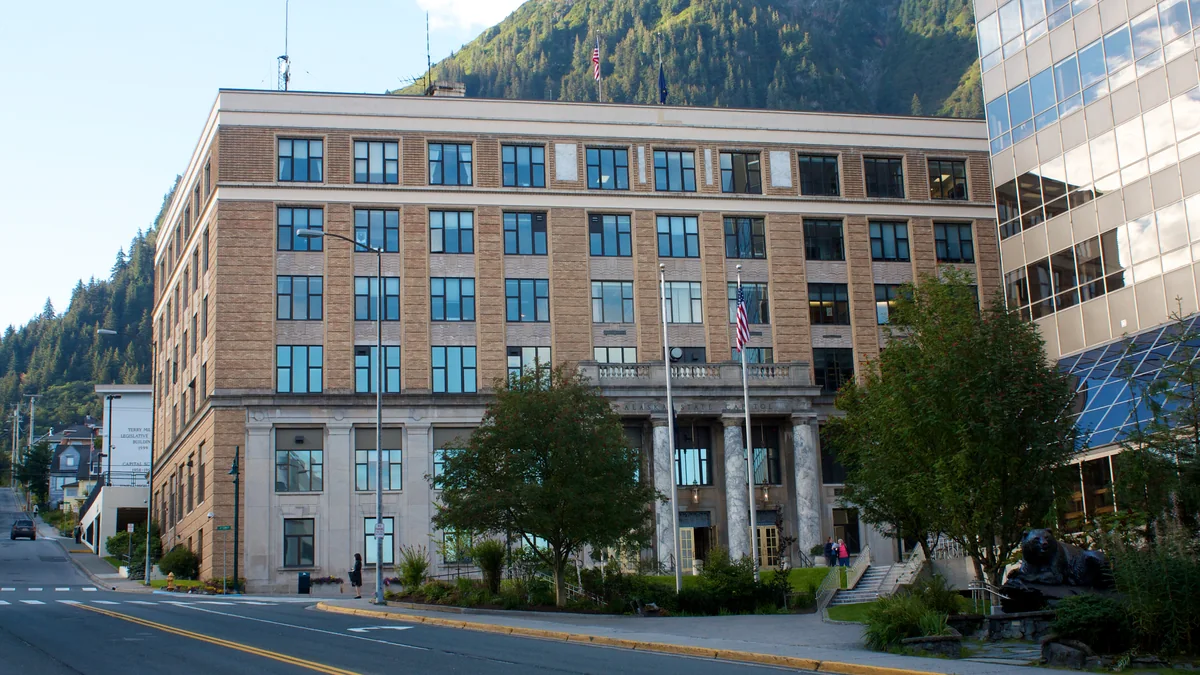
Alaska’s own government opposed Washington’s intervention
Alaska’s Republican-led state government argued that the federal lawsuit lacked a legal basis and asked the court to dismiss it. Election administration is primarily a state responsibility, and Alaska officials said the requested remedy was incompatible with voters’ right to a secret ballot.
That opposition made the case unusual: the federal administration was trying to halt a certification process that the state government responsible for the election defended. Peltola’s campaign and Democratic groups also challenged the suit.
The Justice Department’s new filing does not concede that the original claims were wrong. It asks the appellate court to erase the lower-court ruling because the election result made the dispute irrelevant.
Certification can proceed while the procedural order remains
Peltola’s outright majority means Alaska does not need a ranked-choice redistribution to identify the winner. The Justice Department acknowledged that there is no longer a practical way for the namesake votes to alter the result.
The Ninth Circuit still controls how it closes the appeal, including whether it vacates the trial court’s earlier dismissal. That procedural choice could affect whether the lower-court reasoning remains available as precedent, but it no longer changes who won the race.
The public consequence is immediate: the federal government has withdrawn the obstacle it sought to place between the counted vote and certification. The court’s final housekeeping order remains pending, while Alaska can complete its election process.
Sources
6 references
- ReutersUS Justice Department drops appeal in Alaska Senate suitIndependent legal reporting on the Justice Department filing and the election result. · 2026-11-20
- Associated PressTrump administration moves to have lawsuit dismissed in challenge to Alaska's US Senate raceIndependent reporting on the filing, the ballot dispute and responses from the parties. · 2026-11-20
- Alaska Public Media / Alaska BeaconDOJ abandons lawsuit that sought to pause certification of Alaska’s US Senate electionRegional reporting quoting the government’s mootness filing. · 2026-11-20
- Alaska Division of ElectionsElection results and ranked-choice voting methodPrimary state source for election-result procedures and ranked-choice tabulation. · 2026-11-22
- Wikimedia Commons / U.S. House of RepresentativesRep. Mary Peltola headshot.jpgLead-photo provenance and U.S. federal public-domain status. · 2022-01-01
- Wikimedia CommonsAlaska State Capitol Building.jpgInline-photo provenance and CC BY 2.0 licence. · 2010-08-31








