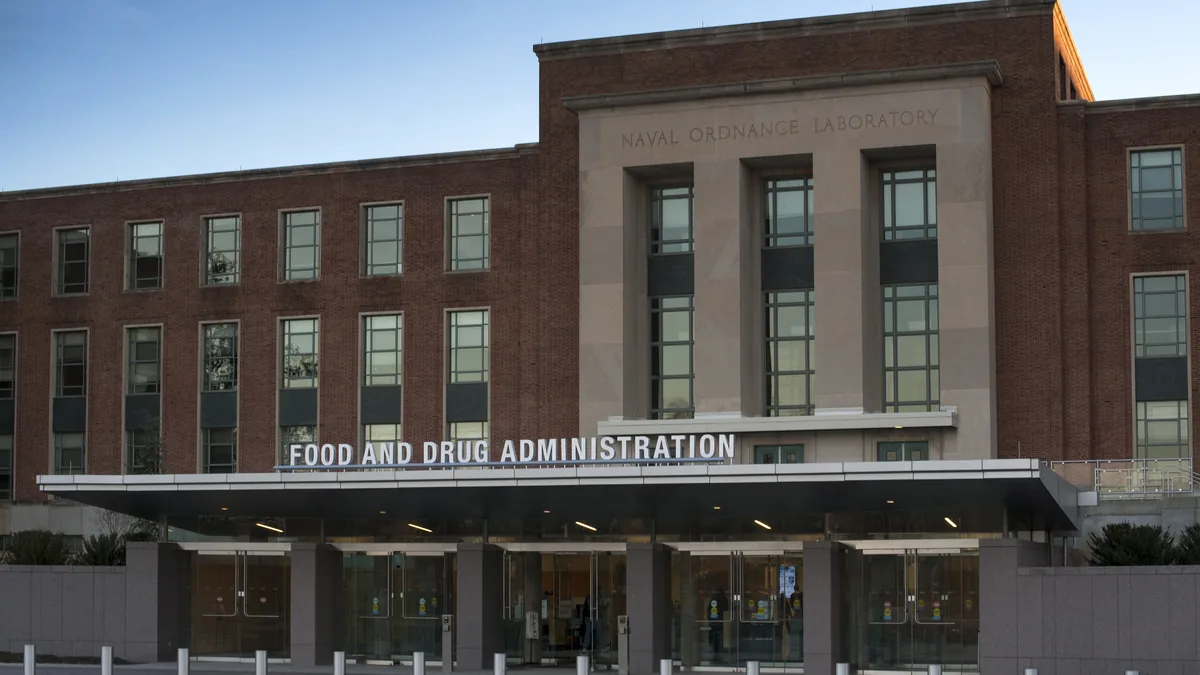
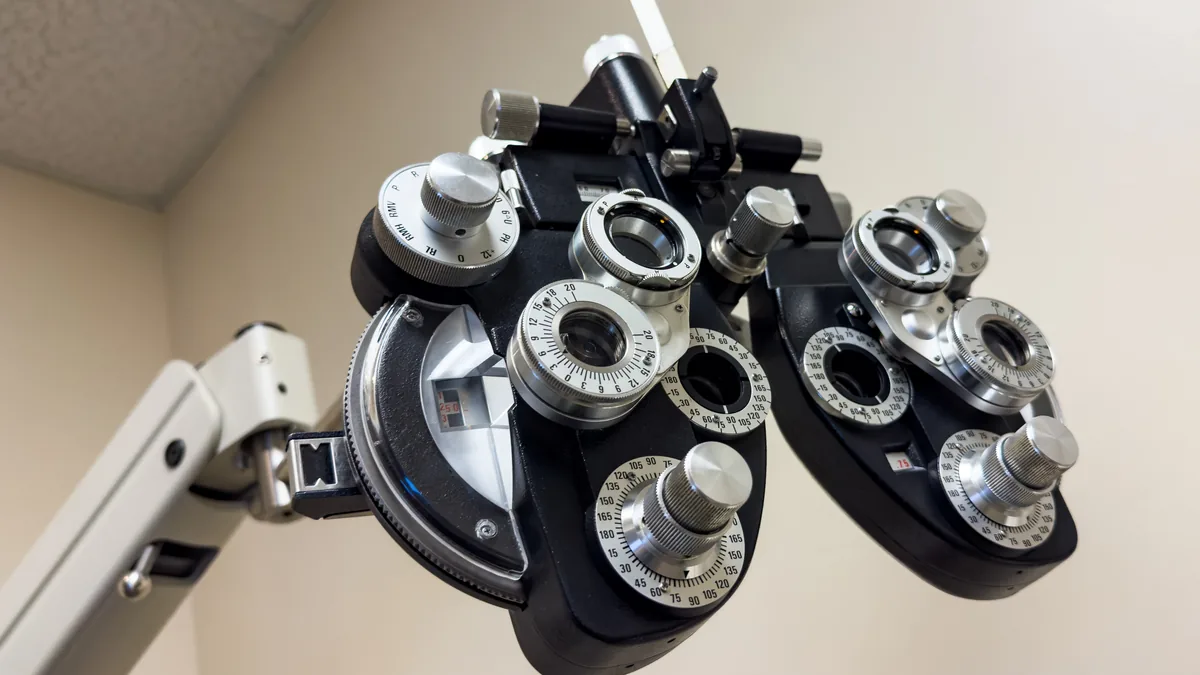
The labeling order, affected drug class, patient guidance and numerical findings were checked against the FDA's Nov. 9 Drug Safety Communication. Associated Press and Reuters independently reported the action; Reuters also carried responses from Eli Lilly and Novo Nordisk. The FDA described a potential increased risk, not proof that GLP-1 medicines cause NAION. Trial events were rare, reporting data were difficult to interpret, animal data did not identify a mechanism, and the Sentinel comparison with SGLT-2 inhibitors was not statistically significant. A bounded current-event image search found only commercially licensed AP and Reuters photographs of medicine packages and FDA signage. The images used are dated archive/context photographs: FDA Building 1 on March 12, 2015, a U.S. government public-domain work, and eye-exam equipment on Dec. 8, 2022 by Tony Webster under CC BY 2.0. They do not depict a patient affected by NAION or the 2026 decision. Full originals are retained in source. Derivatives were center-cropped to 1,200 × 675 and converted to WebP at quality 82; no retouching.
The warning covers the whole drug class
The U.S. Food and Drug Administration is requiring every approved medicine with GLP-1 receptor-agonist activity to add a warning about a potential increased risk of non-arteritic anterior ischemic optic neuropathy, or NAION. The rare condition reduces blood flow to the front of the optic nerve and can cause sudden, painless loss of sight in one eye, sometimes permanently.
The order reaches widely used diabetes and weight-management brands including Ozempic, Wegovy, Mounjaro and Zepbound. GLP-1 medicines mimic a natural hormone that helps control blood sugar and appetite; individual products also have approved uses involving cardiovascular, kidney, sleep-apnoea and liver-disease risks. The new wording therefore affects a large and varied patient population.
Rare trial events prompted a class-wide response
Because individual studies recorded few or no cases, FDA scientists pooled 126 randomised controlled trials involving 134,253 patients and 288,879 person-years of exposure. They identified 15 probable NAION events: 10 among GLP-1 users and five among people receiving a comparator.
That produced incidence rates of 6.4 cases per 100,000 person-years for GLP-1 users and 3.8 for comparator patients. The FDA said the pattern supported a potential risk, but the small number of events makes precise estimates difficult.
A separate analysis of real-world records produced a mixed result. GLP-1 users did not have a statistically significant increase compared with people starting SGLT-2 inhibitors, but the risk was higher compared with DPP-4 inhibitors. Animal studies did not reveal a biological mechanism. Reports to the agency were also hard to interpret because diabetes, high blood pressure, sleep apnoea and kidney disease can themselves raise NAION risk.
Patients are told to act on sudden visual changes
The FDA advises patients to contact a health professional immediately if they develop sudden painless sight loss in one eye, blind spots, tunnel vision, distorted colours or reduced central sharpness. Clinicians should arrange prompt ophthalmology assessment when NAION is suspected and consider stopping the medicine after an event unless the treatment benefits clearly outweigh the risk.
The communication does not tell patients to stop treatment pre-emptively. Novo Nordisk said available data do not establish a cause-and-effect relationship, while Eli Lilly said it was evaluating the class-wide update. Those responses do not alter the FDA's legal requirement to add the warning.
The practical effect will depend on the final label language and how prescribers discuss a very rare but serious outcome alongside established benefits. The regulator's evidence review supports heightened vigilance; it does not quantify an individual patient's risk or prove that the drugs caused each reported case.
Sources
5 references
- U.S. Food and Drug AdministrationFDA Requires Safety Labeling Changes for GLP-1 RAs Due to Potential Increased Risk of Rare But Serious Eye ConditionPrimary safety communication with the labeling action, pooled-trial results, Sentinel comparisons and guidance. · 2026-11-09
- Associated PressFDA adds rare vision-loss warning to popular GLP-1 drugsIndependent reporting on the decision and its implications for widely used medicines. · 2026-11-10
- ReutersUS FDA orders new eye risk warnings for Ozempic, ZepboundIndependent reporting with responses from major manufacturers and international regulatory context. · 2026-11-09
- Wikimedia CommonsFDA Entrance (16792957331).jpgArchive context photograph by Michael J. Ermarth for the FDA, a U.S. government public-domain work. · 2015-03-12
- Wikimedia CommonsEye Exam - Eye Doctor (52953506780).jpgArchive context photograph by Tony Webster, licensed CC BY 2.0. · 2022-12-08