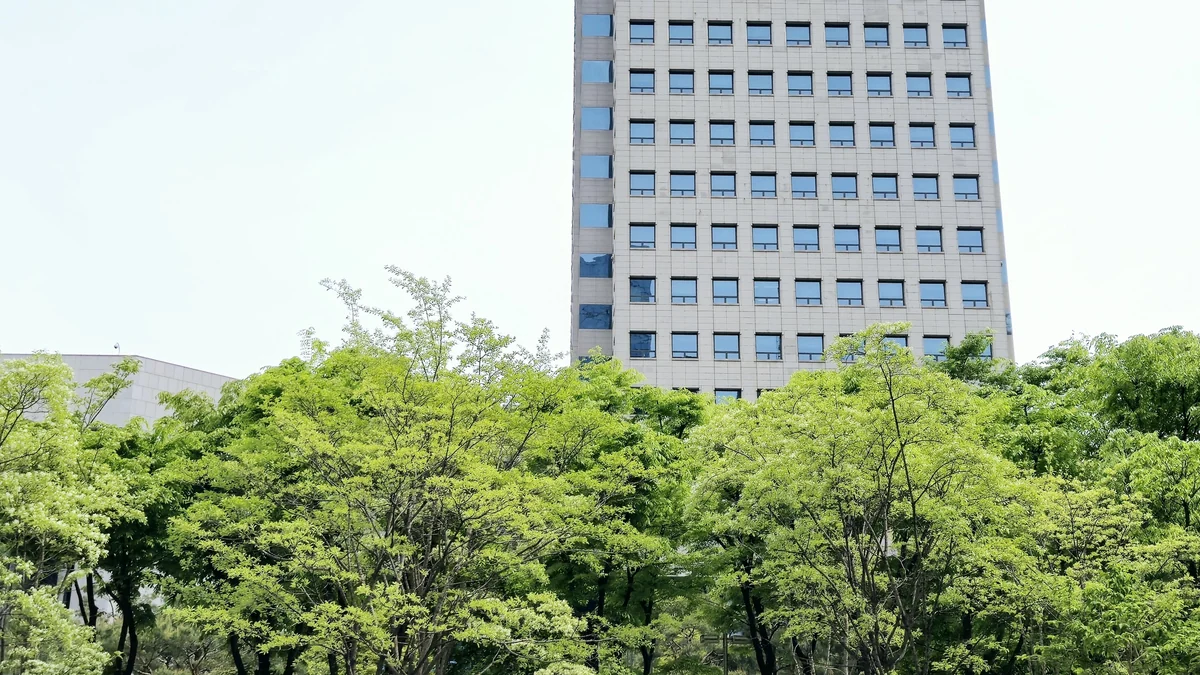
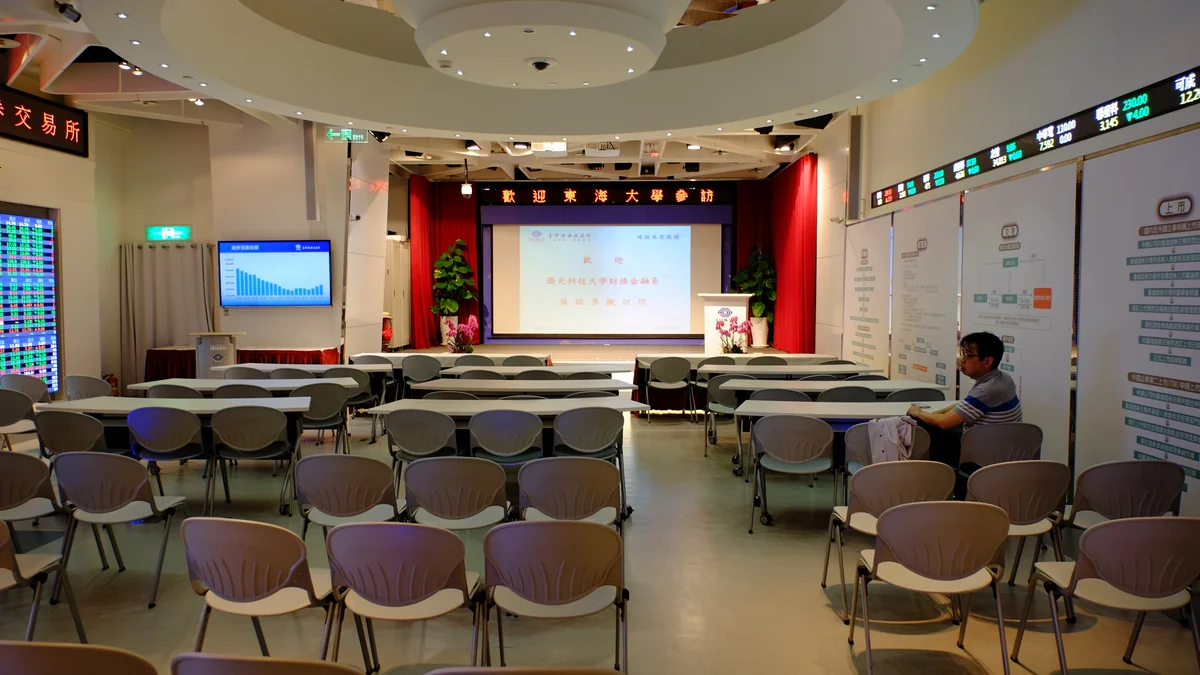
Reuters' Nov. 11 analysis of LSEG data was reviewed for the seven-market aggregate, country flows, index moves and attributed explanations. A Bank of Korea-linked regional securities report independently supports the direction and scale of October selling in South Korean equities, but uses a different cross-border securities measure and reports $19.31 billion of equity outflows rather than Reuters' $14.59 billion net foreign equity sale; the figures are therefore not treated as interchangeable. MSCI's official index page was checked for the benchmark's scope. The latest flow estimates are backward-looking and may be revised. They measure reported portfolio transactions, not permanent capital flight or a forecast of future returns. Reuters' event image is commercially licensed. A bounded actual-event search did not establish reusable rights for October trading-floor photography, so two dated exchange context photographs are used: the Korea Exchange's Seoul office in April 2025 and the Taiwan Stock Exchange press room in April 2016. Neither depicts October 2026 trading. Originals are retained; derivatives were centre-cropped to 16:9, resized to 1,200 × 675 and converted to WebP quality 86 without retouching.
Taiwan and South Korea accounted for most of the selling
Foreign investors sold a net $49.77 billion of equities across seven Asian markets in October, according to LSEG data analysed by Reuters. It was the largest combined monthly withdrawal since June and was concentrated in markets with large semiconductor and artificial-intelligence supply chains.
Taiwan recorded $30.68 billion of net selling, the largest monthly outflow in LSEG records going back to January 2008. South Korea followed with $14.59 billion. Those two markets together accounted for more than nine-tenths of the seven-market total. November selling had reached a further $22.6 billion at the time of the analysis, including $19.76 billion from Taiwan and $8.32 billion from South Korea, partly offset by inflows elsewhere.
The retreat followed a sharp regional market decline
The MSCI Asia Pacific ex-Japan index fell 6.91% in October, compared with a 1.69% decline for the MSCI All Country World Index, Reuters reported. The comparison shows the regional sell-off was unusually severe, but it does not by itself establish why investors traded.
Analysts cited by Reuters linked the outflows to reduced appetite for crowded AI-related positions, questions about whether large technology companies can turn heavy data-centre spending into profits, and concern about possible US regulation of AI and data centres. A US 10-year Treasury yield near 5.3% also raised the relative appeal of dollar bonds. These are market interpretations, not verified motives for every transaction.
The regional picture was not uniform
India saw $3.6 billion of net foreign equity selling in October, then $5.68 billion of inflows in November through the point covered by Reuters. Indonesia posted $938 million of October outflows and Thailand $199 million, while Vietnam received $122 million and the Philippines $109 million.
The reversal in India and the small inflows in two Southeast Asian markets matter because the headline total can obscure different local conditions. Currency moves, domestic earnings, market valuations and country-specific policy can redirect portfolios even when investors are reducing regional exposure overall.
Flow data are a stress signal, not a verdict
A net outflow records purchases minus sales by the investor group and market covered by a data set. It does not mean the same amount physically left a country, that all foreign investors sold, or that the capital cannot return. Different reporting systems can also produce different totals: a separate Bank of Korea-linked measure put October foreign equity outflows from South Korea at $19.31 billion, wider than the LSEG net-sale figure used in the seven-market comparison.
The concentration in Taiwan and South Korea nevertheless shows how rapidly sentiment toward AI-linked Asian equities changed during October. Whether that becomes a lasting reallocation will depend on earnings, capital spending, bond yields and November's still-incomplete data rather than one monthly total.
Sources
5 references
- ReutersForeign investors pull out $50 billion from Asian equities in October on AI cash-burn woesIndependent analysis of LSEG portfolio-flow data, regional benchmarks and investor explanations. · 2026-11-11
- The Korea HeraldForeign equity outflows from South Korea widen in OctoberRegional reporting on Bank of Korea-linked cross-border securities data; useful for direction, with a different scope from LSEG's net foreign equity measure. · 2026-11-12
- MSCIMSCI AC Asia Pacific ex Japan IndexOfficial benchmark page describing the regional equity index referenced in the market comparison. · 2026-11-12
- Wikimedia Commons한국거래소 2025.jpgArchive photograph of the Korea Exchange's Seoul office by Narubaru7, licensed CC BY 4.0. · 2025-04-27
- Wikimedia CommonsTaiwan Stock Exchange Press Conference Room in 1st Floor, Taipei 101 20160422.jpgArchive photograph by 玄史生, dedicated to the public domain under CC0 1.0. · 2016-04-22








