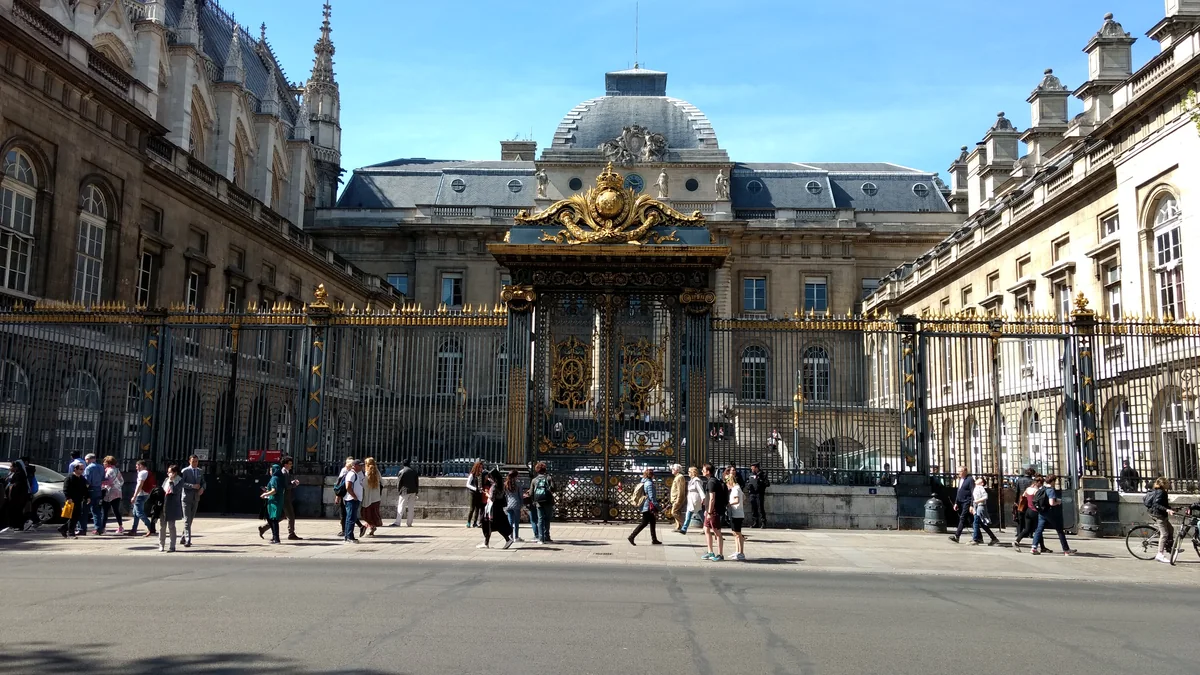
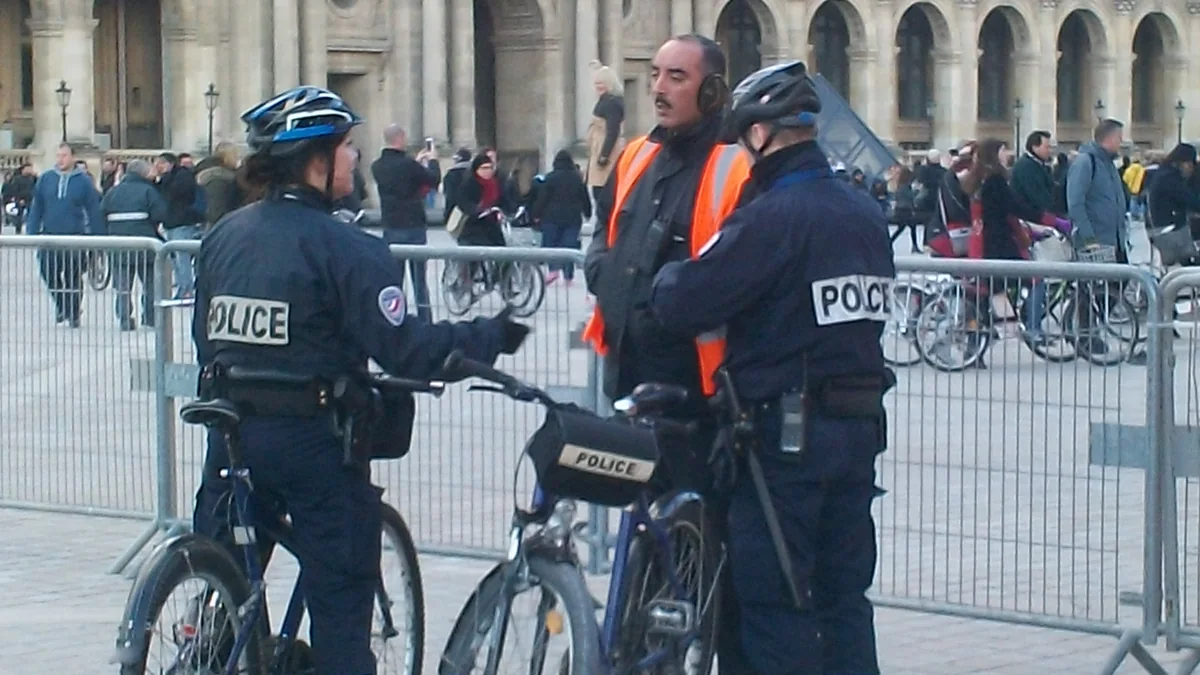
INCE NEWS compared Reuters, Le Monde and The Guardian accounts of the verdict and used The Associated Press as an additional independent check. All agree that three officers were convicted over the 2020 assault on Michel Zecler, that the court recognized a racist aggravating factor and that their official account was contradicted by video. Le Monde provided the detailed sentence structure. The written judgment was not publicly available in an accessible source reviewed for this report, and appeals may alter the outcome. Actual-event courtroom photographs from news agencies required editorial licences, so two clearly dated CC BY-SA 4.0 Paris context photographs are used; neither shows Zecler, the defendants or the trial.
Three convictions and permanent police bans
A Paris criminal court convicted three police officers of assaulting Black music producer Michel Zecler with a racist aggravating factor, then falsifying an official report about the encounter. Each received a five-year sentence, but most of each term was suspended, leaving effective penalties ranging from one year under electronic monitoring to two years in custody.
Aurélien Lapersonne received five years with three suspended, Philippe Tondeux five years with three and a half suspended, and Pierre Plantier five years with four suspended. The court permanently barred all three from police work. Le Monde reported that the bans take effect even if the officers appeal.
Video overturned the officers’ account
The case arose from a November 2020 police intervention at Zecler’s music studio in Paris. Prosecutors said the officers repeatedly punched and struck him with a baton during an assault lasting several minutes. Zecler was left unable to work for 45 days, according to reporting from the trial.
The officers filed a report accusing Zecler of assaulting police and resisting arrest. Surveillance footage from the studio and video recorded by neighbours contradicted that account, showing officers hitting him inside the entrance. The images circulated widely and turned the encounter into a national test of accountability for police violence.
The court applied the racist aggravating factor
The court found that Lapersonne used a racist slur during the assault and extended the aggravating circumstance to the other two officers. That finding was central to the verdict because French criminal law allows racism to increase the seriousness of an offence when discriminatory intent accompanies the violence.
The ruling does not establish that every officer shared the same words or motive. It records the court’s conclusion that the violence carried a racist dimension and that the three officers participated in the assault and false reporting. The defendants retain the right to appeal.
A consequential ruling with legal limits
Zecler’s lawyer described the decision as historic and said it could shape how later courts handle racist police violence. The judgment may influence future arguments, but a trial-court ruling is not a binding nationwide precedent and any appeal could change the convictions or penalties.
Its immediate consequence is concrete: three officers were convicted, given custodial terms and permanently excluded from policing after video evidence exposed a false account. The wider impact will depend on appeals and whether prosecutors and courts apply similar reasoning in later cases.
Sources
6 references
- ReutersFrench policemen convicted of racist assault on music producerIndependent reporting on the convictions, racist intent, false report and penalties. · 2026-11-21
- Le MondePolice beating of Black music producer: Court recognizes racist nature of violence, sentences officers to prisonDetailed reporting from court on the sentence structure, racist aggravating factor and permanent bans. · 2026-11-21
- The GuardianFrench police officers found guilty of racist assault on Black music producerIndependent account of the filmed assault, injuries and false official report. · 2026-11-20
- Associated PressFrench police officers convicted in racist assault of Black music producerAdditional independent confirmation of the convictions and custodial terms. · 2026-11-21
- Wikimedia CommonsPalais de Justice.001 - Paris.jpgLead-photo provenance and CC BY-SA 4.0 licence. · 2017-04-12
- Wikimedia CommonsFrench Police, Paris.jpgInline-photo provenance and CC BY-SA 4.0 licence. · 2014-05-01








