
INCE NEWS checked Reuters and Associated Press market reporting against the IMF Global Markets Monitor and published closing index data. The roughly $9 trillion decline in global equity value is a Reuters estimate measured from an August peak, not a realised loss for every investor. Market moves can have several causes; concerns about AI valuations and higher interest rates were prominent explanations cited by market participants, not a single proven cause. Actual-event photographs available from publishers and agencies did not carry verified reuse permission. Dated Creative Commons context photographs of Nasdaq displays and a Tokyo stock board are used instead and do not show the November 2026 sell-off.
Technology losses turn into a broader retreat
A sell-off centred on artificial-intelligence shares accelerated across major markets on Friday, pushing the technology-heavy Nasdaq Composite down 5.3% and leaving it below its level at the start of the year. The S&P 500 lost 3.7%, entering a correction after falling more than 10% from its October 6 record.
The move was not confined to Wall Street. Japan's Nikkei 225 fell 5.1% on Friday, South Korea's Kospi also dropped more than 5%, and Taiwan's market lost about 17% over the week. European shares declined as investors cut exposure to companies tied to semiconductors, data centres and other parts of the AI investment cycle.
Valuations and borrowing costs collide
AI-related companies had carried an outsized share of recent equity gains, leaving broad indexes sensitive to doubts about whether rapid spending on computing infrastructure will produce returns that justify high valuations. Semiconductor shares led Friday's decline, while a newly listed AI company also gave back part of its first-day rise.
At the same time, hotter US inflation has increased expectations that interest rates may stay high or rise further. Higher financing costs reduce the present value investors assign to distant profits and raise the cost of funding data centres, power supplies and chip capacity. Those pressures help explain the market's reassessment, though they do not prove a single cause for every price move.
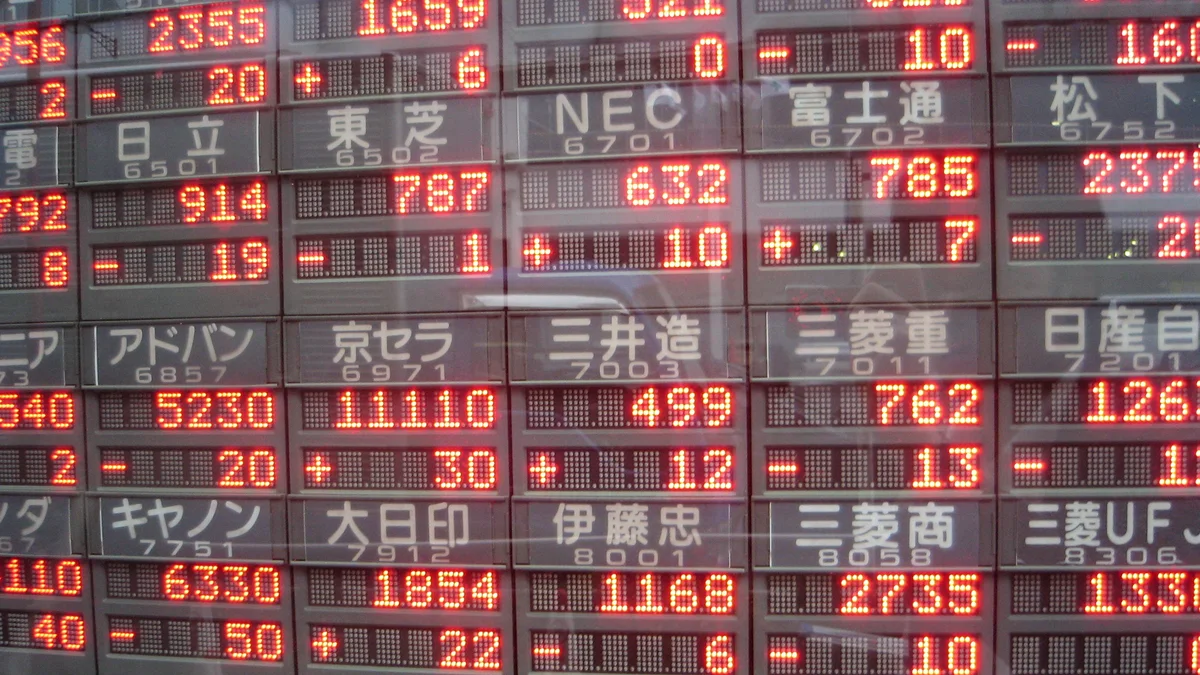
Bonds rally while commodities also weaken
Investors moved toward government debt as stocks fell. The US 10-year Treasury yield dropped below 5% during Friday's session, and German and Japanese government bonds also gained. Bond prices rise when yields fall, so the move signalled demand for assets commonly treated as relatively defensive during market stress.
The defensive pattern was uneven. Gold and copper both declined, suggesting that some investors were raising cash and reducing positions rather than shifting uniformly into traditional havens. The VIX, which reflects the cost of protection against S&P 500 swings, rose sharply and finished near 36.
The economic risk lies in tighter financial conditions
Reuters estimated that nearly $9 trillion had been erased from global equity value since an August peak. That measure describes the change in quoted market capitalisation; it is not a direct tally of cash losses and can reverse as prices change.
A prolonged decline could still affect the wider economy by making new capital more expensive, weakening household wealth and slowing investment in technology infrastructure. For now, the stress is clearest in equities and growth-sensitive commodities. Treasury-market volatility remained below its recent high, leaving an important distinction between a severe stock correction and a system-wide financial crisis.
Sources
6 references
- ReutersThe snowballing selloff in global marketsIndependent reporting on the global equity, bond, currency and commodity moves. · 2026-11-20
- Associated PressS&P 500 sinks 3.7% and Nasdaq composite goes negative for the yearIndependent reporting and US market closing figures. · 2026-11-20
- International Monetary FundGlobal Markets Monitor — November 20, 2026Primary institutional market monitor with cross-asset indicators and stated data timestamp. · 2026-11-20
- SGX SingaporeOther Indices — November 20 closesPublished reference table for major index closing levels. · 2026-11-21
- Wikimedia CommonsNASDAQ stock market display.jpgLead-photo provenance and CC BY 2.0 licence. · 2007-12-06
- Wikimedia CommonsElectronic stock board in Yaesu, Tokyo 2007.jpgInline-photo provenance and CC BY 2.0 licence. · 2007-03-30








