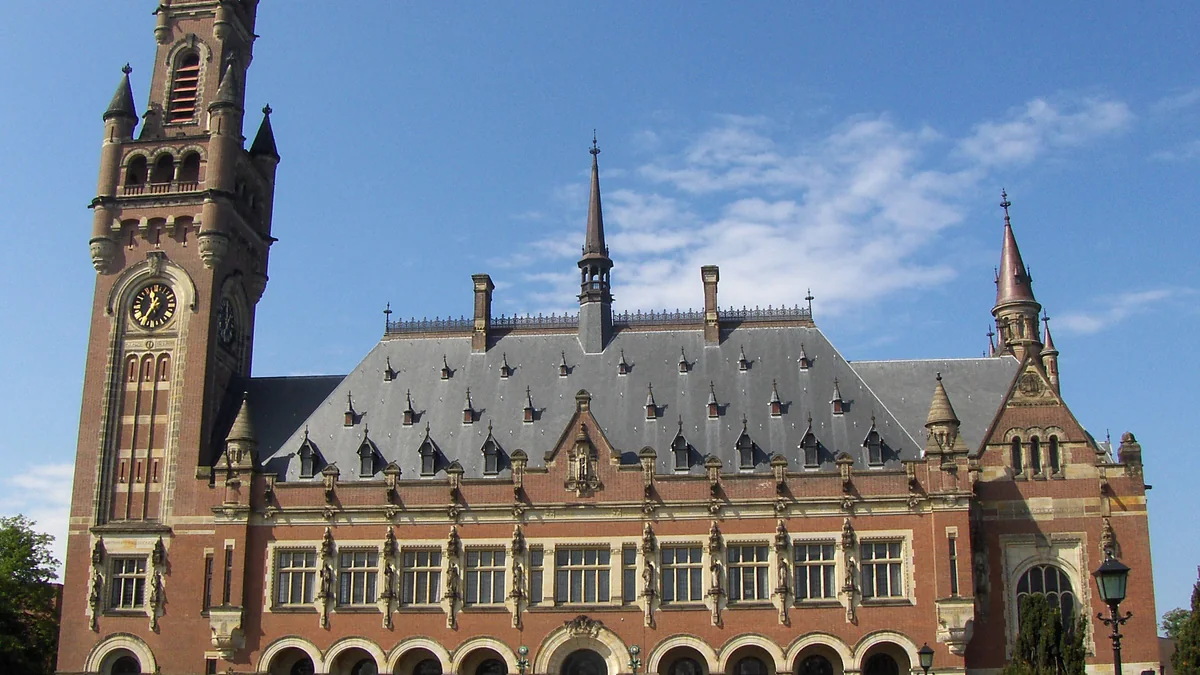
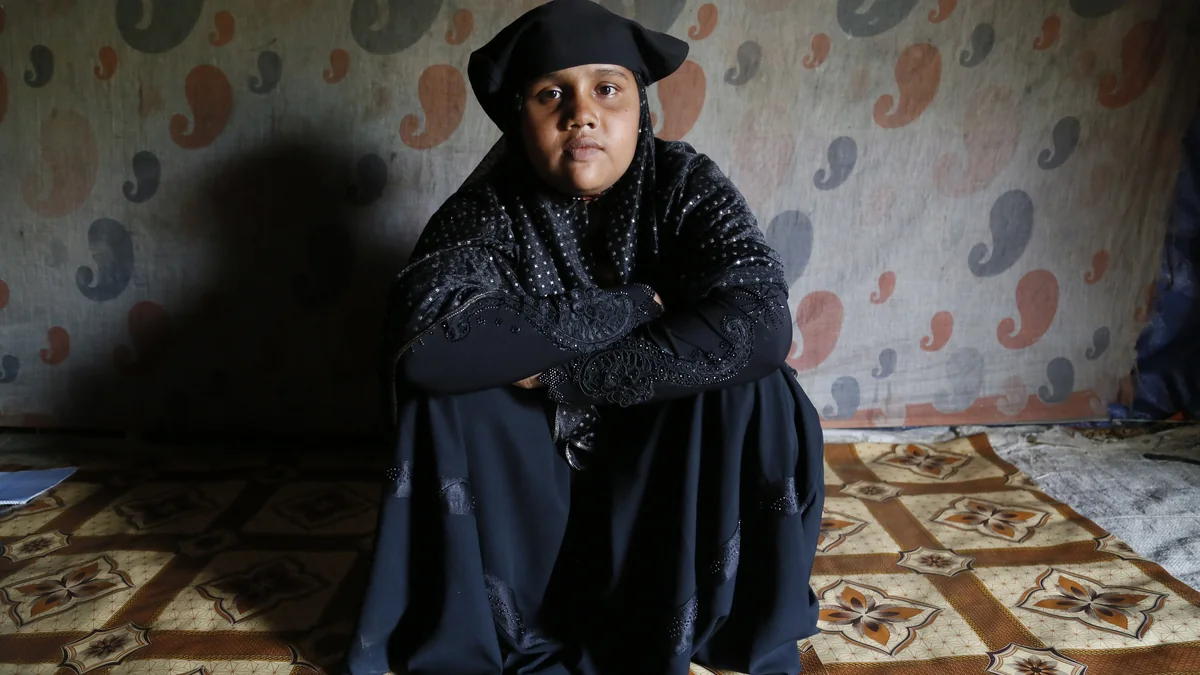
The International Court of Justice Registry’s Nov. 19 press release and the full judgment were read for the findings, vote counts, remedies and two-year reporting requirement. The UN Independent Investigative Mechanism for Myanmar and the UN Secretary-General’s statement were checked for the evidentiary and implementation context. Reuters and AP reporting were read as independent accounts of the judgment and its legal significance. The 9–6 genocide finding is reported separately from the Court’s other votes; rejected or narrower findings are not presented as convictions. The ICJ decides disputes between states and does not itself try individuals. A bounded search found actual Nov. 19 courtroom and refugee-reaction photographs offered through Reuters, AFP and Getty without open reuse grants. The article therefore uses a CC0 2011 photograph of the Peace Palace and a CC BY 2.0 January 2018 portrait of a Rohingya refugee volunteer in Bangladesh; neither depicts the judgment hearing.
A rare finding of state responsibility for genocide
The International Court of Justice ruled Thursday that Myanmar committed genocide against the Rohingya in northern Rakhine State during the military’s 2017 clearance operations. The central finding passed by nine votes to six and is final, binding on the parties and not subject to appeal.
The Court said Myanmar’s security forces killed thousands of civilians, carried out widespread sexual violence, inflicted extreme violence on children and attacked people fleeing toward Bangladesh. Judges concluded that the pattern could be explained only by an intent to destroy a substantial part of the protected Rohingya group, the specific intent required by the Genocide Convention.
The orders extend beyond the declaration
Myanmar must investigate people reasonably suspected of genocide-related acts and, where warranted, prosecute and punish them. The Court also ordered guarantees against repetition, legislation giving full effect to the Convention and measures to preserve evidence.
Restitution must include conditions for the safe, voluntary and dignified return of displaced Rohingya and the reunification of families. Myanmar must also compensate members of the group for damage not repaired through restitution. The amount and method will be settled in a later phase, after Myanmar submits a report within two years.
The judgment distinguishes several legal questions
The panel separately found that Myanmar failed to prevent genocide by people acting alongside its security forces, failed to punish genocide and did not enact the legislation required by the Convention. It also found that Myanmar breached a 2020 provisional order by failing to protect evidence.
The judges did not accept every claim. By fourteen votes to one, they found that Myanmar had not directly and publicly incited private people to commit genocide. Reporting that narrower finding alongside the genocide ruling matters because each obligation under the Convention has its own legal test and vote.
Implementation now depends on Myanmar and sustained pressure
The case was brought by The Gambia in 2019, even though it was not directly affected by the violence. Eleven states later intervened on questions about how the Genocide Convention should be interpreted. Public hearings on the merits ran from Jan. 12 to Jan. 29, 2026.
The ICJ resolves disputes between states; it does not issue arrest warrants or conduct criminal trials of individuals. Its order can shape diplomacy, reparations and other legal proceedings, but the practical effect will depend on compliance and international pressure. More than one million Rohingya remain displaced across the region, most of them in Bangladesh.
Sources
7 references
- International Court of JusticeThe Court delivers its Judgment on the merits — Press Release No. 2026/30Primary Registry summary of the findings, votes, remedies and next phase. · 2026-11-19
- International Court of JusticeJudgment of 19 November 2026Full binding judgment in The Gambia v. Myanmar. · 2026-11-19
- UN Independent Investigative Mechanism for MyanmarICJ — The Gambia v. MyanmarPrimary UN account of the mechanism’s evidence and the Court’s orders. · 2026-11-19
- United Nations Secretary-GeneralStatement on the International Court of Justice judgment in The Gambia v. MyanmarPrimary UN response and implementation context. · 2026-11-19
- ReutersWorld Court finds Myanmar forces killed thousands of RohingyaIndependent reporting from The Hague on the judgment. · 2026-11-19
- Wikimedia CommonsPeace Palace — International Court of JusticeLead-photo provenance and CC0 terms. · 2011-05-10
- Wikimedia CommonsA Rohingya refugee woman in Bangladesh helping protect vulnerable peopleInline-photo provenance and CC BY 2.0 terms. · 2018-01-14








