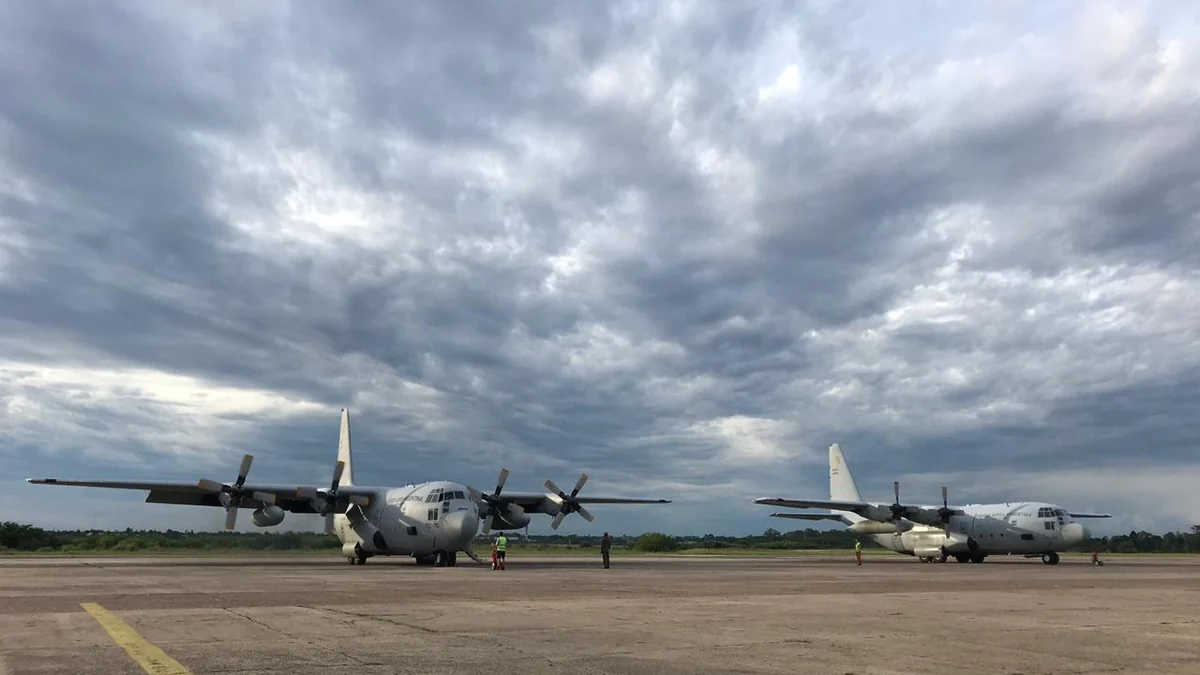
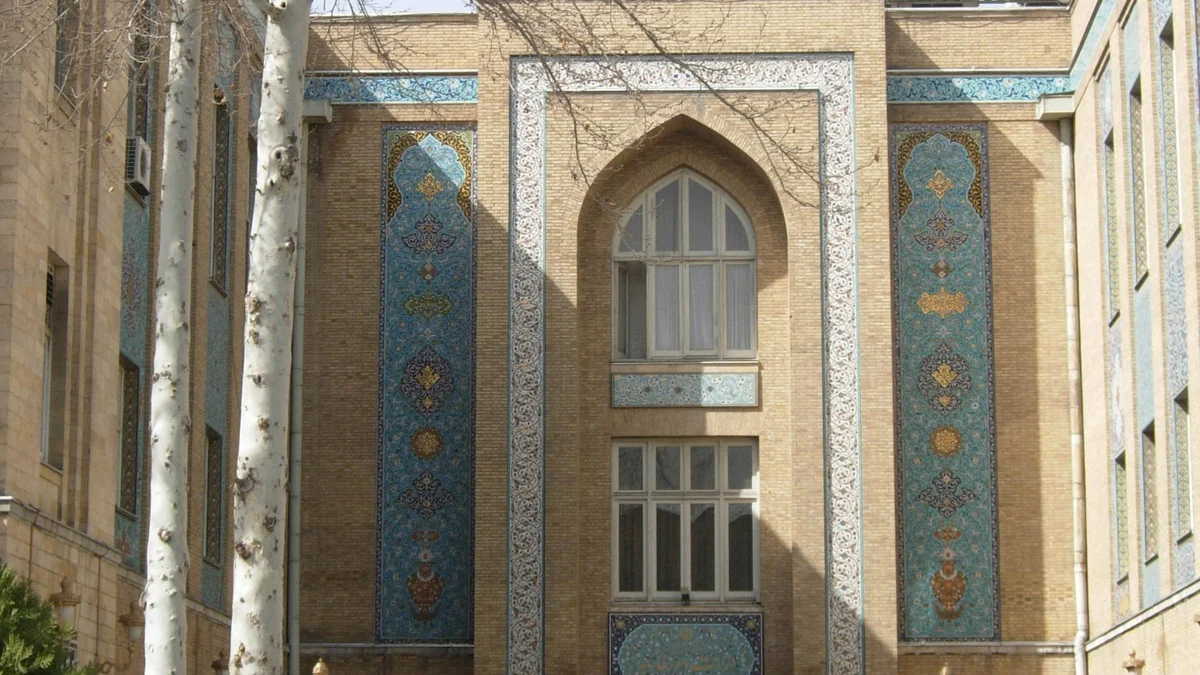
Iran’s Nov. 11 designation was checked against the Foreign Ministry statement as reproduced by Tasnim and Nour News, then cross-checked with Reuters. Argentina’s rejection and its account of the unresolved bombing cases were read directly on the Foreign Ministry website. The March 31 joint resolution and April 6 publication date for Argentina’s IRGC listing were verified in the official legal database. Tehran did not specify operational consequences, and no source reviewed showed that its declaration changes the Argentine services’ status outside Iranian law. Current-event agency photographs lacked reusable rights. The article uses two dated archive/context images: Argentine Air Force C-130 aircraft photographed Jan. 10, 2019, and Iran’s Foreign Ministry building photographed March 4, 2008. Neither depicts the November 2026 exchange. Originals are retained; derivatives were centre-cropped to 16:9, resized to 1,200 × 675 and converted to WebP quality 86 without retouching.
Tehran extends its 2019 countermeasure law to Argentina
Iran’s Foreign Ministry designated Argentina’s navy and air force as “terrorist organizations” on Wednesday, saying it was applying the principle of reciprocity after Buenos Aires listed the Islamic Revolutionary Guard Corps. The Iranian statement did not include Argentina’s army.
Tehran cited a 2019 law adopted after the United States designated the IRGC. The Iranian law provides for reciprocal measures against countries that follow or support that decision, according to the ministry statement. Iran said Argentina would bear responsibility for any consequences but did not explain what practical steps would follow.
Argentina rejects the designation as baseless
Argentina’s Foreign Ministry said the declaration was “completely baseless” and an inadmissible accusation against constitutionally established services. It stressed that the navy and air force operate under democratic civilian authority and national and international law.
The exchange sharpens a diplomatic conflict, but the reviewed statements do not establish an immediate operational change for Argentine personnel outside Iran’s domestic legal framework. Neither government announced a break in relations or a new military measure alongside the declarations.
Buenos Aires tied its IRGC listing to decades-old attacks
Argentina’s government signed its decision to place the IRGC in the public registry for people and entities linked to terrorism and its financing on March 31; the joint resolution was published and entered into force on April 6. The listing enables financial sanctions and operational restrictions inside Argentina.
Buenos Aires says the decision reflects Argentine judicial findings concerning the 1992 bombing of Israel’s embassy and the 1994 bombing of the AMIA Jewish community centre. The attacks killed 29 and 85 people respectively. Argentina has accused Iranian officials and Hezbollah of responsibility; Iran has denied involvement.
The practical consequences remain undefined
Argentina renewed its demand that Iran cooperate with its courts and surrender suspects covered by international arrest notices. Tehran, meanwhile, framed its action as a legal countermeasure rather than presenting new evidence about either Argentine service.
The immediate consequence is a new layer of official hostility between two governments already divided over the bombing investigations and Argentina’s closer alignment with the United States and Israel. Any further effect will depend on whether Iran attaches travel, financial or operational restrictions to the designation.
Sources
6 references
- Iranian Foreign Ministry via Tasnim News AgencyIran designates Argentine Navy, Air Force as terrorist organizationsPrimary ministry statement reproduced by an Iranian news agency; used for Tehran’s stated legal basis and wording. · 2026-11-11
- ReutersIran designates Argentina’s navy and air force as ‘terrorist organizations’Independent reporting on the reciprocal designation, Argentina’s response and diplomatic background. · 2026-11-11
- Argentina Ministry of Foreign AffairsLa Argentina rechaza la declaración de la República Islámica de Irán contra sus Fuerzas ArmadasPrimary Argentine response and statement on the 1992 and 1994 bombing cases. · 2026-11-11
- Argentina official legal databaseJoint Resolution 3/2026 — Islamic Revolutionary Guard CorpsPrimary legal text for Argentina’s decision to add the IRGC to its terrorism-financing registry. · 2026-04-06
- Wikimedia CommonsAviones C-130 argentinos.jpgArchive photograph credited to Argentina.gob.ar, licensed CC BY-SA 4.0. · 2019-01-10
- Wikimedia CommonsForeign Affairs Ministry of Iran.jpgArchive photograph by Xiquinho Silva, licensed CC BY 2.0. · 2008-03-04