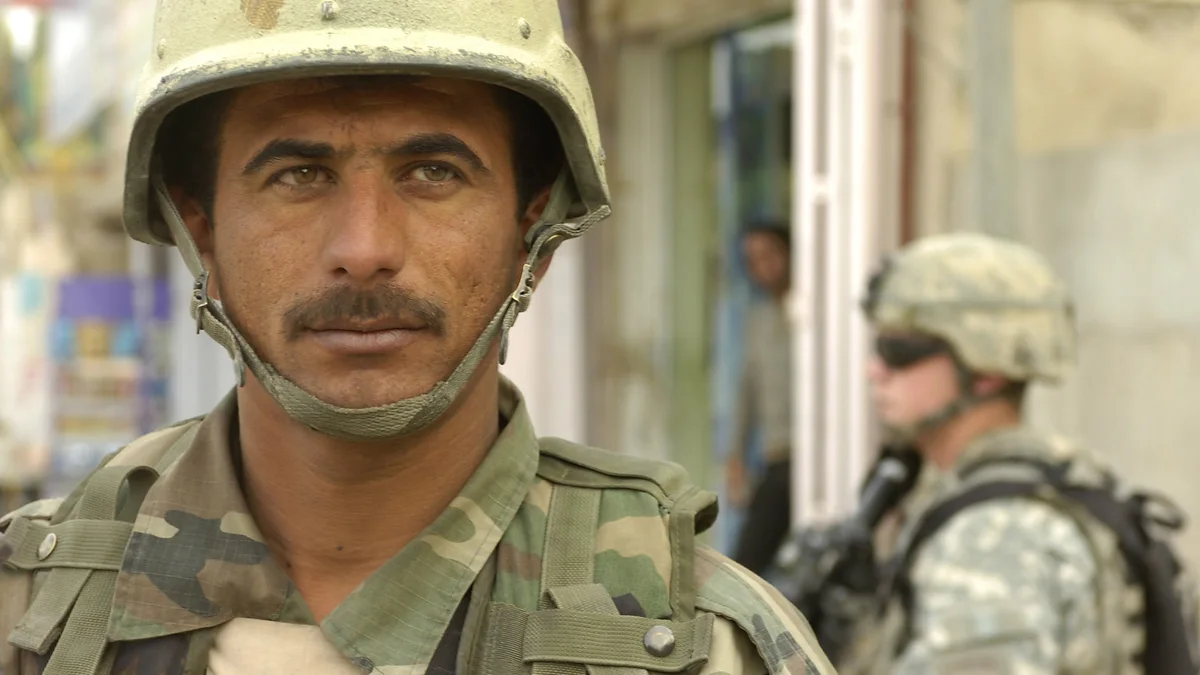
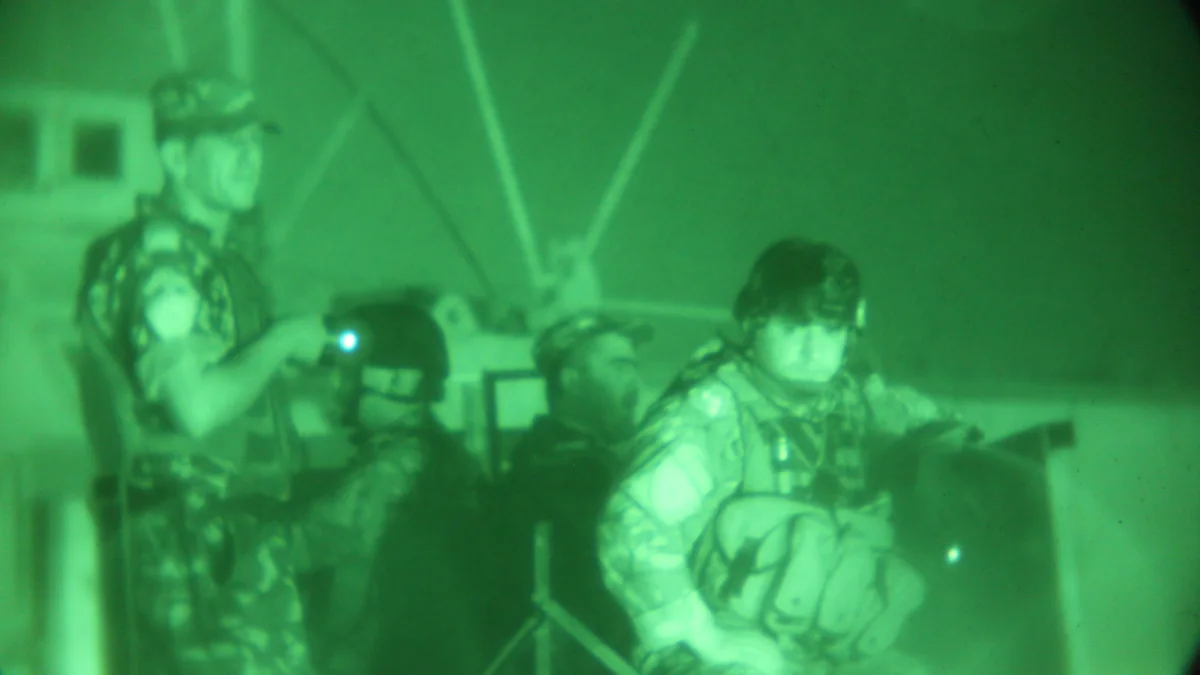
INCE NEWS checked Reuters and AP reporting against translated Iraqi government and Popular Mobilization Forces statements carried by 964media, plus on-the-ground accounts from Al Jazeera and The National. The deployment and creation of a joint command are confirmed; allegations that Kataib Hezbollah operated an oil-smuggling network remain government claims that the group denies. The compromise includes PMF brigades and gives Kataib Hezbollah about a month to withdraw, so the article does not describe state control as complete. Current-event Reuters, AP and AFP photographs lacked an open commercial reuse grant. Dated public-domain photographs of Iraqi army and police personnel are used as context and do not depict the Nov. 20 deployment.
A joint command moved in after two months of pressure
Iraqi army, federal police and energy-police units entered Jurf al-Sakhar on Friday and established a joint security headquarters. Soldiers took positions in the centre of the district, about 60 kilometres southwest of Baghdad, while energy police began guarding the oil pipeline that crosses the area.
The move followed weeks of government pressure on Kataib Hezbollah, the Iran-aligned faction that has dominated the district since helping recapture it from Islamic State in 2014. Prime Minister Ali al-Zaidi told the incoming troops they were not going to war, while insisting that weapons and security authority must ultimately rest with the state.
The compromise reduces the risk of fighting but dilutes the takeover
Kataib Hezbollah had threatened to resist a government entry. Negotiations instead produced a phased arrangement: federal units can deploy immediately, two Popular Mobilization Forces brigades will remain part of the security structure and Kataib Hezbollah fighters are expected to leave within roughly a month.
That composition matters because the PMF is legally part of Iraq’s security system but includes factions close to Iran. The agreement allows Baghdad to enter without an armed clash, yet it does not demonstrate that Kataib Hezbollah’s informal influence has ended.
Oil-smuggling allegations triggered the confrontation
The government says an investigation found pipeline tampering and unauthorized refining linked to theft of state oil worth hundreds of millions of dollars. Nine senior security and oil officials were dismissed, and the prime minister ordered energy police to secure the pipeline. Kataib Hezbollah rejects the accusations and says the reports were fabricated.
No court judgment establishing the group’s responsibility had been reported at publication. The confirmed development is the security transfer and investigation; the scale and authorship of the alleged smuggling remain contested.
Residents and the wider militia campaign will test the deal
Jurf al-Sakhar has remained largely closed for more than a decade, and many residents displaced during the fighting against Islamic State have been unable to return. Government officials say reopening roads and restoring state administration are part of the plan, but no timetable for a broad civilian return has been completed.
The operation is also a test of al-Zaidi’s promise to bring armed factions under state control by mid-2027. A durable transfer would weaken one of Iraq’s most powerful non-state centres; a nominal reshuffle that preserves the same command networks would show the limits of Baghdad’s reach.
Sources
7 references
- ReutersIraqi security forces deploy in Iran-backed militia strongholdIndependent reporting from the deployment and security officials. · 2026-11-20
- Associated PressTrump says Iran wants a deal, Saudi Arabia and Yemen's Houthis exchange fire and other Mideast newsIndependent confirmation of the command headquarters and compromise. · 2026-11-20
- 964mediaPMF announces replacement of Kataib Hezbollah brigades in Jurf al-SakharRegional reporting with translated PMF and government statements. · 2026-11-19
- Al JazeeraIraqi forces deploy to Jurf al-Sakhar after deal with Iran-backed groupOn-the-ground reporting on the force composition and agreement. · 2026-11-20
- The NationalIraqi security forces move into Iran-backed militia stronghold of Jurf Al SakharRegional reporting and expert context on the transfer's limits. · 2026-11-20
- Wikimedia CommonsIraqi Army soldier in Al KarradhahLead-photo provenance and US-government public-domain status. · 2008-12-31
- Wikimedia CommonsMembers of the Iraqi police go on a night patrol in Kirkuk provinceInline-photo provenance and US-government public-domain status. · 2011-07-21








