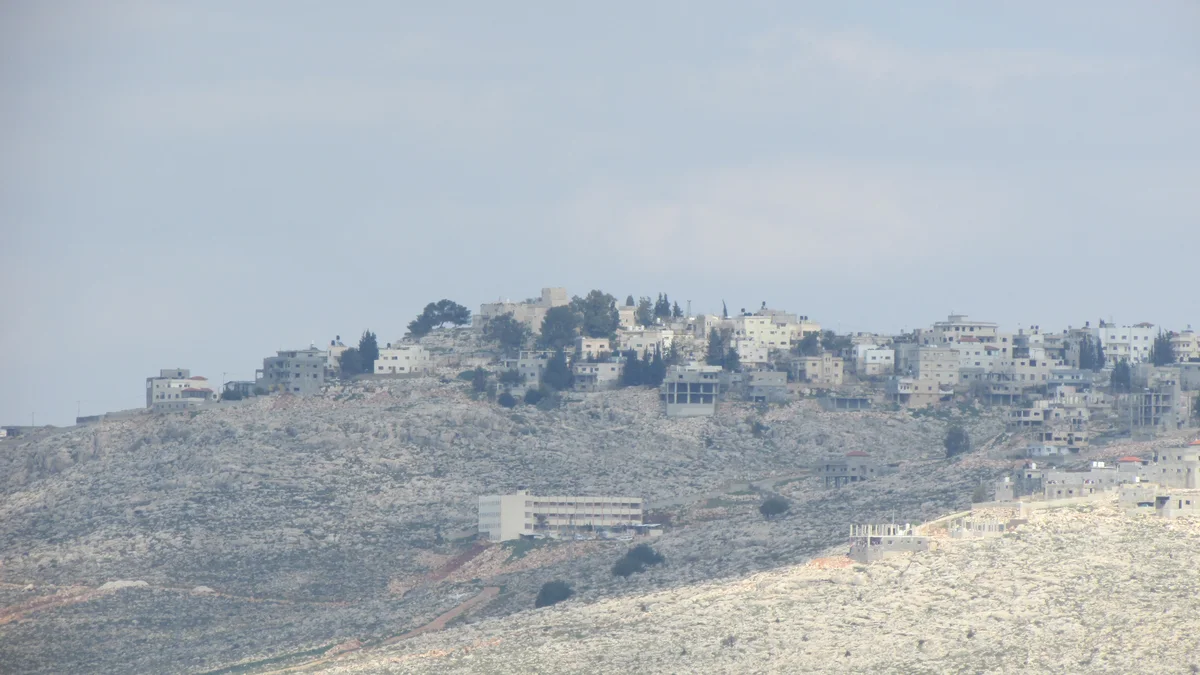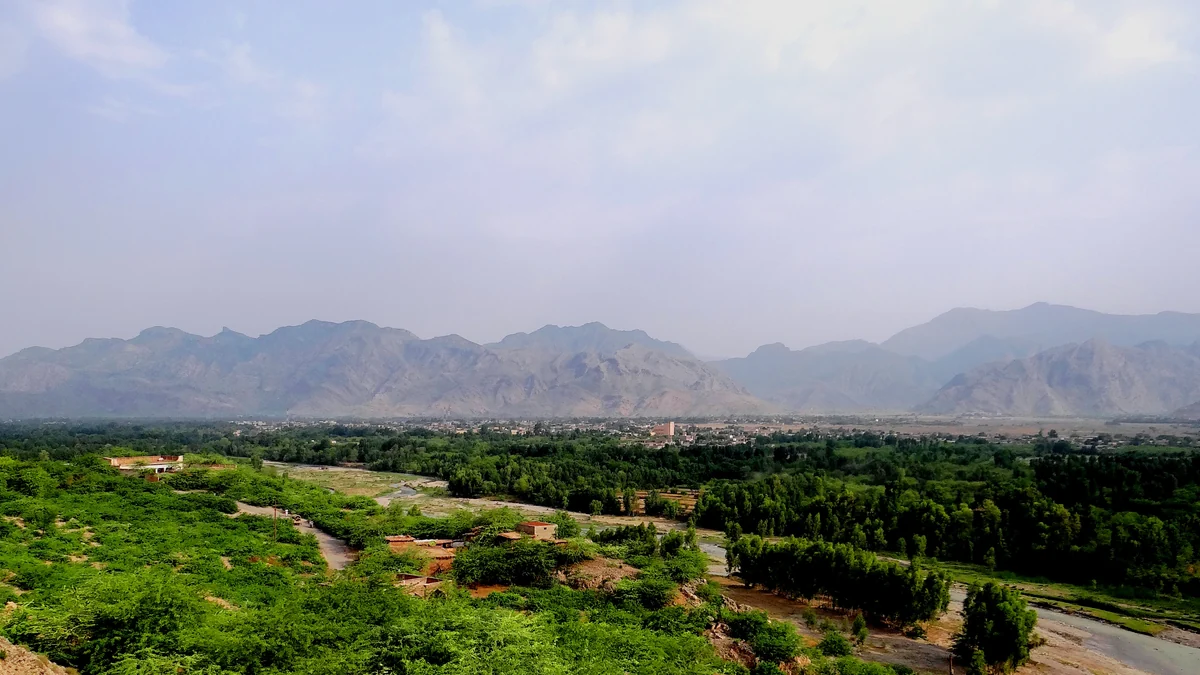
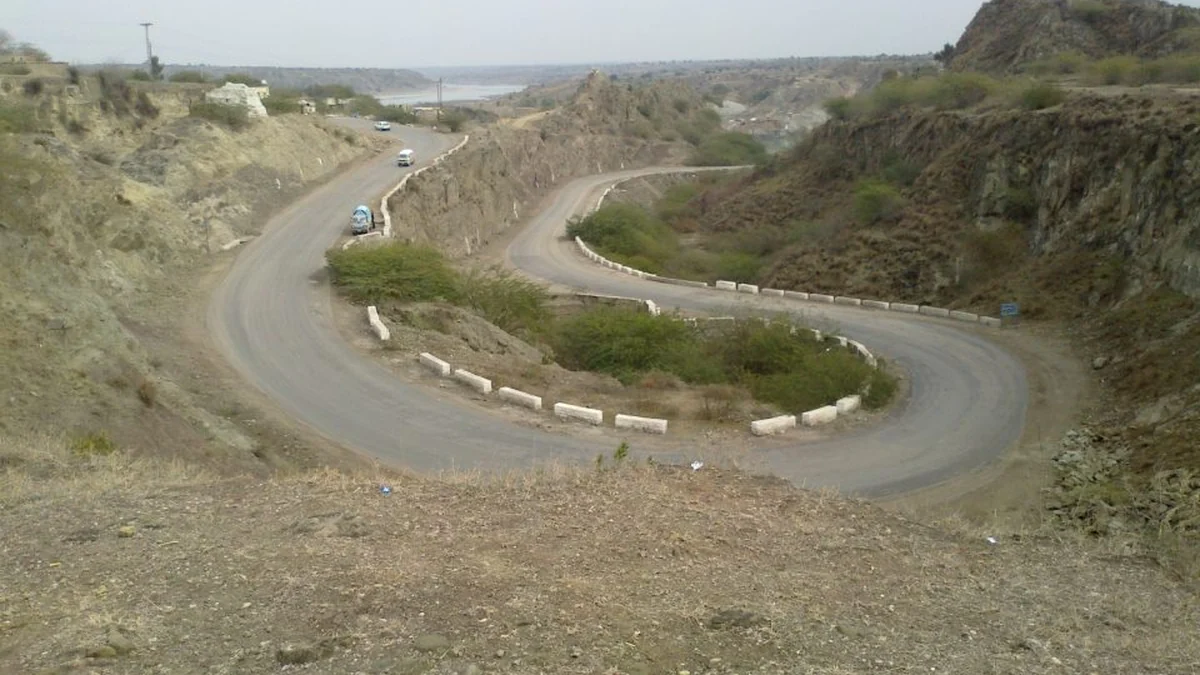
The official death toll, location and sequence were checked against Khyber Pakhtunkhwa Police's statement as carried by Pakistan's state broadcaster and against reporting by Associated Press and Dawn. AP independently reported the TTP claim and noted that police offered no evidence for allegations that criminal networks and foreign powers directed the attack. Reuters' initial report said 11 officers were feared dead, while the later police statement and AP account put the confirmed toll at 10; this article uses the later official figure and identifies it as such. A bounded current-event image search found commercial agency photographs but no clearly reusable image of the Nov. 11 attack. Both photographs are dated archive context from Kohat district: the lead shows Kohat Valley on May 17, 2015, by Fidakhan 1; the inline image shows the road near Lachi on the same date, by Alifarhad57. Each is CC BY-SA 3.0. Originals are retained in source; derivatives were centre-cropped to 1,200 × 675 and converted to WebP at quality 86 with no retouching.
A mining operation ended in an hours-long firefight
Militants ambushed police vehicles in Kohat district on Wednesday as officers returned from a joint operation with the civil administration against illegal placer-gold mining, according to provincial police and independent reporting. Khyber Pakhtunkhwa Police said 10 officers died and 18 attackers were killed in the ensuing firefight.
The official account placed the attack in Darabukach, within the Gumbat police-station area. Associated Press reported that two senior officers were among those killed and that the exchange of fire lasted for hours. Early casualty reports varied: Reuters cited a rescue-service spokesman saying 11 officers were feared dead, while the later police statement and AP account put the confirmed toll at 10.
The Pakistani Taliban claimed responsibility
The Tehrik-e-Taliban Pakistan, or TTP, claimed the attack in a statement reported by AP. The group is separate from Afghanistan's Taliban government but has close historical and ideological ties to the Afghan Taliban.
Provincial police alleged that militants acted with criminal networks involved in illegal mining and at the direction of foreign powers. Police did not present evidence for those claims, and this article does not treat them as established. The TTP claim establishes a claim of responsibility, not independent proof of every detail of the attack.
Illegal gold extraction had already drawn new restrictions
Dawn reported that Kohat's deputy commissioner had imposed a 60-day ban a day earlier on parking excavators in and around two placer-gold blocks. The order said machinery stored near mining areas could be used for unauthorized extraction. A separate restriction covered fuel sold in open containers for use in illegal mining.
That context helps explain why police and civil administrators were operating in the area, but it does not by itself prove the alleged link between miners, criminal groups and militants. Authorities said additional forces were sent to the scene and promised action against facilitators.
The attack adds pressure to a strained border relationship
Pakistan has faced rising militant violence in recent years, much of it blamed on the TTP. Islamabad accuses Afghanistan's Taliban authorities of allowing TTP fighters sanctuary across the border; Kabul denies that allegation.
The Kohat losses deepen the security burden on provincial police, who are often the first force confronting attacks away from major military installations. They also add to tensions between Pakistan and Afghanistan as Islamabad pursues militants it says operate from border areas.
Sources
6 references
- Associated PressMilitants ambush police in Pakistan, sparking gunbattle that kills 10 officers and 18 militantsIndependent reporting on the attack, TTP claim and police allegations. · 2026-11-11
- Dawn10 cops martyred as police team ambushed in KPPakistani reporting on the operation, casualties and local restrictions on mining equipment. · 2026-11-12
- Radio PakistanKohat Operation: 10 policemen martyred, 18 Khawarij killedState broadcaster carrying the Khyber Pakhtunkhwa Police statement. · 2026-11-11
- ReutersEleven Pakistani police personnel feared killed in attack, rescue group saysEarly independent report showing initial uncertainty over the police death toll. · 2026-11-11
- Wikimedia CommonsKohat Velly.jpgArchive context photograph by Fidakhan 1, licensed CC BY-SA 3.0. · 2015-05-17
- Wikimedia CommonsLachi kohat.jpgArchive context photograph by Alifarhad57, licensed CC BY-SA 3.0. · 2015-05-17