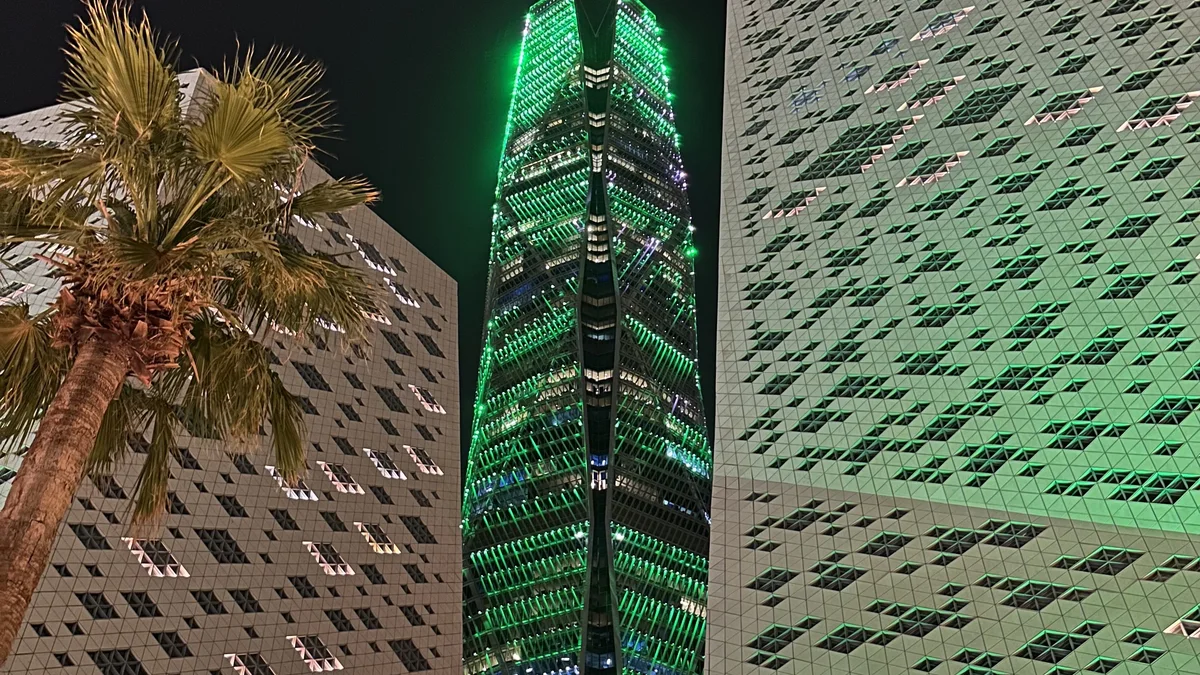
INCE NEWS read Saudi Civil Defense and coalition statements carried by the Saudi Press Agency, plus Reuters, AP and the Financial Times. The official record establishes material damage and no reported injuries; Reuters independently observed damage and attributed the impact to a Houthi missile through three people familiar with the incident. The Houthis later said they targeted Riyadh’s financial centre twice, but their additional claims about attacks on an airport, airbase and petrochemical site were not confirmed by Saudi authorities at publication and are identified as claims. A bounded actual-event image search found SPA, Reuters, AP, AFP and Getty photographs without an explicit commercial reuse grant. The article therefore uses dated archive photographs of the PIF Tower and King Abdullah Financial District; neither shows the Nov. 19 damage.
The attack hit a symbol of Saudi economic policy
Saudi Civil Defense said a Houthi attack damaged several floors of a tower in Riyadh’s financial district and nearby buildings on Thursday, with no injuries reported. An official photograph showed the Public Investment Fund Tower, the 80-storey headquarters of the kingdom’s sovereign wealth fund.
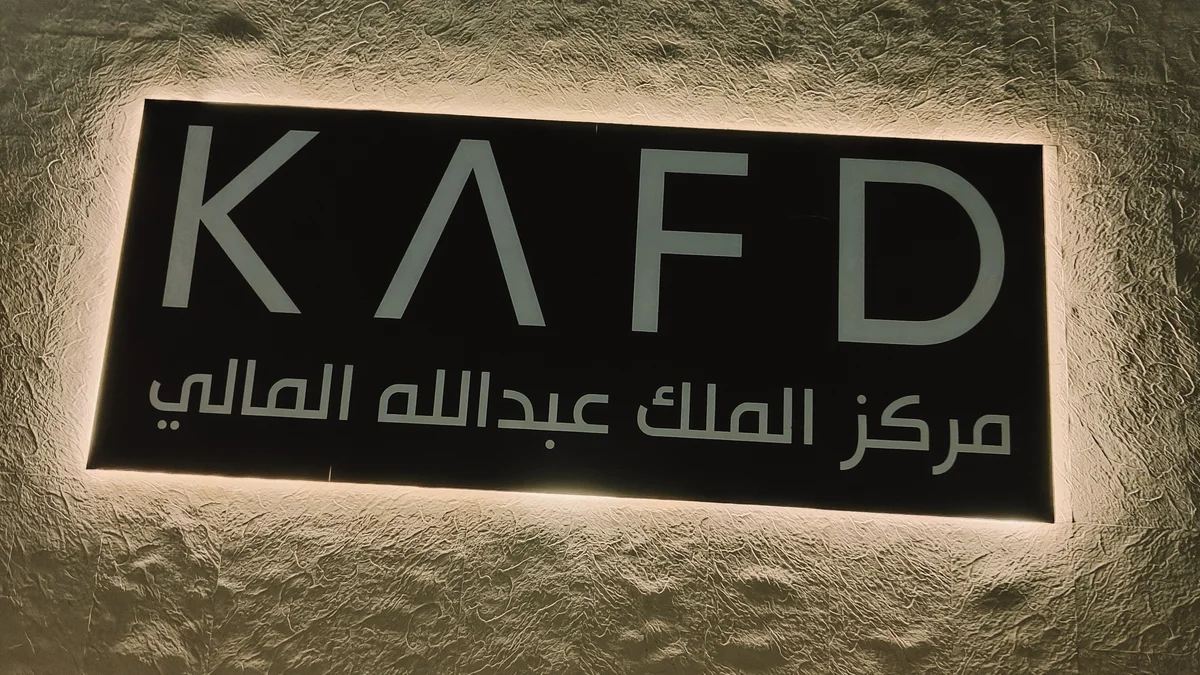
Reuters witnesses saw windows blown out across seven or eight floors and parts of the metal facade bent. The King Abdullah Financial District closed to visitors while emergency crews responded. The district is a centrepiece of Saudi Arabia’s effort to attract finance and investment beyond oil.
Saudi statements and witness evidence narrow what is known
The Saudi-led coalition said it had dealt with a missile threat launched toward Riyadh and that falling debris caused material damage. Three people familiar with the incident told Reuters that an incoming Houthi missile struck the building. The official statements did not explain whether the projectile itself or intercepted debris caused the damage.
The Houthis later said they targeted the financial centre twice on Thursday. They also claimed attacks on King Khalid International Airport, King Khalid Air Base and a petrochemical plant in Jubail; Saudi authorities had not confirmed those additional claims by publication.
A second landmark strike raises the cost of renewed fighting
The PIF Tower was the second prominent Riyadh building damaged in less than two weeks. A Nov. 8 attack hit an Aramco office tower in the same financial district. Repeated impacts in the capital challenge Saudi air defences and may disrupt offices even when casualties are avoided.
The nearly $1 trillion Public Investment Fund finances major domestic projects and holds international stakes. No evidence had emerged that Thursday’s damage interrupted the fund’s operations, but the target carries economic and political significance beyond the physical loss.
The Saudi-Houthi front has reopened after years of relative calm
Cross-border attacks resumed in July after the 2022 truce had reduced direct Saudi-Houthi fighting. The Houthis have since fired missiles and drones at airports, military sites and energy infrastructure, while Saudi aircraft have struck targets in Houthi-controlled Yemen.
Saudi Arabia said it reserved the right to take necessary measures to defend its territory and assets. The immediate test is whether the exchange remains a pattern of intermittent strikes or develops into a sustained campaign that threatens oil facilities, aviation and the capital’s business districts.
Sources
6 references
- ReutersRiyadh’s tallest skyscraper hit in Houthi strike on Saudi wealth fund HQIndependent reporting, witness observations and attribution of the missile impact. · 2026-11-19
- Saudi Press AgencyCivil Defense: Houthi attack on Riyadh financial district tower causes material damage, no injuriesPrimary official statement on damage and reported casualties. · 2026-11-19
- Saudi Press AgencyCoalition says it dealt with a missile threat launched toward RiyadhPrimary coalition statement on the incoming missile and falling debris. · 2026-11-19
- Associated PressSaudi-led coalition says missile debris caused damage in RiyadhIndependent account of visible tower damage and the wider exchange of fire. · 2026-11-19
- Wikimedia CommonsPIF Tower Riyadh 2024Lead-photo provenance and CC BY-SA 4.0 terms. · 2024-09-23
- Wikimedia CommonsKAFD 8Inline-photo provenance and CC0 dedication. · 2025-02-08