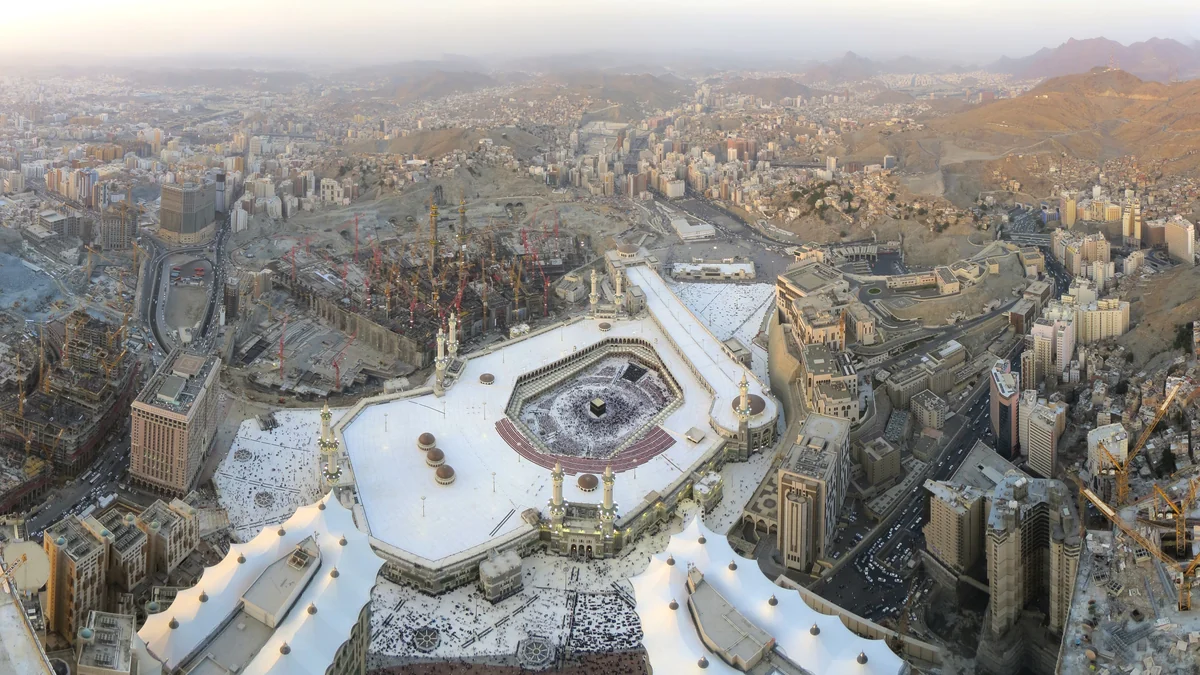
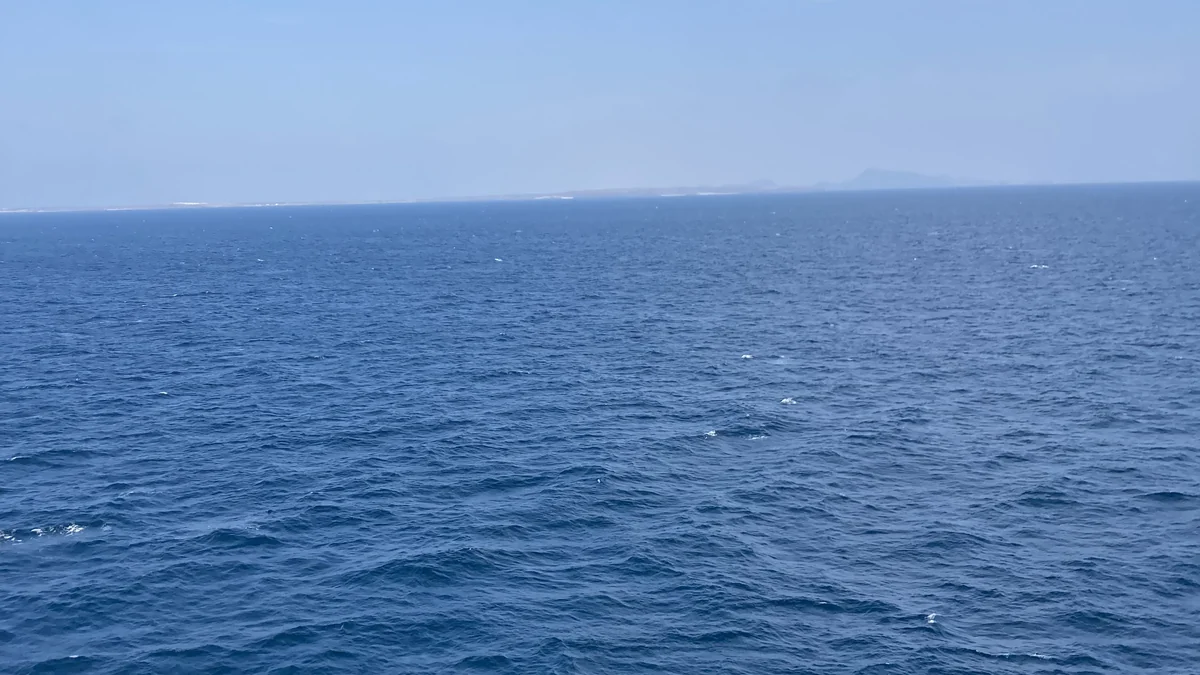
Reuters' Nov. 12 report was reviewed for the two reported interception sites, distances from the Grand Mosque, Saudi Civil Defence statement and conflict context. Reuters' Nov. 11 report independently records the wider wave of announced interceptions and the Houthi spokesperson's denial that Mecca was targeted. Saudi Gazette reproduces coalition spokesperson Turki al-Maliki's count of nine missiles and drones intercepted across several regions between Wednesday and Thursday. No independent wreckage analysis or launch-site evidence was available, so Houthi responsibility and intended targets are presented as Saudi claims alongside the group's denial. A bounded actual-event search found agency and publisher images without verified republication rights. Two dated CC0 archive/context photographs are used instead: a 2012 panorama of Mecca and a 2023 view across Bab el-Mandeb. Neither depicts the Nov. 11 interceptions or debris. Originals are retained; both derivatives were centre-cropped to 16:9, resized to 1,200 × 675 and converted to WebP quality 86 without retouching.
Debris landed east of the Grand Mosque
Saudi Arabia said air defences intercepted and destroyed two ballistic missiles launched toward the Mecca region on Wednesday night. Fragments fell at Sabuhah village, about 35 kilometres northeast of the Grand Mosque, and Wadi al-Maghmas, roughly 21 kilometres east, according to Saudi state television as reported by Reuters.
Saudi Civil Defence described the incident as the targeting of civilian objects. Other Saudi reporting said no deaths or injuries were announced at the debris sites. The material reviewed for this report did not include independently verified photographs, wreckage analysis or coordinates establishing who launched the missiles.
Attribution and intent remain contested
Saudi authorities attributed the weapons to Yemen’s Houthi movement. The group’s military spokesperson denied targeting Mecca and said its operations were directed at oil facilities and military bases elsewhere in the kingdom.
The denial does not independently establish the missiles’ origin or intended targets, just as the Saudi statement does not provide public technical evidence. The verified development is that Saudi authorities reported interceptions and debris in the Mecca region; responsibility and targeting intent remain claims by the opposing sides.
The episode was part of a wider interception wave
Saudi Gazette, citing coalition spokesperson Major General Turki al-Maliki, said Saudi defences intercepted nine weapons between Wednesday and Thursday: two ballistic missiles, three cruise missiles and four drones directed toward several regions. Reuters separately reported earlier interceptions near Riyadh, Mecca and southern and western Saudi Arabia.
The Houthis also claimed an attack on a pumping station along the East-West oil pipeline and an oil facility at Yanbu. Saudi Arabia had not confirmed those claims when Reuters reported them. The pipeline has become more important during disruption to shipping through the Strait of Hormuz because it carries crude westward to the Red Sea.
Renewed fighting raises risks beyond the immediate sites
A UN-brokered truce in 2022 largely froze direct Saudi-Houthi hostilities, but attacks resumed in 2026. The Houthis have launched missiles and drones at Saudi airports, ports and oil facilities, while Riyadh has carried out airstrikes in Yemen.
The escalation also touches Bab el-Mandeb, the narrow route linking the Red Sea with the Gulf of Aden. Continued attacks could affect civilian safety, pilgrimage traffic and energy shipping even when interceptions prevent a weapon from reaching its reported destination. Falling fragments remain hazardous, and the absence of reported casualties in this incident does not remove that risk.
Sources
5 references
- ReutersSaudi Arabia says debris from intercepted missiles falls in Mecca regionIndependent reporting on the Saudi statement, debris locations, distances from the Grand Mosque and wider conflict. · 2026-11-12
- ReutersSaudi Arabia intercepts Houthi missiles, drones; group denies targeting MeccaIndependent reporting on the wider interception wave, alerts and the Houthi spokesperson’s denial. · 2026-11-11
- Saudi GazetteSaudi air defenses intercept 9 missiles and drones as debris falls in Makkah RegionSaudi reporting reproducing coalition spokesperson statements and the reported sequence of interceptions. · 2026-11-12
- Wikimedia CommonsMakkah Panorama.jpgArchive panorama by Wurzelgnohm, dedicated to the public domain under CC0 1.0. · 2012-01-26
- Wikimedia CommonsBab-el-Mandeb Seen From Midchannel.jpgArchive photograph by Richard Weil, dedicated to the public domain under CC0 1.0. · 2023-12-02








