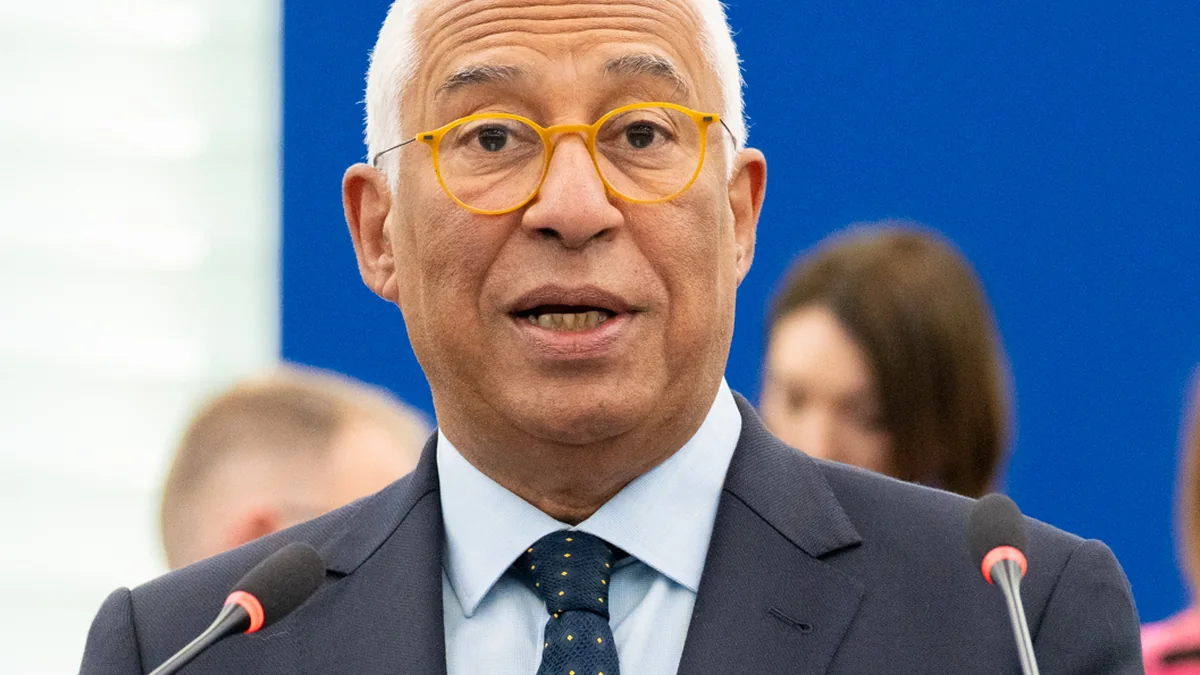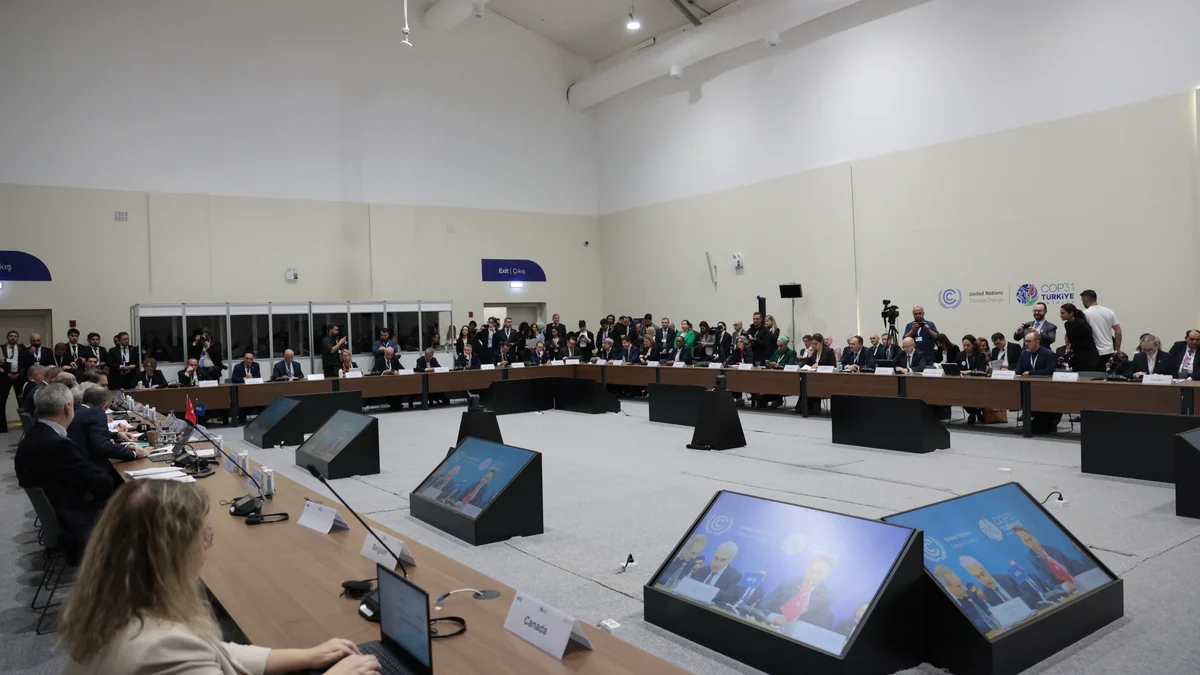
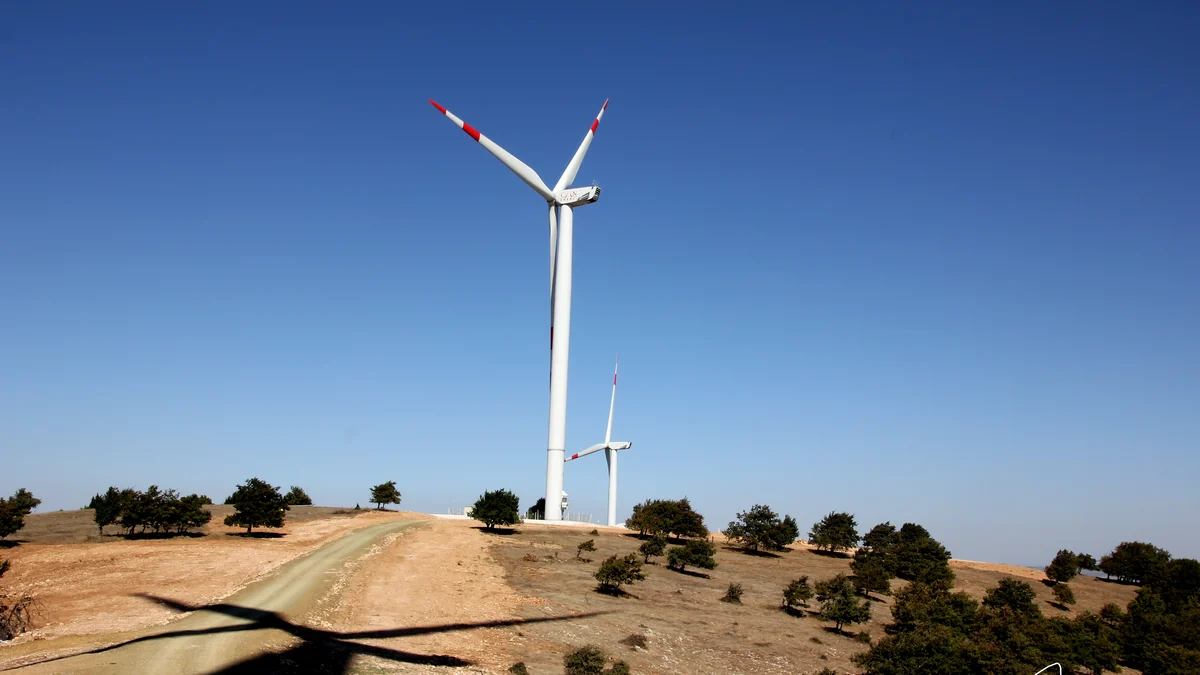
The signing, structure and reform targets were checked against AIIB’s Nov. 12 announcement and the bank’s approved-project record, which dates board approval to Oct. 22 and separates an $800 million parent loan from an $800 million supplemental loan. Reuters independently reported the COP31 signing, the record size and Türkiye’s estimated $68 billion additional investment need through 2030. Anadolu Agency’s account of the ceremony was used to distinguish this $1.6 billion program from the wider package of development-bank agreements announced at COP31. The article describes approved and signed policy financing, not a verified completed disbursement, and treats targets as future milestones. A bounded actual-event photo search found agency and publisher images requiring separate commercial permission. The lead is Necati Savas’s Nov. 10, 2026 photograph of a COP31 energy ministerial in Antalya, supplied by the European Commission Audiovisual Service under CC BY 4.0; it is event context, not the signing. The inline image is sinanaydinnet’s Sept. 5, 2012 photograph of wind turbines in Bozüyük, Türkiye, CC BY-SA 4.0. Originals are retained; derivatives were centre-cropped to 1,200 × 675 and converted to WebP at quality 86 without retouching.
The agreement finances policy change rather than one construction project
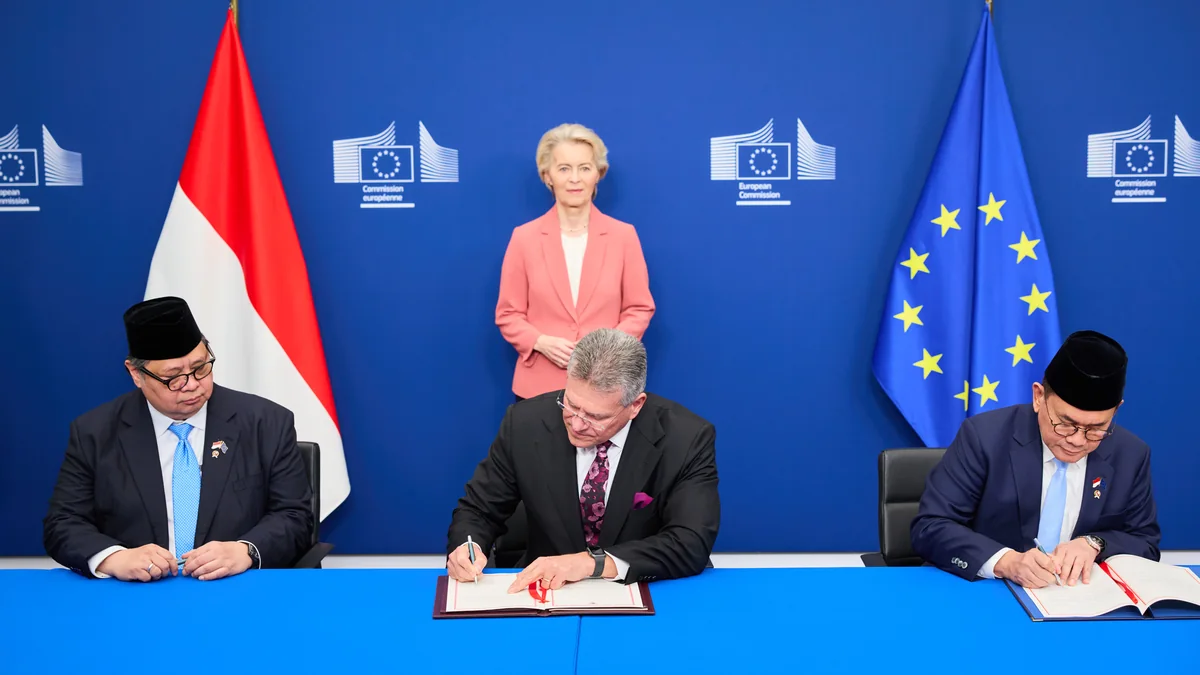
Türkiye and the Asian Infrastructure Investment Bank signed a $1.6 billion climate-policy financing package at COP31 in Antalya on Thursday, creating the bank’s largest climate-focused policy operation to date. The money is designed to support a sequence of government reforms across finance, energy, industry, agriculture and land use rather than pay for a single power plant or transport link.
AIIB’s project record shows two sovereign loans of $800 million each: a parent operation and supplemental financing. The bank approved the program on Oct. 22. Thursday’s ceremony marks the signed package; neither the bank nor independent reporting reviewed by INCE NEWS established that the full amount had already been disbursed.
Carbon rules and renewable permits carry near-term deadlines
The program groups twelve prior policy actions under three pillars: sustainable finance and carbon-market development, lower-emissions production, and resilience to climate shocks. By April 2027, 180 industrial facilities are expected to report baseline greenhouse-gas emissions, an early step toward Türkiye’s planned emissions-trading system.
Energy measures include a target to issue production licences for 1,800 megawatts of new wind and solar capacity by early 2027. Those licences do not by themselves mean the projects are built or generating electricity; they are a regulatory milestone intended to move investment through the pipeline.
Drought adaptation makes the package more than an energy deal
Water stress is central to the financing. The program aims for 225,000 farmers in water-stressed basins to shift toward less water-intensive crops by 2028. It also targets 50,000 hectares of new or restored carbon sinks by that year, linking rural resilience with emissions removal.
Türkiye faces recurring drought, extreme heat, wildfires and flooding. Those risks can raise food prices, strain municipal water systems and damage infrastructure, so the package’s test will be whether policy conditions change decisions on farms, in factories and in capital markets—not only whether ministries publish new rules.
Private capital remains the larger financing challenge
Reuters reported that Türkiye needs about $68 billion in additional climate investment by 2030, roughly half of it expected from private sources. The AIIB package can supply public financing and policy incentives, but it cannot close that gap alone. Clear carbon prices, credible permitting and enforceable disclosure rules will determine whether businesses invest at the scale the government expects.
The program supports Türkiye’s 2035 climate target and its goal of net-zero emissions by 2053. Progress can be judged against the stated milestones—facility reporting, renewable licences, changes in crop choices and expanded carbon sinks—rather than the size of the announced package by itself.
Sources
6 references
- Asian Infrastructure Investment BankAIIB and Türkiye Sign USD1.6 Billion Package to Accelerate Climate ReformsPrimary announcement of the signed package, reform pillars and measurable targets. · 2026-11-12
- Asian Infrastructure Investment BankTürkiye: Climate Action Acceleration Program (TCAAP)Primary approved-project record for the two-loan structure, policy actions and implementation framework. · 2026-10-22
- ReutersCOP31 host Turkey, AIIB strike record $1.6 billion climate policy dealIndependent reporting on the signing, financing need and implementation context. · 2026-11-12
- Anadolu AgencyTürkiye signs $5.1B in deals with 4 development banks at COP31Ceremony reporting that places the AIIB program within the wider development-bank package. · 2026-11-12
- Wikimedia CommonsGeneral view of the COP31 Presidency’s Energy Ministerial Meeting.jpgCOP31 context photograph by Necati Savas / European Union / EC Audiovisual Service, CC BY 4.0. · 2026-11-10
- Wikimedia CommonsWind turbine.jpgArchive photograph by sinanaydinnet, CC BY-SA 4.0. · 2012-09-05