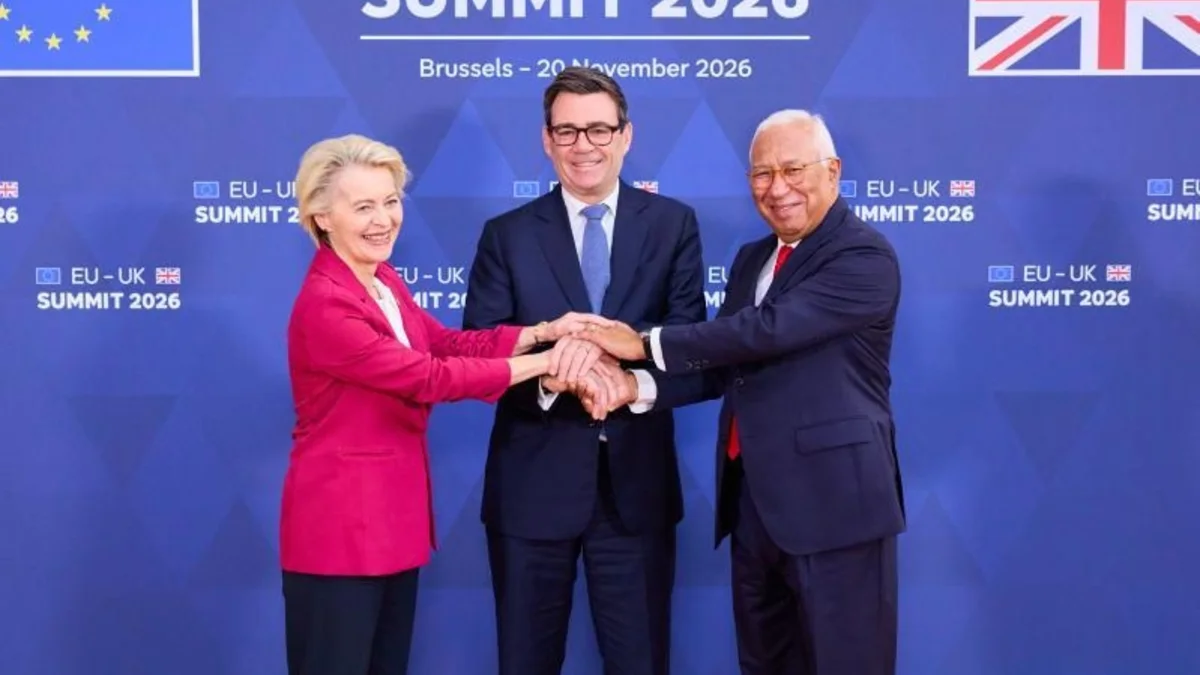
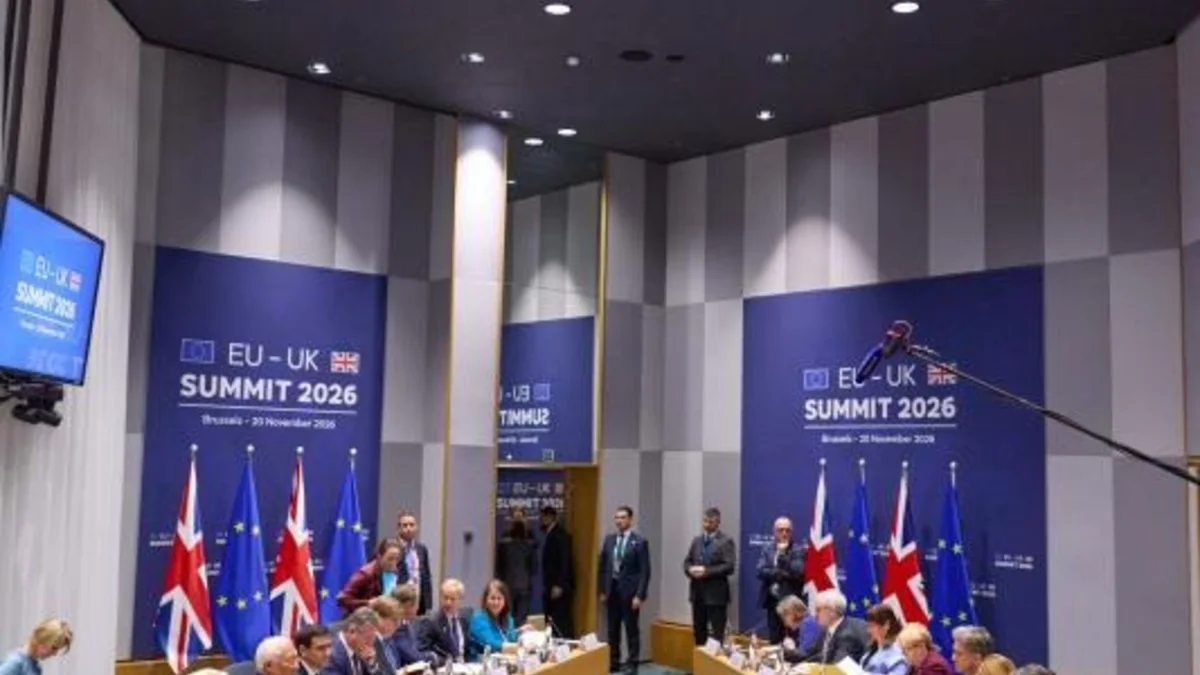
INCE NEWS checked the Nov. 20 UK-EU joint statement and detailed UK explainers against the European Council summit record, Reuters and AP reporting. The agreement concludes negotiations on food-trade, youth-mobility and carbon-market arrangements, but several provisions still require legislation, technical implementation or further negotiation. UK estimates of annual economic gains are government projections, not measured outcomes. Two current-event photographs from the European Commission Audiovisual Service are reused under its CC BY 4.0 terms; both depict the Nov. 20 summit.
Food checks are set to fall, but alignment is the price
Britain and the European Union concluded negotiations on a common sanitary and phytosanitary area at their Brussels summit Friday. Once implemented, the arrangement is designed to remove most certificates and routine border checks for animals, plants and related products moving between the two markets.
The change addresses one of the most expensive everyday consequences of Brexit for food exporters. Reuters reported that health certificates commonly cost £150 to £250 per consignment, before delays or physical inspections. Britain estimates the agreement could add as much as £5.1 billion a year to its economy, but that is a government projection and the gains will depend on implementation. The trade-off is continued UK alignment with relevant EU food and plant-safety rules.
A capped youth route restores movement without reviving free movement
The Youth Experience Scheme will admit up to 100,000 participants from each side every year. People aged 18 to 31 when their visa begins will be able to work, study, volunteer, au pair or travel for as long as three years. UK participants may move between as many as three participating EU countries, subject to residence conditions.
The route is capped, time-limited and visa-based, so it does not recreate the unrestricted free movement that ended with Brexit. A major cost question remains open: the two sides gave themselves six months to negotiate tuition fees for students from the other market.
Linked carbon markets would shield major exports from border levies
The parties also concluded negotiations on linking their emissions-trading systems, aiming for operation from 2028. Allowances issued in either market would be recognized across both, creating a larger pool for regulated companies and supporting exemptions from each side's carbon border charge.
The UK says the link could spare about £6.5 billion of steel, aluminium and other exports from EU carbon-border costs and generate up to £3.8 billion a year. Those figures are prospective. Legislation, technical work and the final legal text must still be completed before allowances become interchangeable.
The summit narrows practical Brexit frictions while stopping short of reversal
The package also extends energy cooperation, confirms reciprocal fishing access through June 2038 and expands coordination on defence, cyber threats, migration and sanctions. It marks a material shift from years dominated by disputes over implementing the withdrawal settlement.
The agreements do not return Britain to the EU single market or customs union. Their significance lies in targeted convergence: both sides accepted shared rules or structured cooperation where the economic and security costs of separation had become clearest.
Sources
7 references
- UK GovernmentUK-EU Summit 2026 Joint StatementPrimary joint record of the agreements and remaining work. · 2026-11-20
- European CouncilEU-United Kingdom summit, 20 November 2026Primary EU summary of trade, mobility, security and carbon-market outcomes. · 2026-11-20
- UK GovernmentUK-EU Summit 2026 Explainer: Youth Experience SchemePrimary detail on eligibility, caps and duration. · 2026-11-20
- ReutersWhat EU and UK have agreed to at summitIndependent reporting and business-cost context. · 2026-11-20
- Associated PressUK and EU strike deals on trade and travel, pledging to rebuild ties after BrexitIndependent summit reporting and political context. · 2026-11-20
- European Commission Audiovisual ServiceParticipation in the EU-UK SummitActual-event photo provenance. · 2026-11-20
- European Commission Audiovisual ServiceCopyright and conditions of useCC BY 4.0 reuse terms for EU-owned audiovisual content. · 2026-11-20








