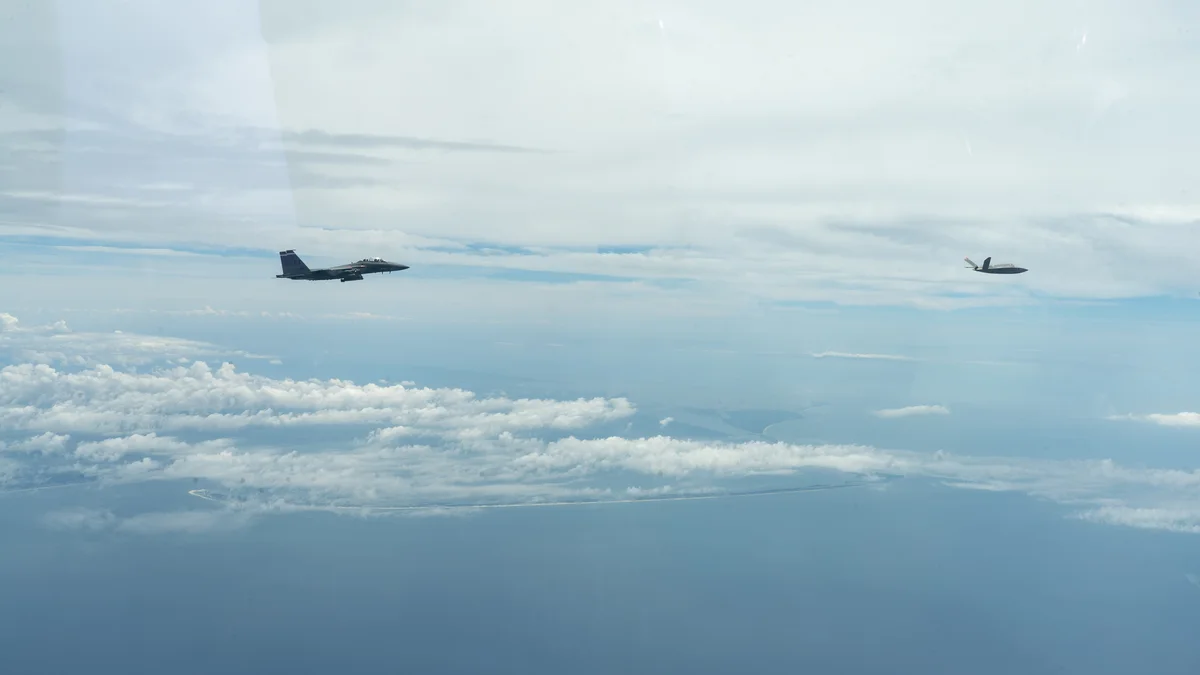
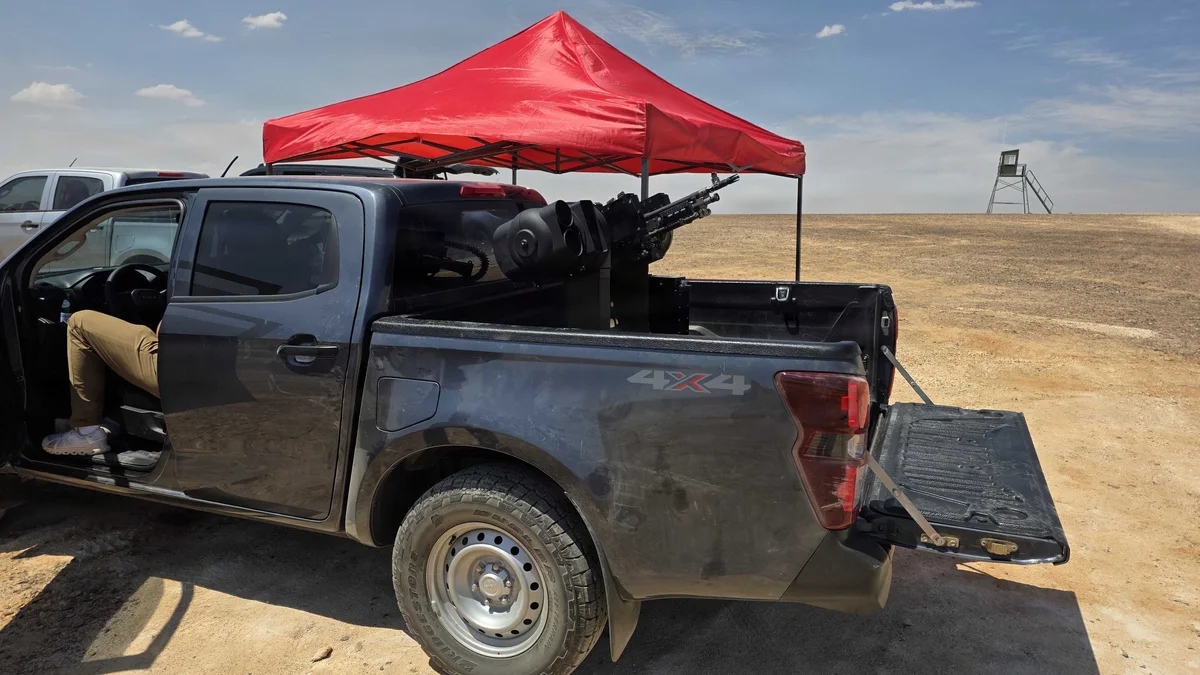
INCE NEWS checked Reuters and AP reporting against the UN Convention on Certain Conventional Weapons conference record, the draft final report and the UN's autonomous-weapons explainer. States agreed to continue work through 2028, but the adopted mandate does not commit them to a treaty or other legally binding instrument. Reuters reported that roughly 100 countries supported binding rules; the United States, Russia and Israel opposed that approach. Current-event AFP and Getty photographs lacked an open reuse grant, while UN photographs require separate permission or reliance on limited journalistic fair use. Dated public-domain US government photographs of AI-piloted and autonomous counter-drone systems are used as technology context and do not depict the Geneva conference.
A two-year mandate replaces the push for immediate treaty talks
States party to the Convention on Certain Conventional Weapons ended an overnight session in Geneva with consensus to continue developing rules and other possible measures for lethal autonomous weapons systems through 2028. The decision prevents the decade-old process from collapsing, but it does not launch negotiations on a binding protocol.
Autonomous weapon systems can use sensors and software to identify, select and engage targets with varying degrees of human involvement. Existing international humanitarian law applies to their use, but no CCW protocol specifically regulates the technology.
Major military powers kept the legal outcome open
Reuters reported that around 100 countries supported legally binding rules, while the United States, Russia and Israel opposed that course. The final compromise leaves open whether the 2028 product will be a treaty, political declaration, technical guidance or a mixture of measures.
That ambiguity was the price of consensus. The CCW process requires all 128 parties to agree, allowing a small number of states to block stronger language even when a large majority supports it.
Human control and accountability remain the central dispute
Countries broadly agree that commanders and operators remain responsible for complying with the laws of war. They differ over how much human judgment must be retained when a system searches for targets, decides that an object or person matches its criteria and applies force.
Supporters of a treaty want prohibitions on systems that cannot be used with meaningful human control and restrictions on other autonomous functions. Opponents argue that existing law, national weapons reviews and operational guidance can manage the risks without a new binding instrument.
The timetable may now lag behind deployment
AI-assisted targeting, loitering munitions and autonomous navigation are already being used or tested in conflicts and military programmes. The systems differ widely, and not every remotely piloted drone is autonomous, but faster software-driven decisions make it harder to settle rules before the technology spreads.
The 2028 deadline creates a measurable diplomatic checkpoint rather than an immediate safeguard. If states again fail to agree on the legal form, treaty supporters may move to a negotiating process outside the CCW, as previous weapons bans did when consensus forums stalled.
Sources
6 references
- ReutersStates agree to UN talks aiming to regulate 'killer robots' by 2028Independent reporting from Geneva on the final compromise and negotiating positions. · 2026-11-21
- Associated PressNations at UN talks on AI killer robots agree to more talks but no firm commitment to rein them inIndependent confirmation of the 2028 mandate and absence of a binding commitment. · 2026-11-21
- UN Office for Disarmament AffairsDraft final report of the Seventh CCW Review ConferencePrimary conference record of the adopted final declaration and future LAWS work. · 2026-11-20
- United NationsAutonomous weapon systems: frequently asked questionsPrimary background on the technology, existing law and the CCW process. · 2026-11-13
- Wikimedia CommonsAI agents pilot XQ-58A ValkyrieLead-photo provenance and US Air Force public-domain status. · 2023-04-07
- Wikimedia CommonsBullfrog v2.5 Operational AssessmentInline-photo provenance and US Department of Defense public-domain status. · 2026-06-07








