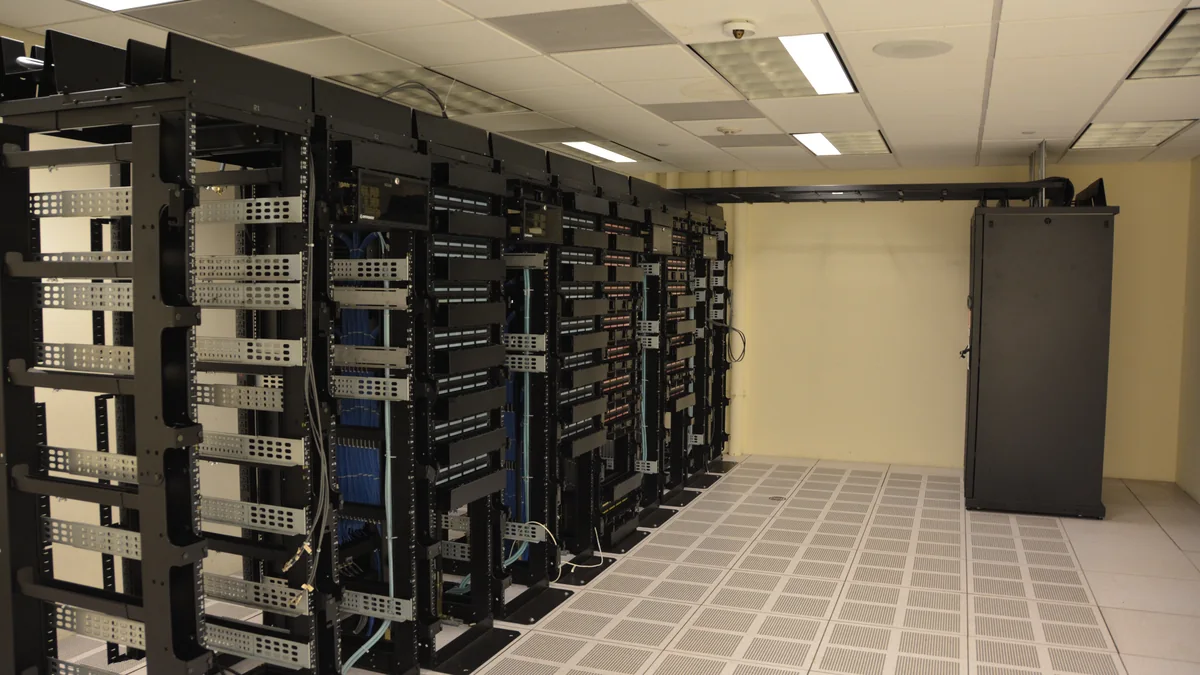
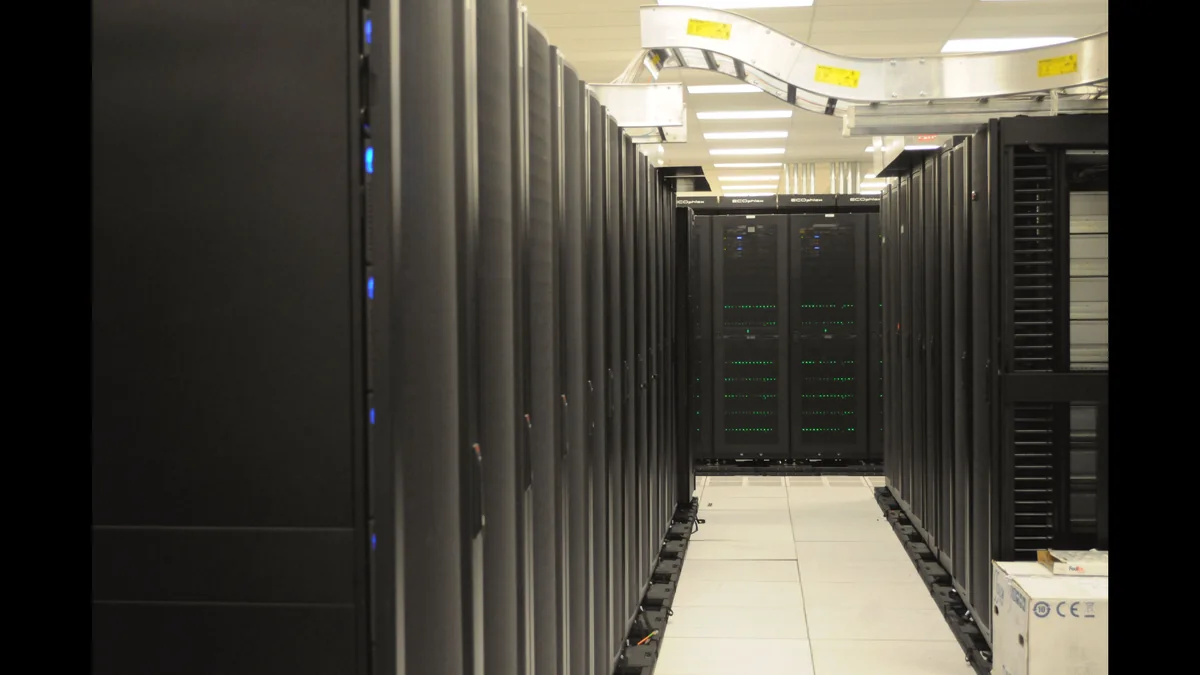
INCE NEWS read the 30-page Bureau of Industry and Security interim final rule published in the Federal Register, the agency’s announcement and its implementation page. The central thresholds, destinations, exemptions, transition period and effective date come from that primary material. The Associated Press independently reported the rule’s purpose and immediate effect; Reuters reported early corporate and market consequences, while DLA Piper’s analysis was used only to check the compliance timetable. Company forecasts and share moves are attributed and are not presented as proof of the rule’s eventual economic impact. The Reuters news illustration and other current-event images lacked reusable publication rights. Two dated archive photographs are therefore used as context: a 2015 data-centre image under CC BY 2.0 and a 2011 NERSC server-room image under CC0. Neither shows a controlled chip shipment or a facility implicated by the rule.
Controls now follow computing power into the cloud
A new U.S. export rule requires a licence when advanced American chips or servers are destined for an overseas data centre that will provide a large pool of computing power to companies headquartered in China, Macau or other U.S. arms-embargoed destinations. The rule took effect on November 19.
The control applies when a supplier knows that one data centre, or several linked facilities operating together, will give such a customer access to more than 12 million aggregate total processing performance, or TPP. TPP is the Commerce Department’s measure for adding up the computing capability of controlled chips. The rule targets remote use because a company can train an advanced model on hardware abroad without physically importing the chips.
Five countries receive a new destination licence requirement
The Commerce Department also imposed licence requirements on covered chips and servers shipped to or within Indonesia, Malaysia, Singapore, Thailand and Brazil. It described those countries as presenting a higher-than-normal diversion risk. Shipments to companies headquartered in the United States, or owned by a U.S.-headquartered parent, can qualify for an exclusion if reporting conditions are met.
Data centres that were already providing computing above the threshold to restricted customers have 90 days from publication to obtain authorisation. Commercial recommendation systems—such as tools that rank products or social-media content—are excluded if providers file the required information, because the department says those workloads do not pose the same training risk.
Cloud providers and chip suppliers inherit due-diligence duties
Exporters, foundries and data-centre operators must examine customers’ ownership and control, including ultimate parent companies. The rule also narrows compliance routes that some chip designers used when ordering advanced manufacturing through third countries, giving U.S. officials more visibility over who controls a design and where the resulting chips will be used.
The duties extend beyond the initial sale. If equipment was exported without a licence because the prohibited end use was not known, the exporter must warn the recipient that later use above the remote-access threshold requires authorisation and customer checks. That creates an ongoing compliance chain from chip maker to data-centre operator.
Chinese companies expect tighter capacity before substitutes scale
Reuters reported that Tencent said the restrictions would slow development of its next-generation AI model in the near term, while Alibaba said the rule could affect services next year and force it to reduce a long-term computing-capacity target. Those are company assessments, not measured outcomes of a rule that has only just taken effect.
Domestic Chinese chips can replace some inference work, but advanced model training demands more powerful hardware and China’s leading-edge manufacturing capacity remains limited. The rule may therefore slow access in the near term while increasing incentives to develop local chips. It also formally rescinds the broader Biden-era AI Diffusion Rule, replacing that unused framework with more targeted controls; public comments are due January 19, 2027.
Sources
6 references
- U.S. Government Publishing Office / Federal RegisterAddressing Remote Access to Advanced SemiconductorsPrimary text of the interim final rule, including thresholds, destinations, exemptions and effective date. · 2026-11-19
- U.S. Bureau of Industry and SecurityBIS Issues Rule Addressing Remote Access to American Super Intelligence TechnologyAgency explanation of the policy purpose; not independent reporting. · 2026-11-16
- Associated PressTrump administration moves to block China from indirect access to American AI technologyIndependent reporting on the rule and the remote-computing route it targets. · 2026-11-16
- ReutersUS AI chip curbs hit China tech stocks, spur self-sufficiency pushIndependent reporting on early company responses, market moves and manufacturing constraints. · 2026-11-20
- Wikimedia CommonsDatacenter Server Racks (22370909788).jpgLead-photo provenance and CC BY 2.0 licence. · 2015-11-04
- Wikimedia CommonsFront of server racks at NERSC.jpgInline-photo provenance and CC0 public-domain dedication. · 2011-10-14