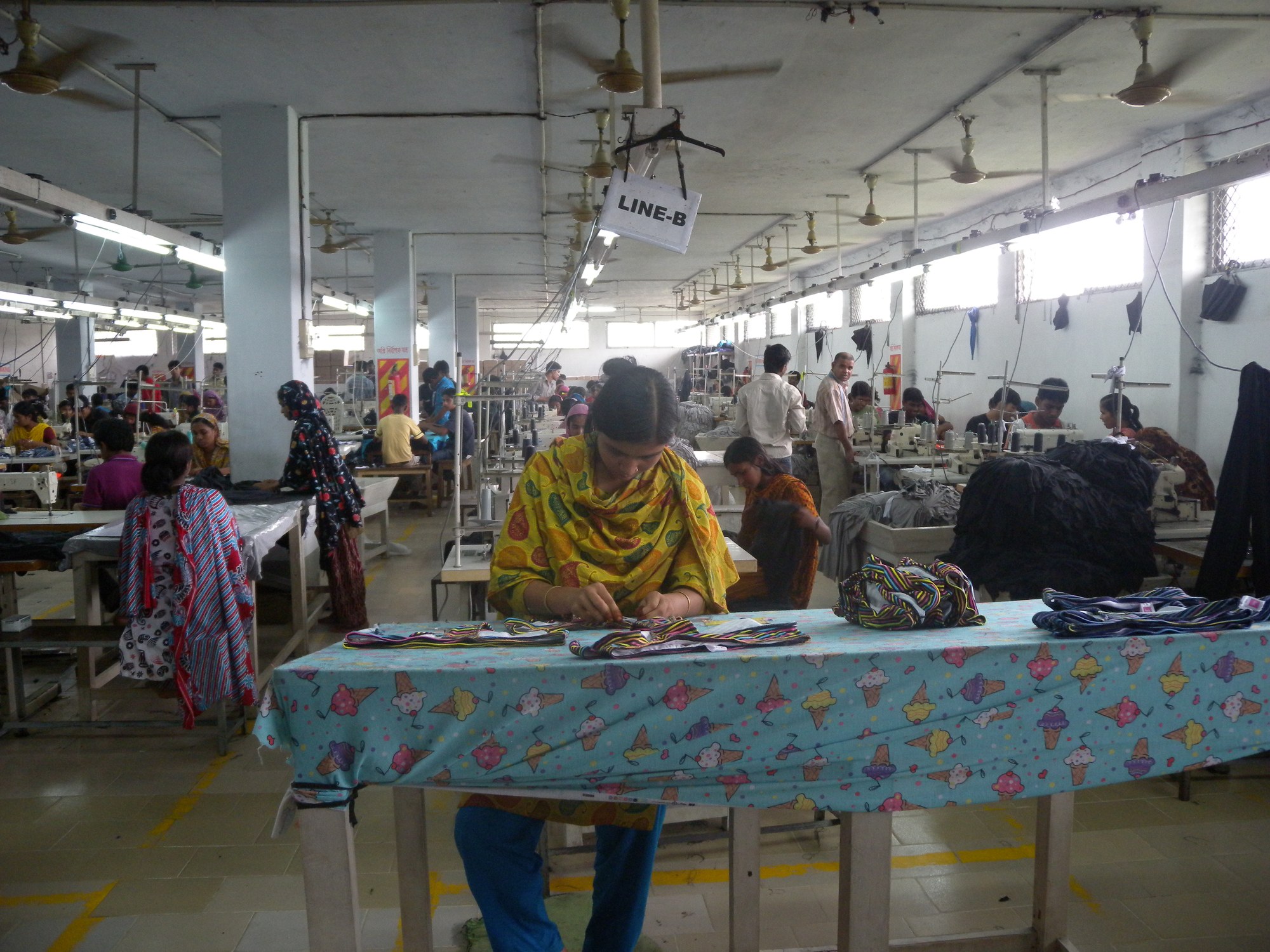
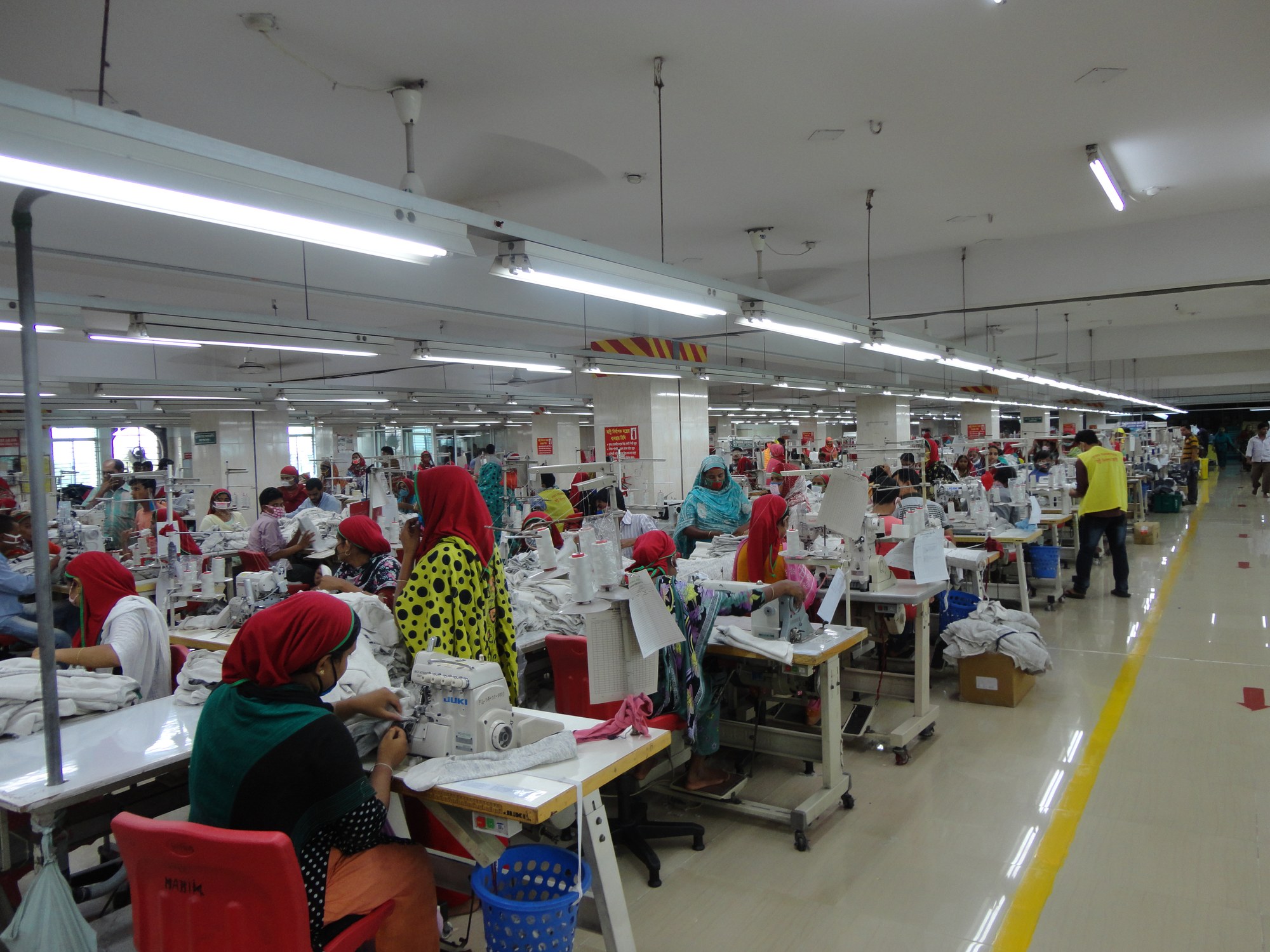
Reuters reported that factories reopened on Nov. 2 while fresh clashes and road-blocking attempts continued; The Business Standard independently reported 529 factories suspending production on Nov. 1, citing industry representatives. The nearly one million workers figure is the trade association’s estimate, not an independently audited count. Bangladesh’s state news agency BSS reported the government’s six-member wage board and the home minister’s meeting with factory owners. The lead is a real archive photograph of a Bangladesh garment factory dated July 2, 2011; the inline archive photograph is dated July 24, 2013. Neither image depicts the current protests or current workplace conditions.
Factories resumed work as protests continued
Bangladesh’s garment factories reopened on Monday after broad closures and production disruption a day earlier, but fresh clashes between workers and police kept pressure on the country’s export industry, Reuters reported. Police used tear gas in Dhaka as protesters tried to block roads, while workers also sought to block highways near the industrial hubs of Ashulia and Gazipur.
The Bangladesh Garment Manufacturers and Exporters Association said demonstrations disrupted 529 factories on Sunday and affected nearly one million workers, according to Reuters and The Business Standard. That is an industry estimate; the outlets did not describe it as an independently audited count.
Workers seek Tk 30,000 as the government reviews pay
Workers are demanding a monthly minimum wage of 30,000 taka, compared with the current 12,500 taka floor. The demand is 2.4 times the existing minimum and comes amid rising costs for food, housing, transport and health care, officials and worker representatives told BSS and Reuters.
The government formed a six-member minimum-wage board on Sunday to review pay. Its formation starts a review; it does not mean that the government has accepted the proposed amount or set a new wage. Home Affairs Minister Salahuddin Ahmed met garment-industry representatives on Monday as the government sought to contain the unrest, BSS reported.
A labour dispute with wider export stakes
The ready-made garment industry supplies more than 80% of Bangladesh’s export earnings, employs about four million people and accounts for roughly a tenth of economic output, Reuters reported. Disruptions therefore affect workers’ incomes as well as factories’ ability to ship orders to international buyers.
Employers have warned that further closures could disrupt deliveries and weigh on buyer confidence. The wage board now faces the difficult task of reviewing pay while the government, workers and factory owners try to keep production and negotiations moving.
Sources
4 references
- ReutersBangladesh garment factories reopen, fresh clashes keep industry on edgeReported Monday’s renewed clashes and factory reopening, the Tk 30,000 demand versus the existing Tk 12,500 minimum, and the sector’s export and employment significance. · 2026-11-02
- The Business StandardMayhem on RMG hubs: 529 factories halt production, exporters fear losing ordersBangladesh reporting on Sunday’s factory shutdowns, wage-board announcement, road blockades and disruption; the factory and worker totals are attributed to industry representatives. · 2026-11-02
- Bangladesh Sangbad Sangstha (BSS)Home minister holds meeting with garment owners to resolve workers’ unrestState news agency report on the government’s Monday meeting with factory owners, the six-member wage board, and the current minimum and workers’ demand. · 2026-11-02
- Bangladesh Sangbad Sangstha (BSS)Ariful urges garment workers to return to workplaces as wage board is formedMinister’s Nov. 1 announcement of the wage board and its remit to determine new garment-worker wages; the board had not yet set a new rate. · 2026-11-01