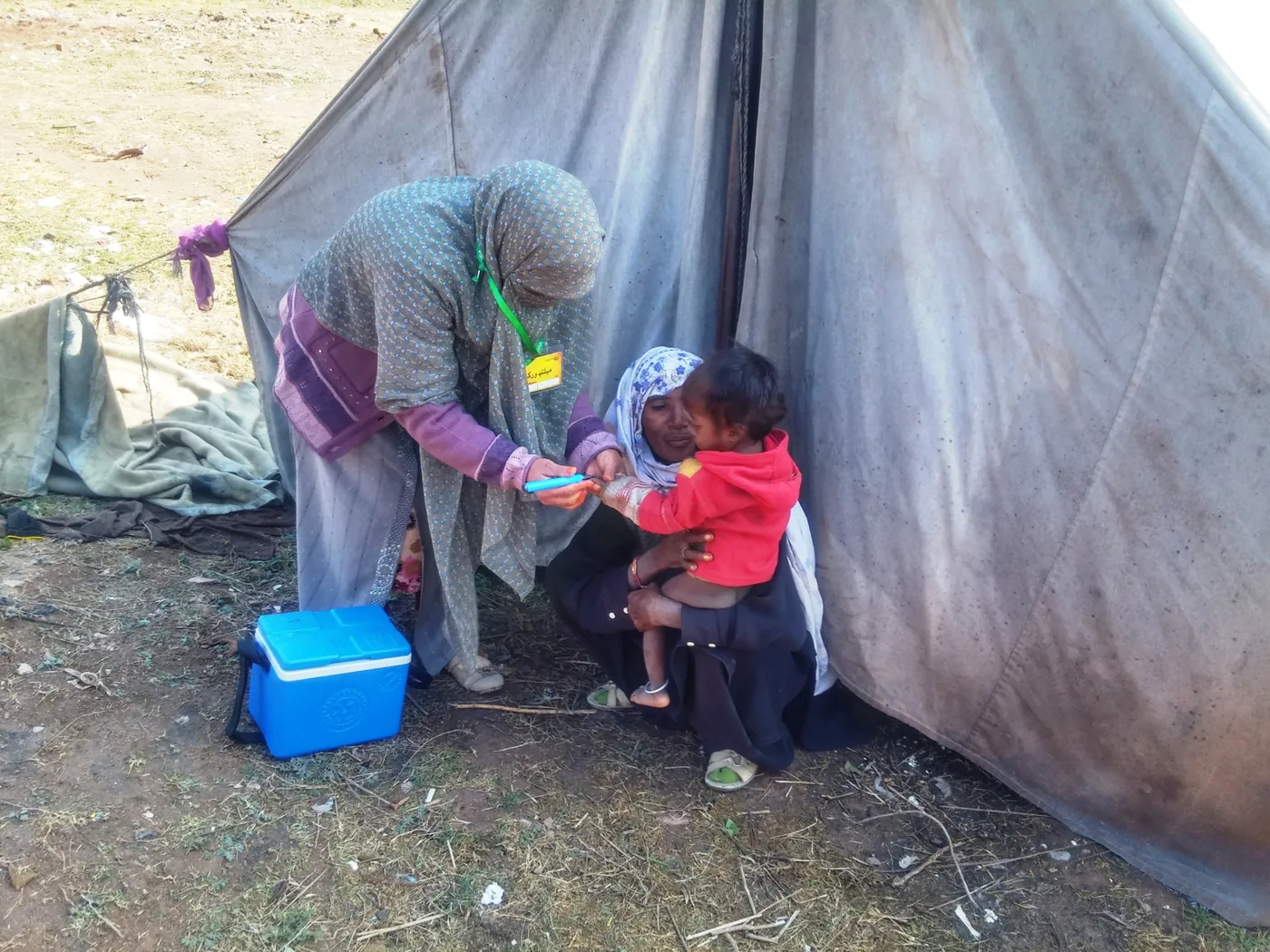
The Associated Press reported WHO Director-General Tedros Adhanom Ghebreyesus’s Nov. 2 warning and his statement that several people were reportedly killed while seeking food in Rama, Tigray. AP said Tedros provided no date or casualty count, did not identify perpetrators, and that no government response was immediately available; the report does not independently verify the deaths. WHO Africa’s Oct. 21 update is a primary source for its report of more than 71 metric tonnes of supplies delivered to Tigray, Amhara and Afar, but does not specify distribution to Rama or say those shipments resolved access gaps. A bounded search for actual-event photos found no reusable image with rights established; AP images carried licensing terms. Both published images are dated archive context, from southern Ethiopia in 2011, and do not depict the current incidents or health response. Originals are retained in public/newsroom/source-originals; display derivatives were proportionally resized and converted to WebP at quality 82, without cropping or content retouching.
A warning alongside an unverified report from Rama
World Health Organization Director-General Tedros Adhanom Ghebreyesus warned Monday that insecurity and renewed attacks were pushing northern Ethiopia’s fragile health system toward collapse. Hospitals in the north lack health workers, medicines and equipment, he said, while ambulance services are severely limited and insecurity is obstructing medical deliveries.
Tedros also said several people were reportedly killed while trying to get food in Rama, a town in the Tigray region. The Associated Press reported that he supplied no date or casualty total for the incident and did not identify those responsible. The deaths remain an attributed report, not an independently verified count; no Ethiopian government response addressing the report was immediately available.
Supplies are moving, but the last mile remains uncertain
A WHO Africa update published Oct. 21 said the agency had delivered more than 71 metric tonnes of essential medical supplies across Tigray, Amhara and Afar. The shipments included emergency health kits, cholera-response materials, reproductive-health kits and medicines for noncommunicable diseases. WHO said it was also supporting mobile health and nutrition teams, disease surveillance and emergency referrals.
That report shows a substantial regional response, but it does not say how supplies were divided among the three regions or whether they reached facilities serving Rama. It therefore cannot establish that local shortages have eased. Deliveries to a region and reliable access for a specific community are different measures, especially where insecurity can interrupt transport and referrals.
Access determines what a health system can deliver
The practical test in the coming days is whether medical workers, ambulances and supplies can reach people who need care. Tedros called for civilians to be protected and for humanitarian assistance to be allowed through. The sources reviewed do not provide current hospital-by-hospital staffing figures, quantify the number of inaccessible facilities or establish whether the reported attacks caused closures.
The warning comes amid renewed fighting in the north and concern over the November 2022 peace agreement between Ethiopia’s federal government and Tigrayan forces. For residents seeking food or emergency treatment, the immediate question is whether access can be restored—not whether regional supply totals alone are rising.
Sources
2 references
- Associated PressEthiopia attacks kill civilians as health system nears collapse, WHO chief saysIndependent reporting on Tedros’s statement: he said hospitals in northern Ethiopia lacked health workers, medicines and equipment, ambulance services were severely limited, and insecurity impeded deliveries. Tedros said several people were reportedly killed seeking food in Rama, but gave no dates, casualty totals or perpetrators. AP reported that it could not verify those details and no government response was immediately available. · 2026-11-02
- World Health Organization, Regional Office for AfricaWHO’s emergency response in Northern EthiopiaPrimary WHO update reporting more than 71 metric tonnes of medical supplies delivered across Tigray, Amhara and Afar, and describing health, surveillance, referral and mobile-team support. It does not give a breakdown for individual locations such as Rama. · 2026-10-21