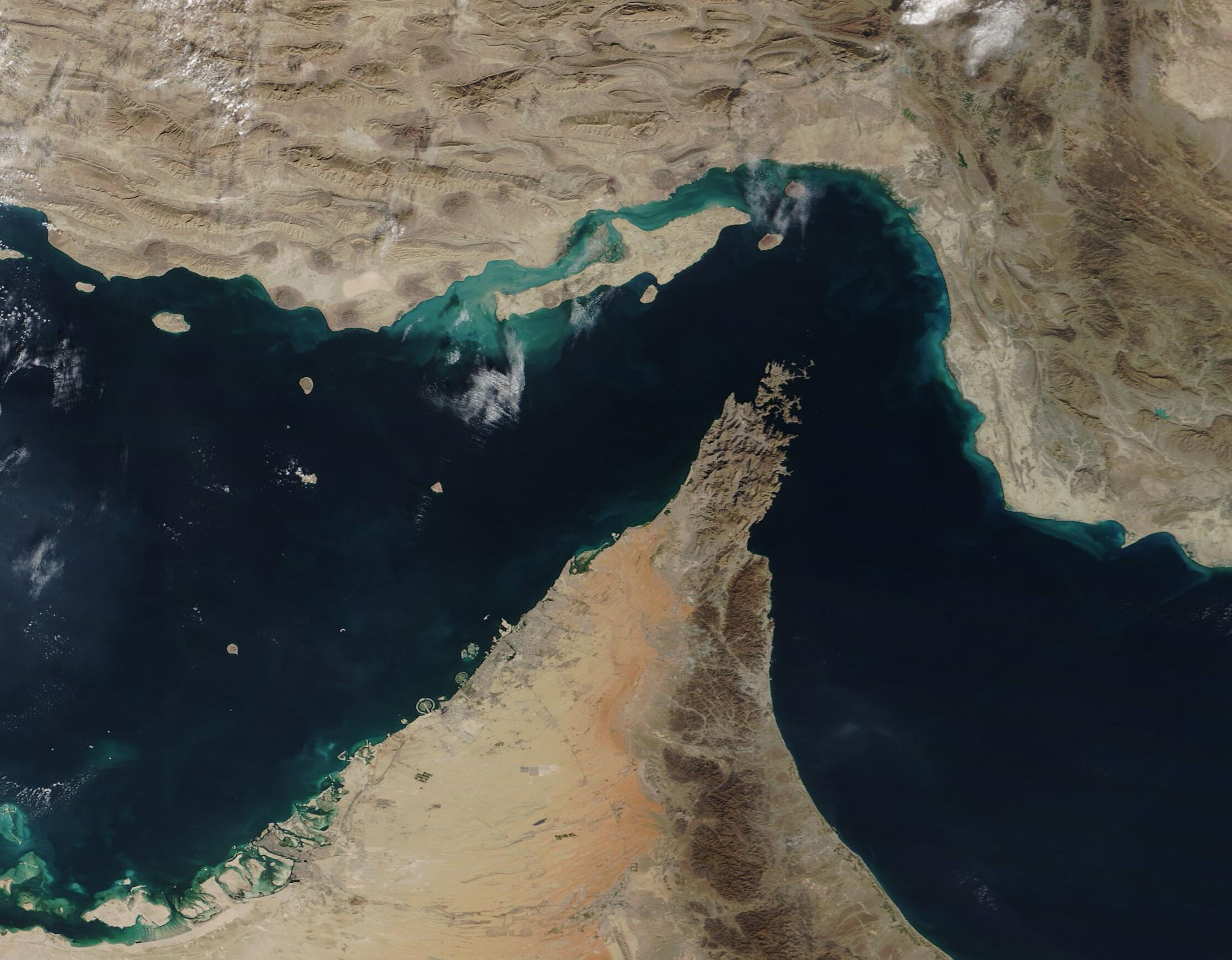
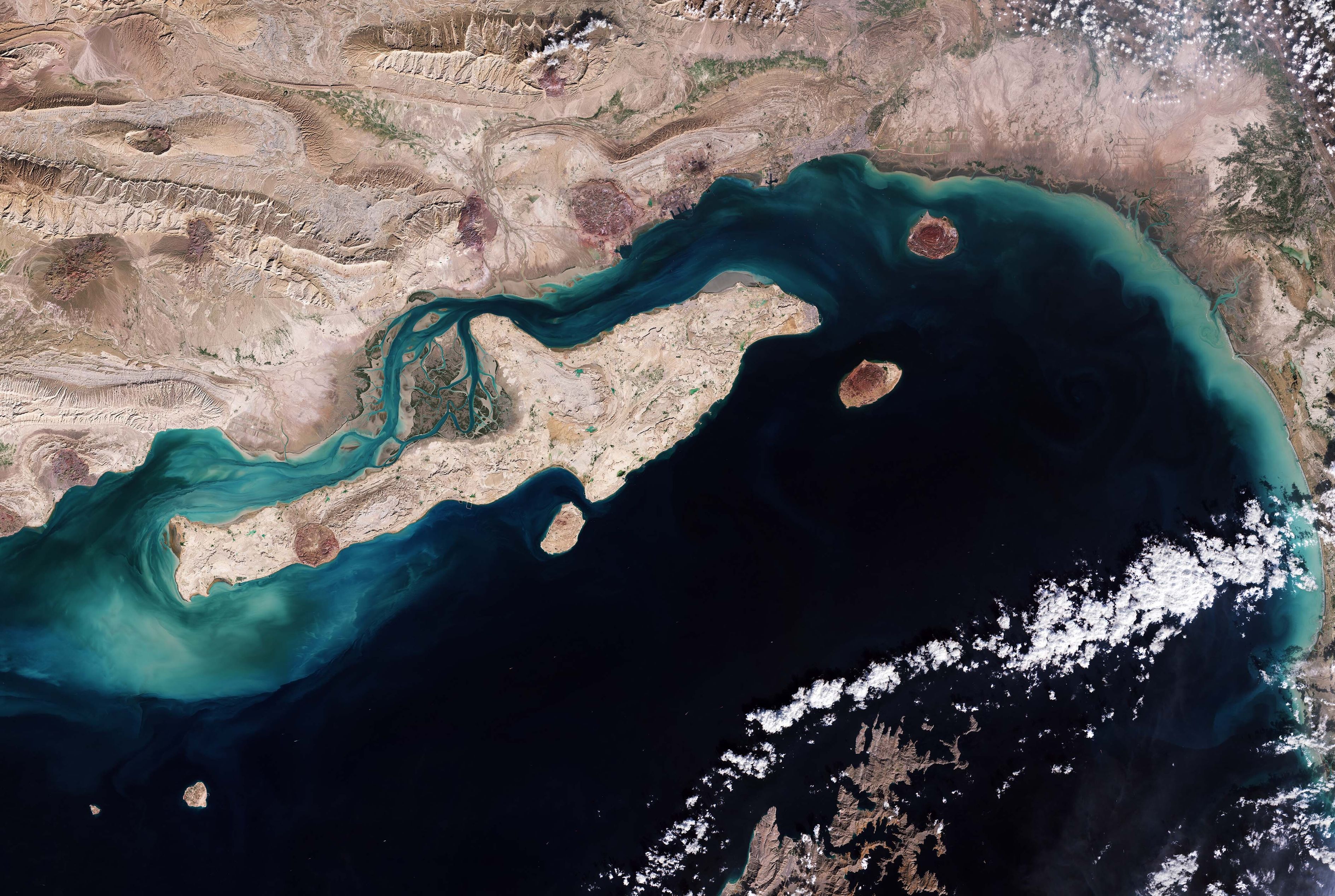
The strike was reported by Associated Press, CBS News and Reuters, each citing U.S. officials; AP and CBS attributed the account of the triggering threat to unnamed officials, and the outlets did not provide an independently verified damage or casualty assessment. CBS said Central Command had not responded to its request for comment at publication. Iran’s state news agency IRNA reported five explosions and reported residents seeing aircraft; Iran International reproduced that dispatch, which did not establish the cause or damage. Reuters recorded the quoted oil prices at 10:43 GMT on Nov. 3 and also reported Qatar’s statement on mediation. The two actual-event photos found in the AP and Reuters reports carried licensing links; no reuse licence was established. The photos used here are dated geographic context, not images of the Nov. 2 strikes: NASA’s Terra/MODIS view was acquired on Dec. 2, 2020, and ESA’s Copernicus Sentinel-2 image was published on May 14, 2021 from 2020 data. NASA imagery is credited under its media-use guidelines; the ESA image is licensed CC BY-SA 3.0 IGO. Both downloaded images are used unchanged.
A limited operation, with key details still unverified
The U.S. military struck Iranian targets near Qeshm Island in the Strait of Hormuz area on Monday, Nov. 2, U.S. officials told several news organizations. CBS News said three officials confirmed limited strikes; a senior official told it the operation targeted Qeshm after Iran’s Islamic Revolutionary Guard Corps fired at an American aircraft. The Associated Press separately quoted a U.S. official, speaking anonymously, who said the targets were Iranians using surface-to-air missiles against U.S. assets in the strait. Those descriptions are officials’ accounts, not a public operational briefing or independent verification of the alleged threat.
Iran’s state news agency IRNA reported five rapid explosions on Qeshm and said residents had reported aircraft over the island. AP also reported Iranian state-media accounts of blasts on nearby Hengam Island and in Bandar Abbas. The reports reviewed for this article did not establish the targets’ damage or a casualty toll.
Why Qeshm matters beyond the battlefield
Qeshm lies alongside the Strait of Hormuz, the narrow maritime gateway between the Persian Gulf and the Gulf of Oman. In peacetime, about one-fifth of the world’s oil supply passed through the waterway, according to AP. Any renewed danger there can raise concerns among shipping companies, insurers and energy traders, although the accounts reviewed here do not establish a new interruption to commercial traffic.
Reuters reported that Brent crude was up 1.3% to $106.13 a barrel and U.S. West Texas Intermediate was up 1.5% to $97.91 at 10:43 GMT on Tuesday. The rise followed a steep fall the previous day amid hopes for progress in talks; Reuters linked the rebound to the strike report and uncertainty about an agreement. The price snapshot reflects several concurrent developments and does not by itself show the strike’s effect on supply.
The strike surfaced as mediation continued
Qatar’s foreign ministry said on Tuesday that Washington and Tehran remained committed to mediation and were reviewing proposals to bridge differences, Reuters reported. Iran had described a proposed two-day path to reopen the strait if the United States accepted its conditions, AP reported. That was a proposal, not an agreement or a confirmed reopening.
The operation was not publicly announced before the news reports, AP said, and came a day before U.S. midterm voting. Its timing alone does not establish a change in negotiating policy or the parties’ next military steps.
Sources
4 references
- Associated PressUS strikes Iranian targets in the Strait of Hormuz, official says, leaving unclear what comes nextReports the U.S. strike, attributes its target description to an unnamed official and reports Iranian state-media accounts of explosions; supplies Strait of Hormuz context and the status of a proposed two-day reopening plan. · 2026-11-03
- CBS NewsU.S. launches defensive strikes at Iranian targets near Strait of HormuzQuotes three U.S. officials confirming limited strikes and attributes the account of an Iranian attack on an American aircraft to a senior U.S. official; says Central Command had not responded to its request by publication. · 2026-11-02
- ReutersOil rises as Iran says war deal remains distant, US strikes QeshmReports the strike via a U.S. official, gives a timestamped oil-market snapshot and quotes Qatar’s foreign ministry on continuing mediation. · 2026-11-03
- Iran International (reproducing IRNA)Five explosions heard on Iran’s Qeshm Island - IRNAReproduces Iran’s state news agency report of five explosions and reports of aircraft over Qeshm; says local and provincial authorities had not issued an official statement at that time. · 2026-11-02