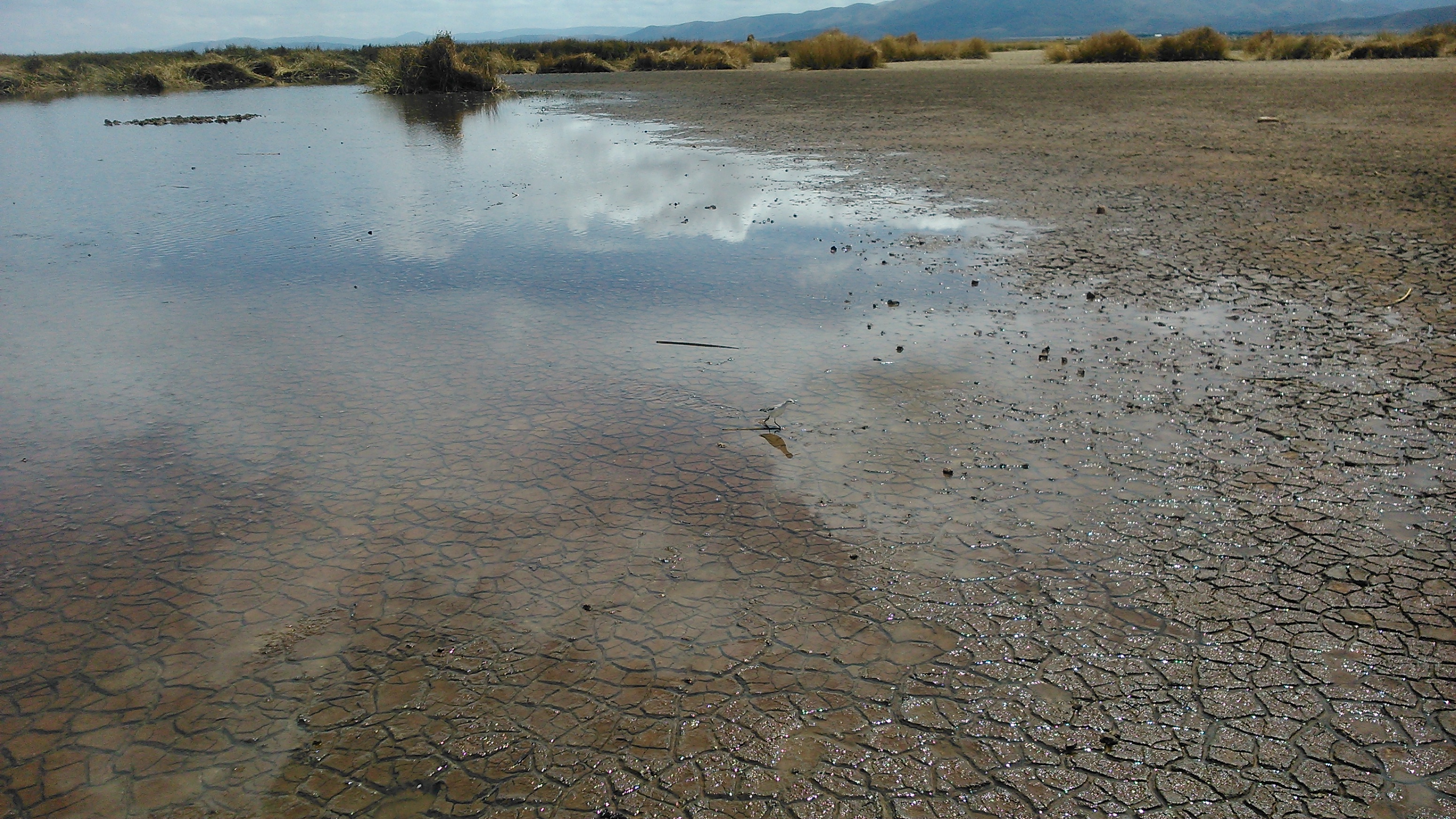
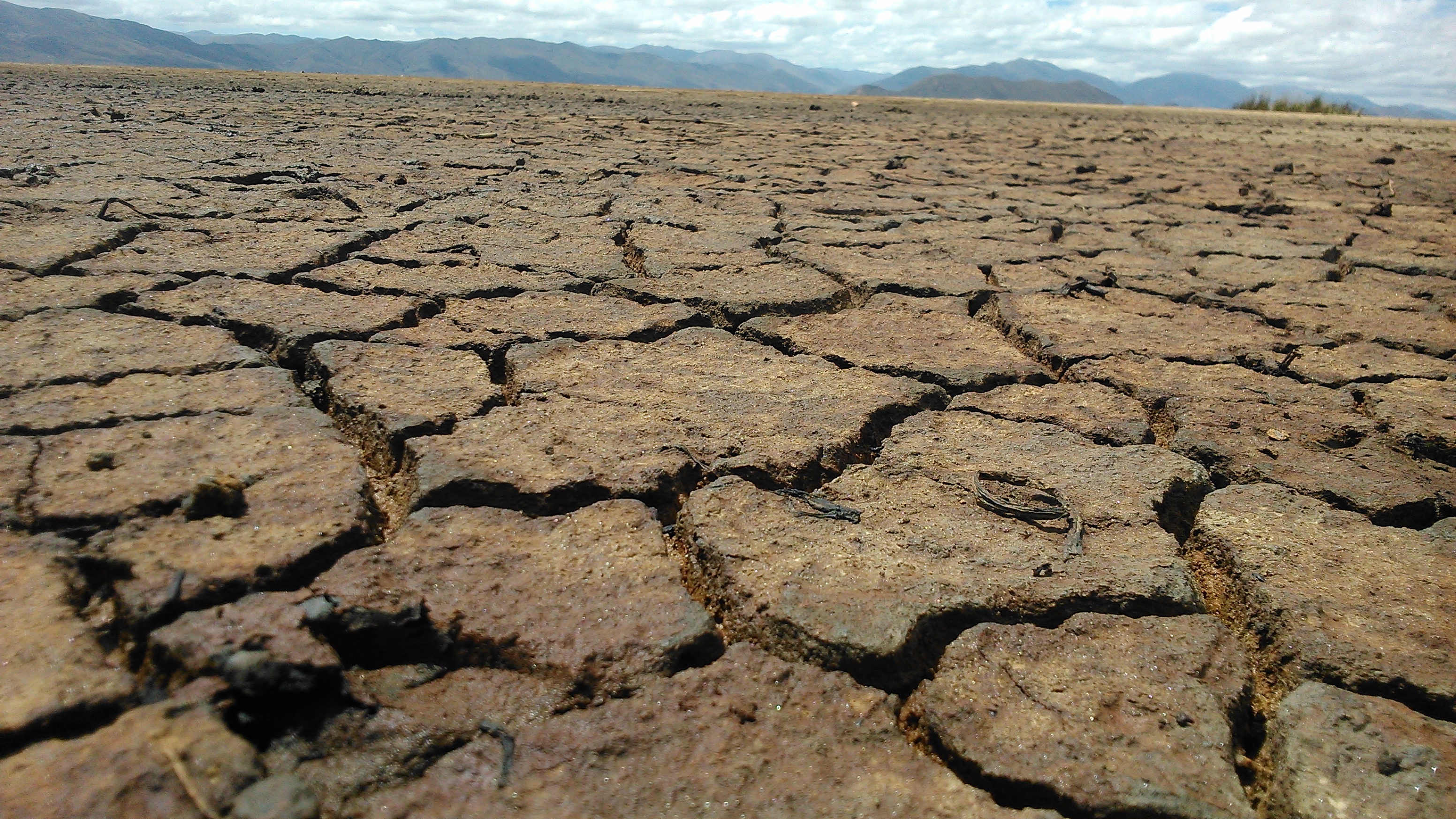
The full text of Supreme Decree 5759, dated Oct. 31, was checked in a reproduction of the text attributed to Bolivia’s Official Gazette; the state-run Bolivia TV reported the Defense Ministry’s figures through Oct. 29, while EFE independently reported the declaration and rounded family count. El Deber separately reported the ministry’s split between households classified as affected and those already suffering direct losses. The figures are official administrative estimates, not an independent audit. Both photographs are licensed CC BY-SA 4.0 archive images of Lake Poopó dated Feb. 17, 2016; they illustrate past drought conditions and do not depict the 2026 emergency.
Decree follows months of reported losses
Bolivian President Rodrigo Paz signed Supreme Decree 5759 on Oct. 31, declaring a national emergency over an existing drought and the risk of further weather extremes linked by the government to El Niño in 2026–27. The order followed a recommendation from the National Council for Risk Reduction and Disaster Response on Oct. 30.
Government records cited by Defense Minister Ernesto Justiniano cover June 1 to Oct. 29. They list 114,048 households in 63 municipalities across six departments: 78,217 classified as affected and 35,831 as having suffered direct losses. The same tally reports 167,511 hectares affected, 60,106 hectares lost and 75,013 head of livestock lost.
EFE separately reported the emergency declaration and cited a rounded estimate of more than 78,000 families affected by drought. The figures describe government records, not an independent assessment of every household or loss.
The order covers several kinds of weather risk
The decree identifies drought already present in the Altiplano, the valleys and the Chaco. It also lists potential frost, hail, wildfire, flooding and river overflow risks associated with El Niño. Those are hazards officials say they are preparing for; the order does not mean that each event will occur in every region.
El Niño is a naturally recurring warming of surface waters in the tropical Pacific that can shift rainfall and temperature patterns. In Bolivia, the decree focuses on preparing for both water shortages and intense rain, rather than treating the emergency as a drought-only response.
The decree sets out coordination, not a cash total
The order directs ministers to carry out its measures and says the response should protect life, health and livelihoods while strengthening preparation, response and recovery. Its preamble refers to activating contingent-financing mechanisms, but the decree itself names no dollar amount and does not say that a particular loan has been drawn.
Bolivia TV reported that officials plan to coordinate with the national weather service, agricultural risk teams and municipal associations. The published sources reviewed for this report do not identify a specific allocation or disbursement tied to the declaration.
Sources
4 references
- Supreme Decree 5759 (full text reproduced by Eju.tv)Bolivia declares national emergency over drought and El Niño risksFull decree dated Oct. 31, including its risk list, stated purpose and directive assigning implementation to ministers; the text gives no specific funding amount. · 2026-10-31
- Bolivia TVMore than 114,000 families affected by drought in BoliviaState television report quoting Defense Minister Ernesto Justiniano on government records through Oct. 29: households, municipalities, communities, hectares and livestock losses. · 2026-11-01
- EFEBolivian government declares national emergency over El NiñoIndependent report on the Oct. 31 decree, its stated purpose and the Vice Ministry of Civil Defence’s drought figures. · 2026-11-01
- El DeberDrought report details household and agricultural lossesBolivian reporting on the Defense Ministry’s data and the distinction between households affected and those classified as having suffered direct losses. · 2026-11-01