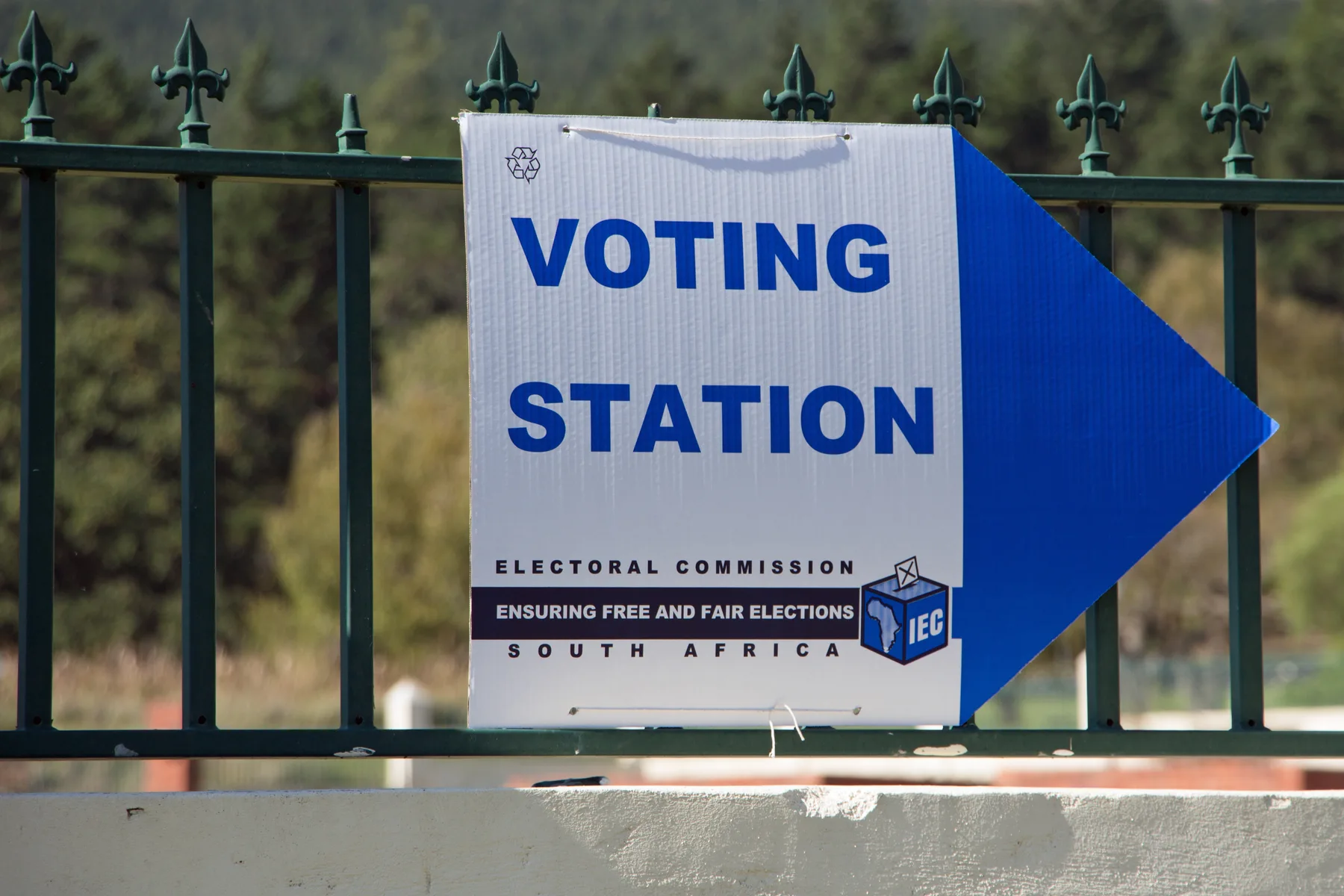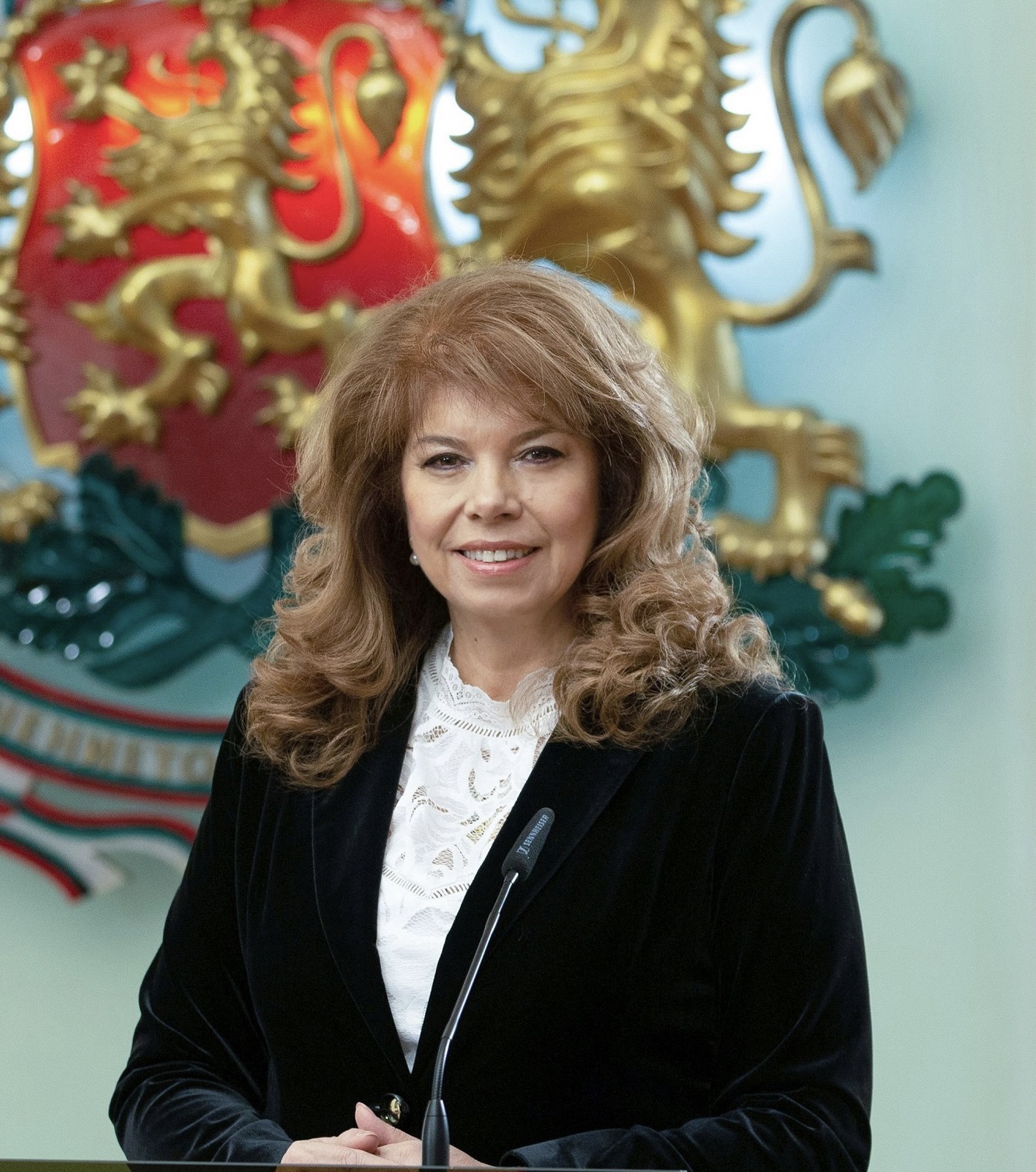
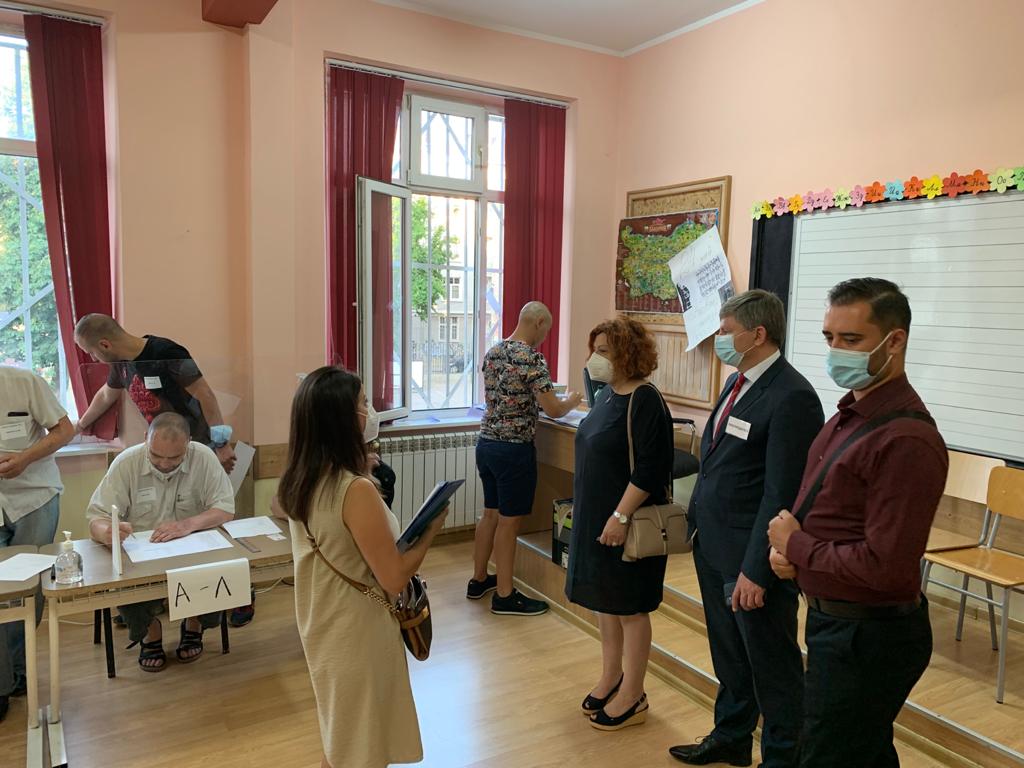
Bulgaria’s Central Election Commission reported the final second-round count at 09:15 on Nov. 2, with 100% of precinct protocols processed: Iliana Iotova and Kiril Valchev received 1,093,852 votes (57.566%); Andrey Gyurov and Georgi Kandev received 750,251 (39.483%); 56,080 voters selected “I support no one.” Reuters’ earlier Nov. 2 report used the near-final count (99.95%) and gave rounded figures; AP’s Nov. 1 report was based on initial counts and concession statements. The text distinguishes the CEC tally from any later formal inauguration. Both photos are contextual: the official portrait is dated Jan. 23, 2026, and the polling-station image shows OSCE Parliamentary Assembly observers during Bulgaria’s July 2021 parliamentary election, not the Nov. 1 presidential runoff.
Final count confirms Iotova’s win
Iliana Iotova has won Bulgaria’s Nov. 1 presidential runoff, becoming the first woman elected to the country’s head-of-state office, according to the Central Election Commission’s final count.
With all precinct protocols processed, Iotova and running mate Kiril Valchev received 1,093,852 votes, or 57.566%. Their opponents, Andrey Gyurov and Georgi Kandev, won 750,251 votes, or 39.483%. A further 56,080 voters selected the ballot option “I support no one,” the commission’s results show.
The result completes Iotova’s transition from acting president to an elected mandate. She assumed the office in January after Rumen Radev resigned to run in parliamentary elections.
A strong result for the governing camp
The presidency is directly elected but is not the center of Bulgaria’s day-to-day executive power. The prime minister and cabinet govern, while the president leads the armed forces, signs treaties, appoints ambassadors and can return legislation to parliament for reconsideration.
That distinction makes the result a signal of political support rather than a change of government. The Associated Press reported that Radev’s Progressive Bulgaria party won a parliamentary majority in April and endorsed Iotova. Her election gives that governing camp continuity in the presidency, but does not replace parliament’s role in setting policy.
Foreign policy will draw attention
Iotova has backed diplomatic efforts to end Russia’s war in Ukraine, a position she shares with Radev, Reuters reported. The Associated Press said she had also called for closer relations with Russia while maintaining Bulgaria’s European orientation.
Bulgaria is a member of both the European Union and NATO. Its president has a limited executive role, but a nationwide mandate gives the office public visibility on security and foreign policy. The vote does not itself change Bulgaria’s alliance commitments or the government’s policies.
Sources
4 references
- Central Election Commission of BulgariaSecond-round presidential election results — national summary (100% of precinct protocols)Official final tally: 1,093,852 votes (57.566%) for Iotova-Valchev, 750,251 (39.483%) for Gyurov-Kandev, and 56,080 votes for “I support no one,” with 100% of precinct protocols processed. · 2026-11-02
- Radio BulgariaIliana Iotova is Bulgaria’s 7th president and first woman elected to the postReports the CEC’s 100% tally, approximate 27% turnout and that Iotova is the first woman elected to the office. · 2026-11-02
- ReutersBulgaria’s Iotova wins presidential runoff, near-final results showIndependent reporting on the Nov. 1 runoff and earlier 99.95% count; reports Iotova and Radev’s calls for a diplomatic end to the war in Ukraine. · 2026-11-02
- Associated PressInitial results suggest Yotova wins runoff to become Bulgaria’s first elected female presidentIndependent reporting on the candidates, concession, political context and the president’s constitutional role; its initial-count figures are not used as final results. · 2026-11-01