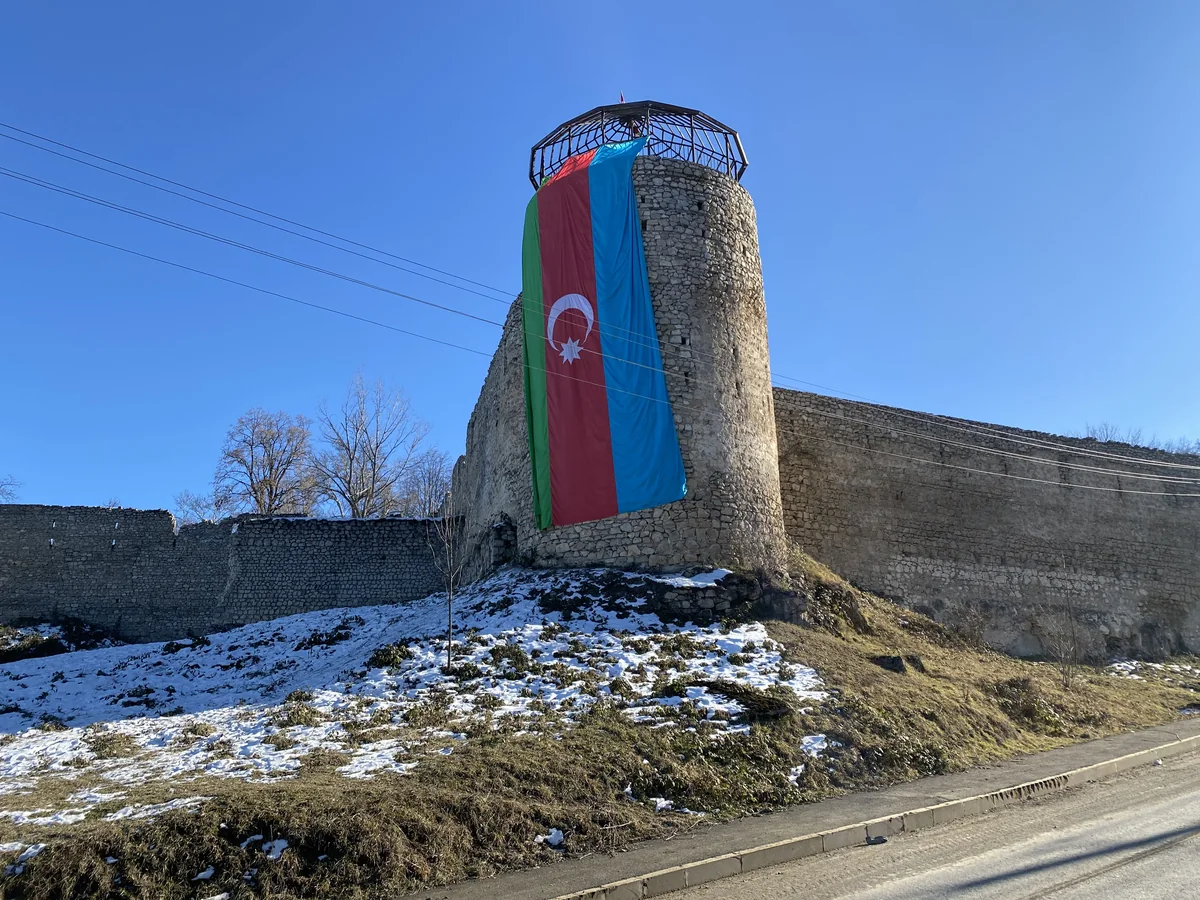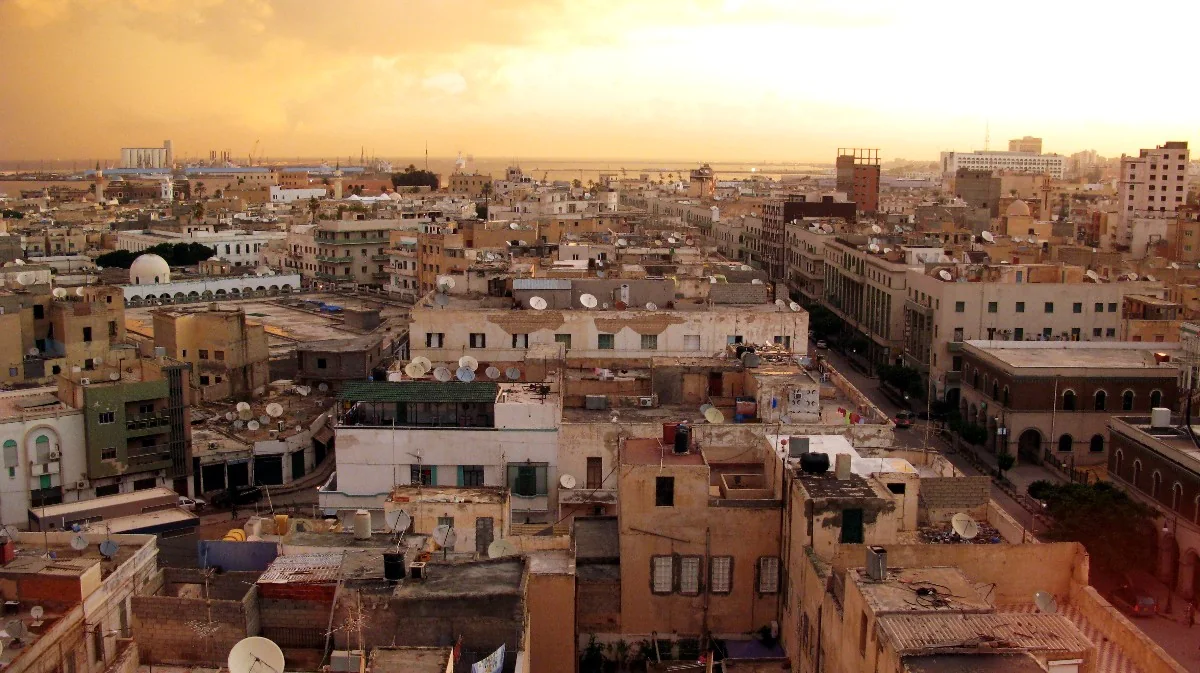
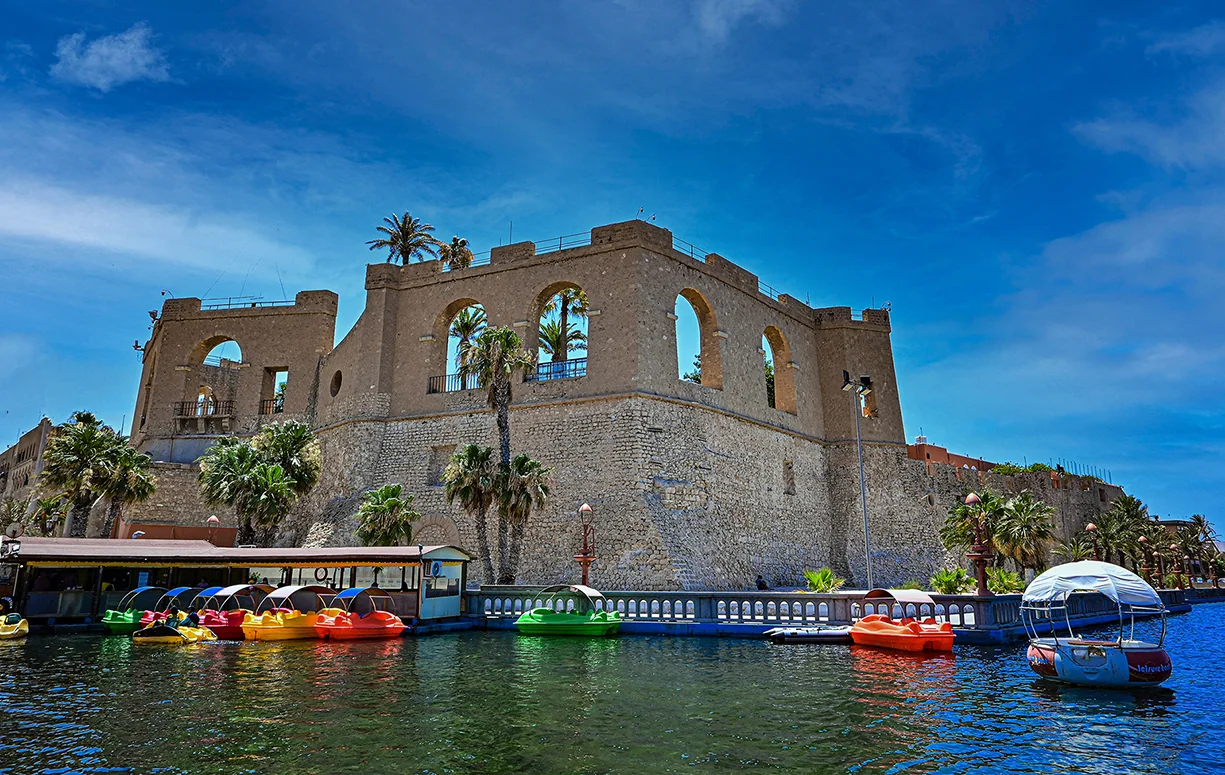
Reuters reports the reopening from a statement by Egypt’s foreign ministry and places it against Cairo’s past support for eastern commander Khalifa Haftar. Ahram Online independently reports the ceremony, participants and agreements, and gives the 2014 security history; it attributes historical-building details to the Egyptian ministry. No original government release was located in the accessible sources reviewed. The bounded search for photographs of the Nov. 7 reopening found agency images offered for licensing, without a reusable licence established here. The two images used are dated context photographs: a Tripoli cityscape from Nov. 7, 2007, and the Red Castle in central Tripoli from July 12, 2023. Neither depicts the embassy or the reopening ceremony. Each source, creator, licence, original file and modification is identified in the captions and image records below.
Reopening a building, restoring a channel
Egypt reopened the historic headquarters of its embassy in Tripoli on Nov. 7, ending a 12-year closure and marking renewed engagement with Libya’s western-based authorities. Foreign Minister Badr Abdelatty reopened the mission; Libya’s acting foreign minister, Taher Al-Baour, attended the ceremony.
The date marks the embassy building’s return to use, not the sudden restoration of all contact between the two countries. Egypt sent a high-level delegation to Tripoli in 2021 to discuss reopening the embassy and consulate, Ahram Online reported. The historic headquarters itself had remained closed.
Health cooperation gives the visit a practical side
Abdelatty also met Libyan Prime Minister Abdulhamid Dbeibah, who heads the Tripoli-based Government of National Unity. The two sides signed a memorandum of understanding on health cooperation, which Ahram said is intended to support medical expertise exchanges and cooperation between healthcare institutions.
The embassy’s return and the health agreement give the visit both a diplomatic and a practical dimension. They create a clearer channel for day-to-day contacts, although the published accounts do not describe new staffing levels, services or a wider agreement on Libya’s political settlement.
A diplomatic move inside a divided Libya
Libya continues to have rival centres of authority. The Government of National Unity is based in Tripoli, while eastern Libya has a rival administration led by Osama Hammad, a House of Representatives and forces commanded by Khalifa Haftar. Reuters reported that Cairo has been one of Haftar’s prominent backers.
Against that background, reopening Egypt’s historic mission in Tripoli is a notable engagement with the western-based government. It does not, on its own, show that Cairo has abandoned its eastern relationships or that Libya’s institutions have been reunified.
Egypt evacuated its diplomats from Tripoli in January 2014 after five Egyptian diplomatic personnel were kidnapped. Later that year, armed men looted the unoccupied embassy and a car bomb exploded outside it, Ahram reported. The reopening therefore restores a physical diplomatic presence after years of insecurity, while leaving the country’s political division unresolved.
Sources
2 references
- ReutersEgypt reopens embassy in Libya’s Tripoli after 12-year closureOriginal reporting; cites Egypt’s foreign ministry statement for the reopening and describes Cairo’s past support for Haftar and Libya’s rival east-west authorities. · 2026-11-07
- Ahram OnlineEgypt reopens embassy in Tripoli after 12-year closureEgyptian reporting on the ceremony, acting Foreign Minister Taher Al-Baour’s attendance, Abdelatty’s meeting with Abdulhamid Dbeibah, the health-cooperation memorandum and the 2014 evacuation history. · 2026-11-08