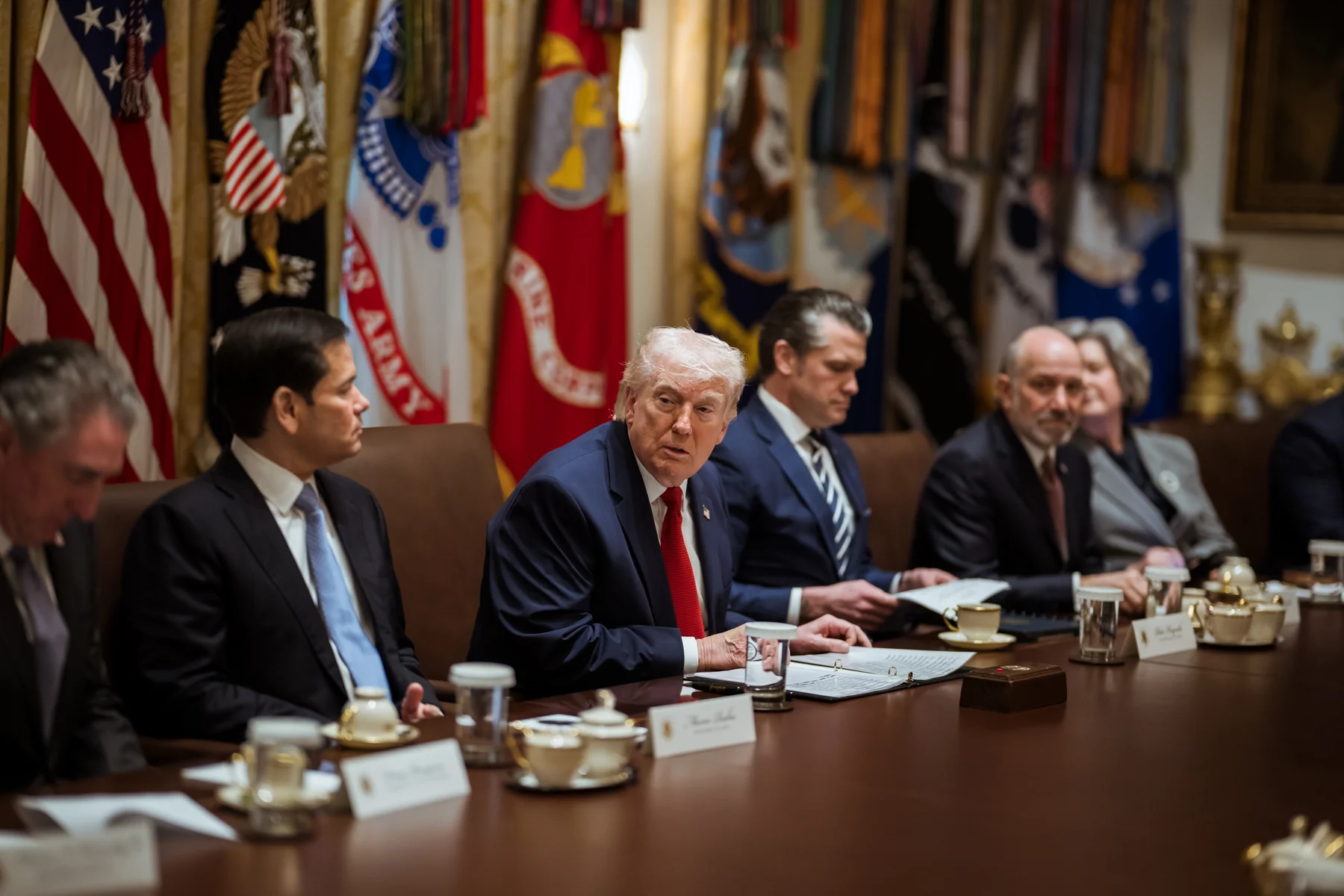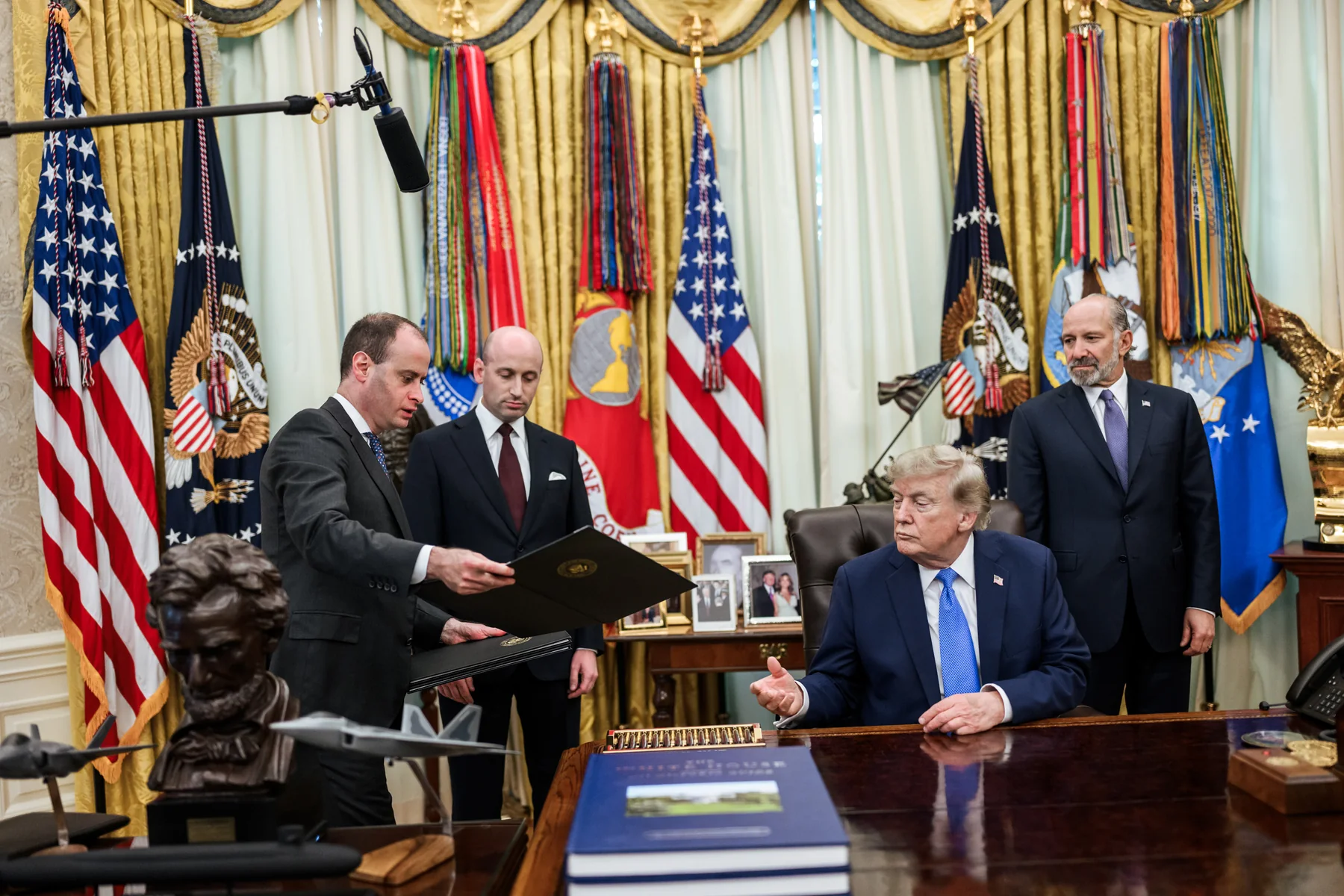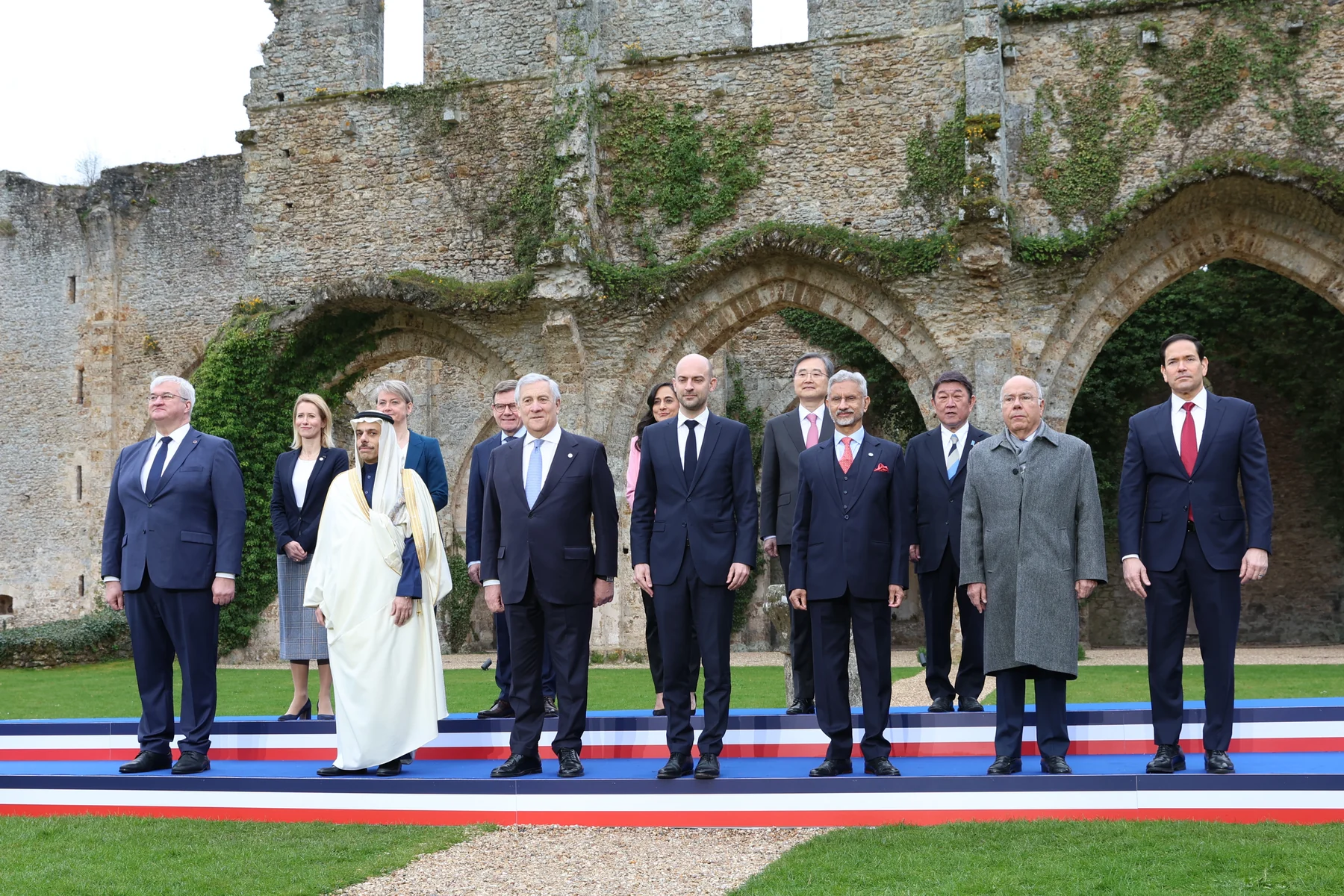
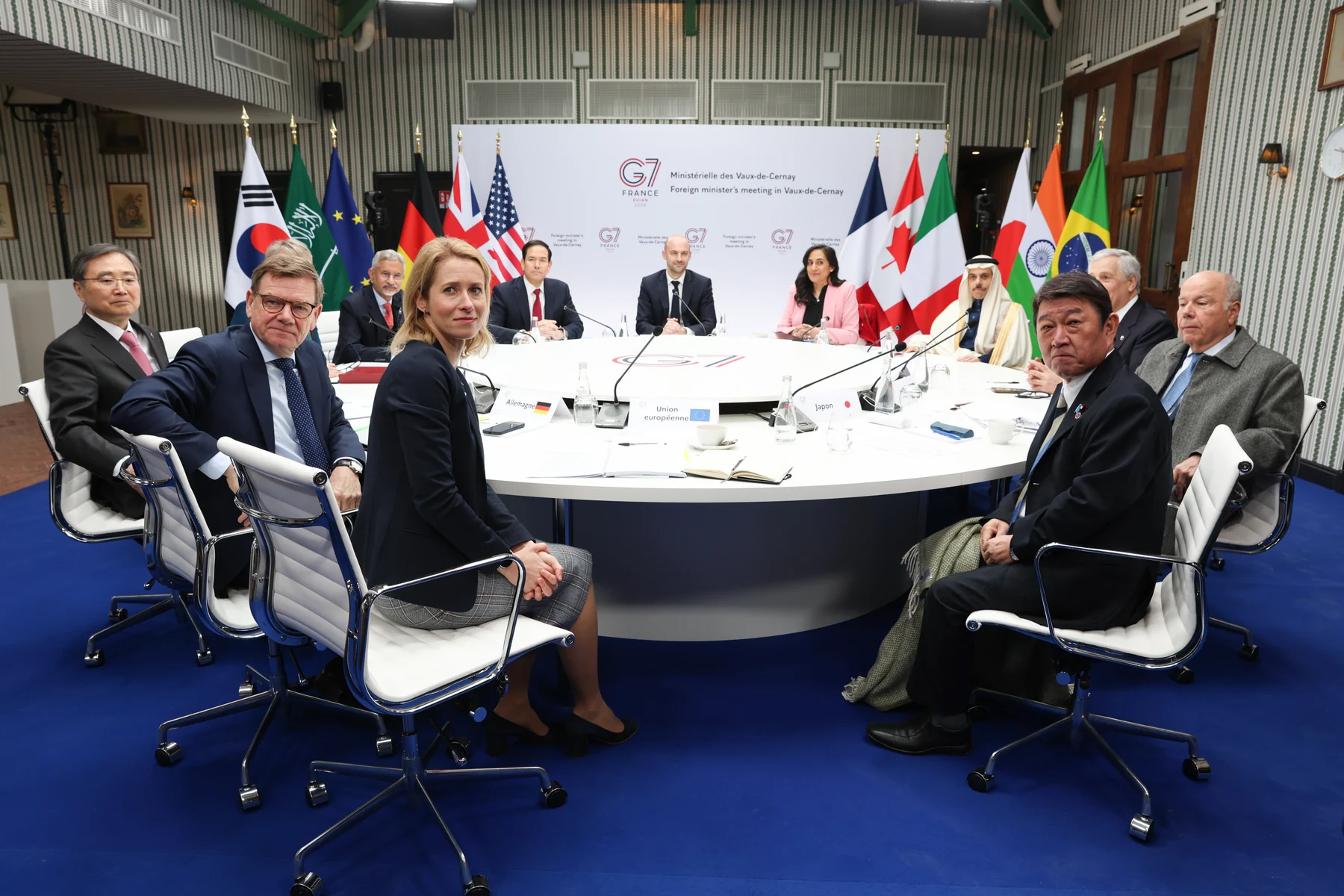
The Paris meeting was scheduled for Nov. 9–10; no outcome was available at publication. Reuters reports Foreign Minister Antonio Tajani said France accepted his proposal and that he had no proof of Russian-government involvement. AP says Tajani did not identify a perpetrator or specify the exposed data. Italy’s ministry says its cyber-security authorities found his personal data on the dark web; that account is attributed, not independently verified here. Both images are archival photographs of a separate G7 foreign ministers’ meeting at Vaux-de-Cernay, France, on March 27, 2026—not the November meeting or a cyber incident.
Cyber threats added to the Paris agenda
G7 foreign ministers are due to discuss recent cyberattacks at a Paris meeting on Nov. 9–10 after France accepted an Italian proposal to raise the issue, Italian Foreign Minister Antonio Tajani said Sunday. The discussions would bring cyber activity into a meeting already covering Ukraine and wider security concerns.
Reuters reported Tajani said French Foreign Minister Jean-Noël Barrot accepted his request to put the issue on the agenda. Canada separately said Foreign Minister Anita Anand would attend in Paris and lead G7 discussions on hybrid threats, Russia’s war on Ukraine, Haiti and artificial intelligence.
The G7 is an informal forum comprising Canada, France, Germany, Italy, Japan, the United Kingdom and the United States, with the European Union also participating. The meetings allow ministers to coordinate positions, but an agenda item does not itself amount to a joint decision or response.
Rome’s account does not establish who was behind the leak
Italy’s foreign ministry said its cyber-security offices had detected personal data belonging to Tajani on a dark-web area accessible through Tor. The ministry said Tajani linked the threat to Italy’s support for Ukraine and asked the G7 presidency to address hybrid threats. It did not publicly detail what information was exposed.
The Associated Press reported that Prime Minister Giorgia Meloni blamed pro-Russian hackers, while Tajani did not identify who was responsible. Reuters reported Tajani said the suspected hackers were pro-Russian but that he had no proof the Russian government was involved. Those are separate claims: suspected group alignment is not evidence that a state directed an operation.
The ministers have yet to agree on a response
“Hybrid threats” is a broad term governments use for activity that can combine cyber operations, influence campaigns, sabotage or other pressure. Officials often use it when responsibility or the method remains uncertain; the label alone does not identify a perpetrator.
The material reviewed before the meeting confirms that the issue was expected to be discussed, not what the ministers would conclude. No shared attribution, sanctions plan or other G7 measure had been announced by publication time. The content of the leaked data and the identity of the attackers remain unclear in the cited reporting.
Sources
4 references
- ReutersG7 ministers to discuss recent cyber attacks, Italy saysOriginal reporting: meeting dates, Tajani’s account that Jean-Noël Barrot accepted the proposal, and Tajani’s explicit caveat that he had no proof of Russian-government involvement. · 2026-11-08
- The Associated PressItaly’s Meloni blames pro-Russian hackers for leak of foreign minister’s data on the dark webIndependent reporting: Tajani said personal data was posted, but did not specify the information or identify who was responsible; Meloni separately blamed pro-Russian hackers. · 2026-11-07
- Italian Ministry of Foreign AffairsTajani: personal data posted on the dark web; asked to discuss hybrid threats at the next G7 foreign ministers’ meetingPrimary statement: the ministry says its cyber-security offices detected Tajani’s personal data on a Tor-accessible dark-web area and says he requested the issue be placed on the Nov. 9–10 Paris agenda. Attribution remains the ministry’s. · 2026-11-07
- Global Affairs CanadaMinister Anand to participate in G7 Foreign Ministers’ Meeting in FrancePrimary schedule and agenda confirmation: Canada’s foreign minister was due in Paris, where Canada said it would lead discussions on hybrid threats, Ukraine, Haiti and artificial intelligence. · 2026-11-08