The French authorities’ statement published by Inserm was compared with ECDC’s assessment and Reuters reporting read via Internazionale. These establish the reported detection; the route of infection and its contribution to the patient’s death remain under investigation.
Detection in a patient receiving hospital care
French authorities announced the first documented human infection with Shamonda virus on October 22, after identifying it in a severely immunocompromised patient treated for a serious illness at the Hospices Civils de Lyon. The patient died in early October.
The virus had previously been reported in animals. French investigators consider the patient’s brain complications very likely linked to the infection, according to a statement published by Inserm. ECDC says investigations into whether the virus caused or contributed to the death are continuing.
French authorities said they had identified no health risk to the general population on the available evidence. WHO told Reuters that the isolated human case was unlikely to lead to wider spread at this stage.
An insect bite is the leading hypothesis
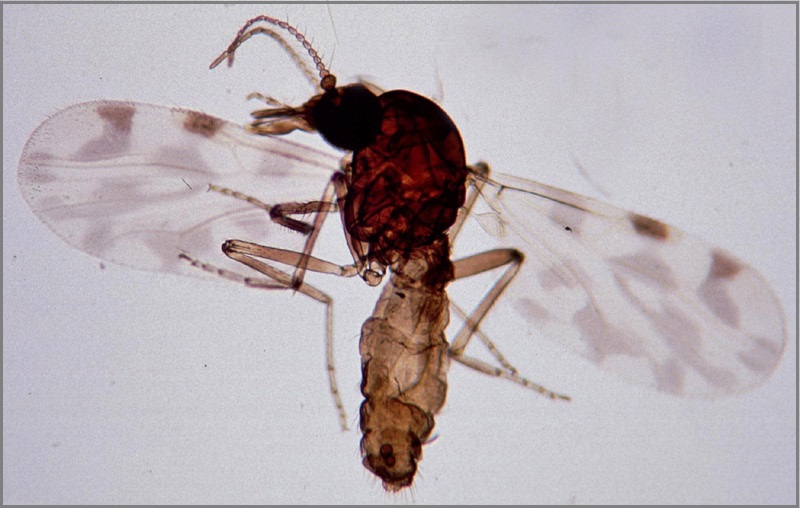
Investigators suspect a bite from a Culicoides midge in eastern France, where the virus circulated among animals during spring and summer 2026. The transmission route has not been established, and ECDC says the specific midge species involved is unknown.
Grégory Emery, head of France’s health directorate, told reporters there had been no report of cattle-to-human or human-to-human transmission, according to Reuters. The suspected insect route is distinct from direct contact with livestock.
Animal infections preceded the human detection
Shamonda was first identified in Nigeria in the mid-1960s and subsequently reported in animals in Africa and Japan. European farm-animal infections were identified in summer 2026; cattle are considered the principal animal hosts, with infections also detected in other species.
The human case changes what is known about the virus’s ability to infect people, but one patient with a severely weakened immune system cannot establish the risk for the wider population. ECDC is working with the relevant EU reference laboratory to strengthen testing capacity and help countries identify any further cases.
Sources
3 references
- Inserm / French health and agriculture authoritiesVirus Shamonda : une première détection chez l’être humainPrimary evidence — joint public-health statement · 22 October 2026
- European Centre for Disease Prevention and ControlSeverely ill patient in France becomes first ever human infected with Shamonda virusPrimary evidence — European public-health assessment · 22 October 2026
- Reuters via InternazionaleFrance reports first human case of livestock virus Shamonda after patient diesIndependent agency reporting; syndicated English text · 22 October 2026