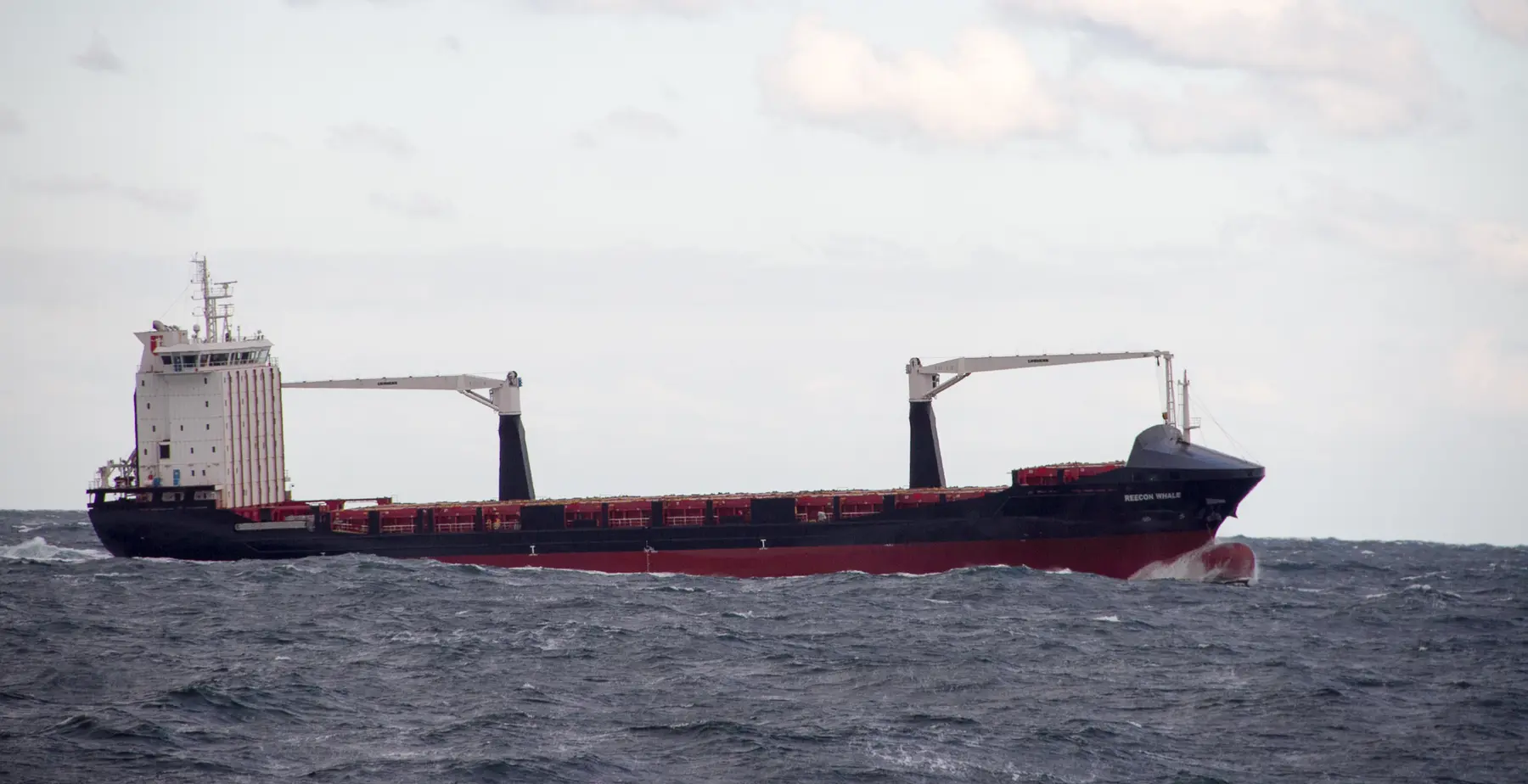
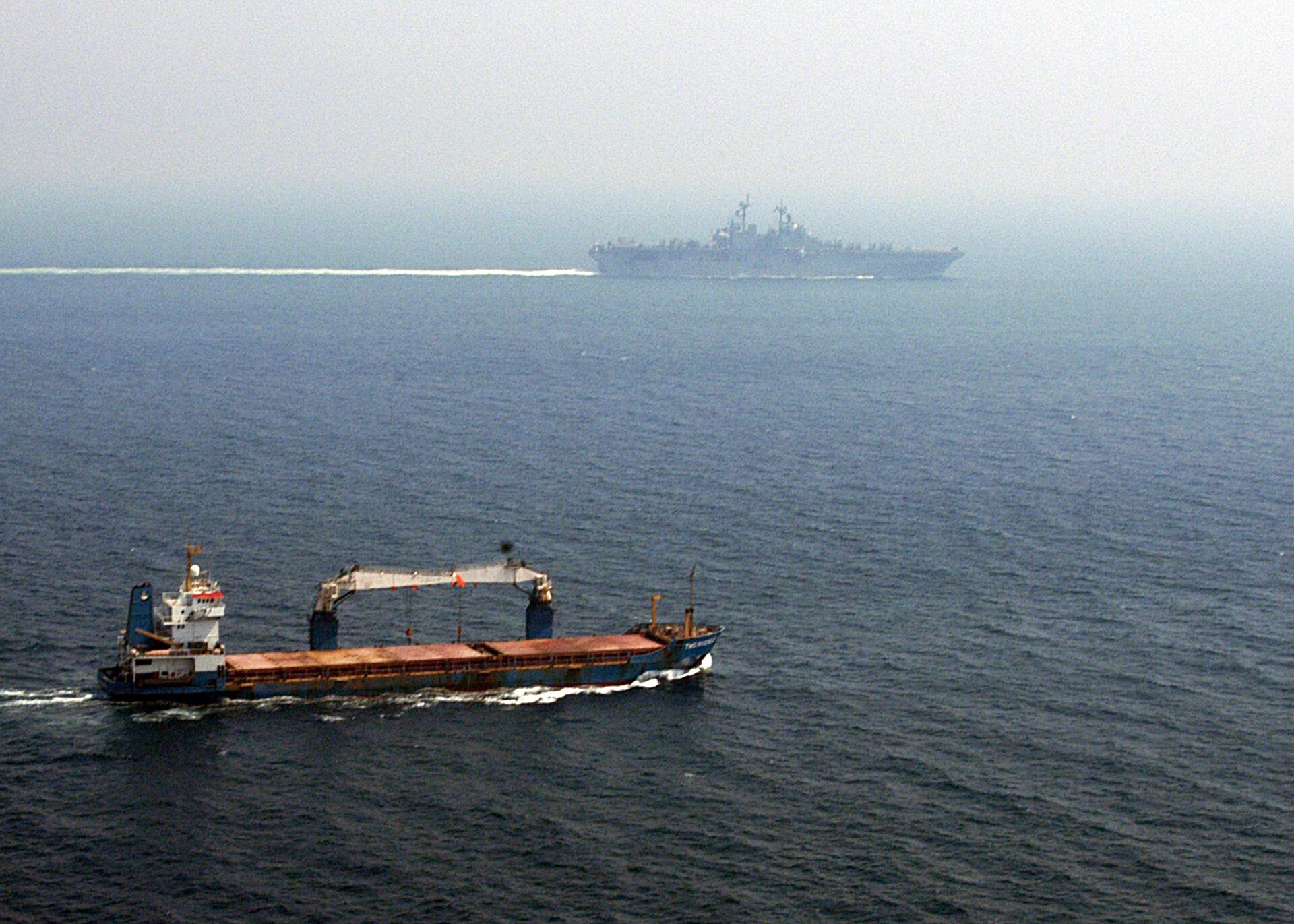
Reuters reported that UKMTO said the crew was safe, the fire extinguished and the vessel continuing to port; three maritime security sources identified it as Louise 1 and the explosives as limpet mines. UKMTO’s public recent-incidents page displayed zero reports when checked, so the vessel identity and mine assessment rely on Reuters’ attributed sourcing. No attacker was identified. Both photographs are public-domain U.S. Navy archive images, dated 2005 and 2004, and do not depict this incident.
A fire, then a return to port
A tanker transiting the Strait of Hormuz caught fire after explosives were attached to its hull, a new threat to commercial shipping on a route central to global energy trade. The crew was safe, the fire had been put out and the ship was continuing toward its next port, according to the United Kingdom Maritime Trade Operations (UKMTO).
Reuters reported on Friday, citing three maritime security sources, that the vessel was the Panama-flagged Louise 1 and that two limpet mines caused the engine-room fire. UKMTO’s public account did not name the ship. The attack happened on Thursday, October 29, about 25 nautical miles (46 kilometres) northeast of Khasab, Oman.
The attacker remains unknown
No one had been identified as responsible. The distinction matters: Iranian state media separately claimed that three tankers had hit mines, but that claim is not evidence that Iran carried out this attack. Reuters said the Louise 1 incident was the first known successful limpet-mine strike in the waterway since the U.S.–Iran war began in February; a September attempt reportedly failed to detonate.
Limpet mines are explosives attached directly to a vessel’s hull, often by divers or small craft. Their low-profile use can make attribution difficult. The Strait remains a critical passage for oil and gas: the U.S. Energy Information Administration estimated that 4.9 million barrels of oil per day transited it in the second quarter of 2026, down sharply from 21.6 million barrels a day in the final quarter of 2025 as the conflict disrupted traffic.
A narrow route with wider consequences
The incident did not produce a reported spill or crew injuries, but it adds to the security risk facing ships moving between Gulf export terminals and global markets. A fire that disables a vessel can also complicate traffic through a narrow shipping lane even when the ship remains afloat.
The available public reporting does not establish who placed the explosives or whether the attack was linked to other incidents. The vessel’s operator had not immediately responded to Reuters’ request for comment.
Sources
3 references
- ReutersTanker in Strait of Hormuz hit by limpet mines, security sources sayIndependent reporting; UKMTO account and three maritime security sources identify vessel and explosive method · 2026-10-30
- UK Maritime Trade OperationsRecent incidents and maritime security reportingPrimary maritime-security reporting service; public incident list displayed zero reports when checked · 2026-10-30
- U.S. Energy Information AdministrationShort-Term Energy Outlook: energy security and transit chokepointsOfficial context on the Strait’s oil flows; EIA estimated 4.9 million barrels per day in the second quarter of 2026 · 2026-08-01