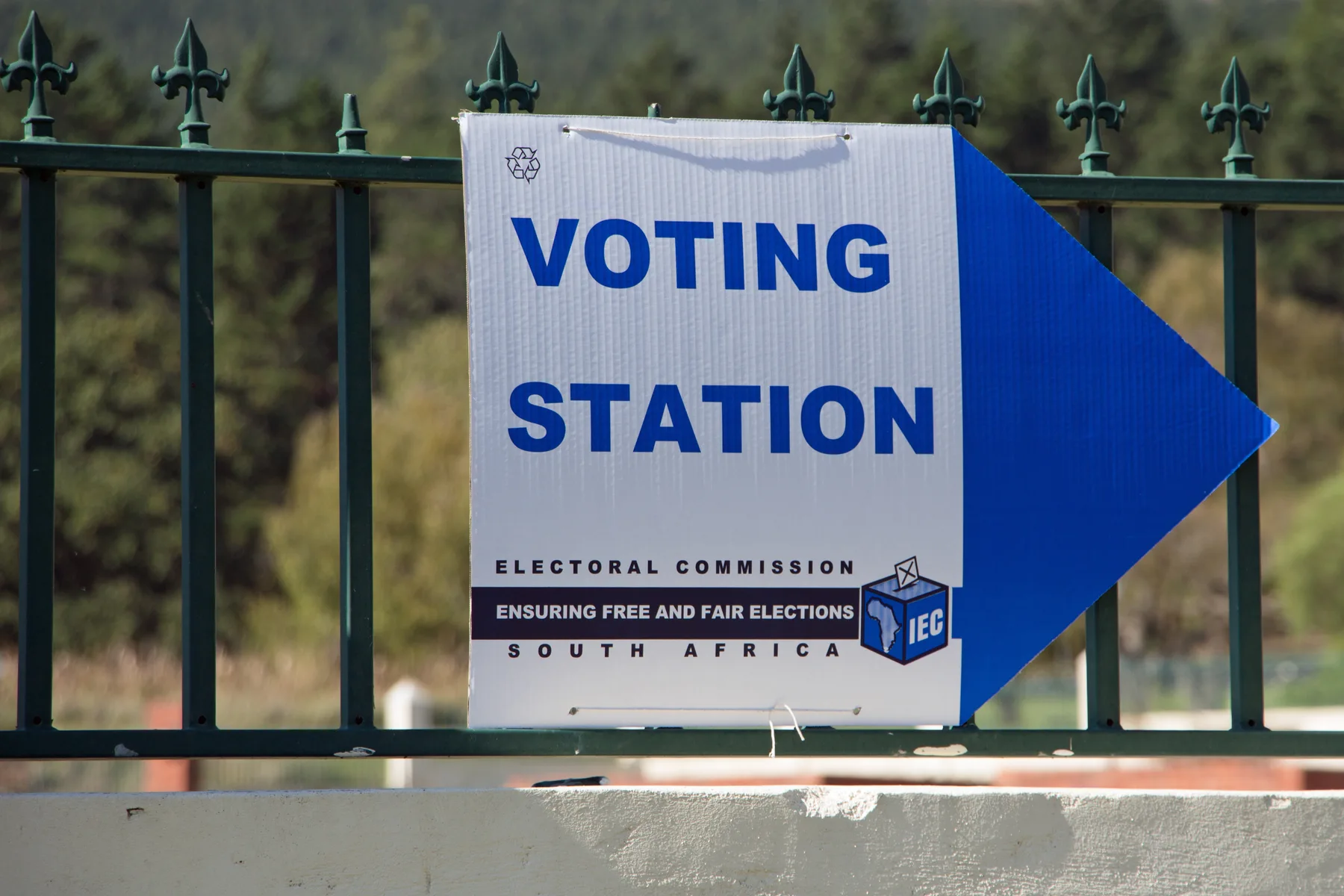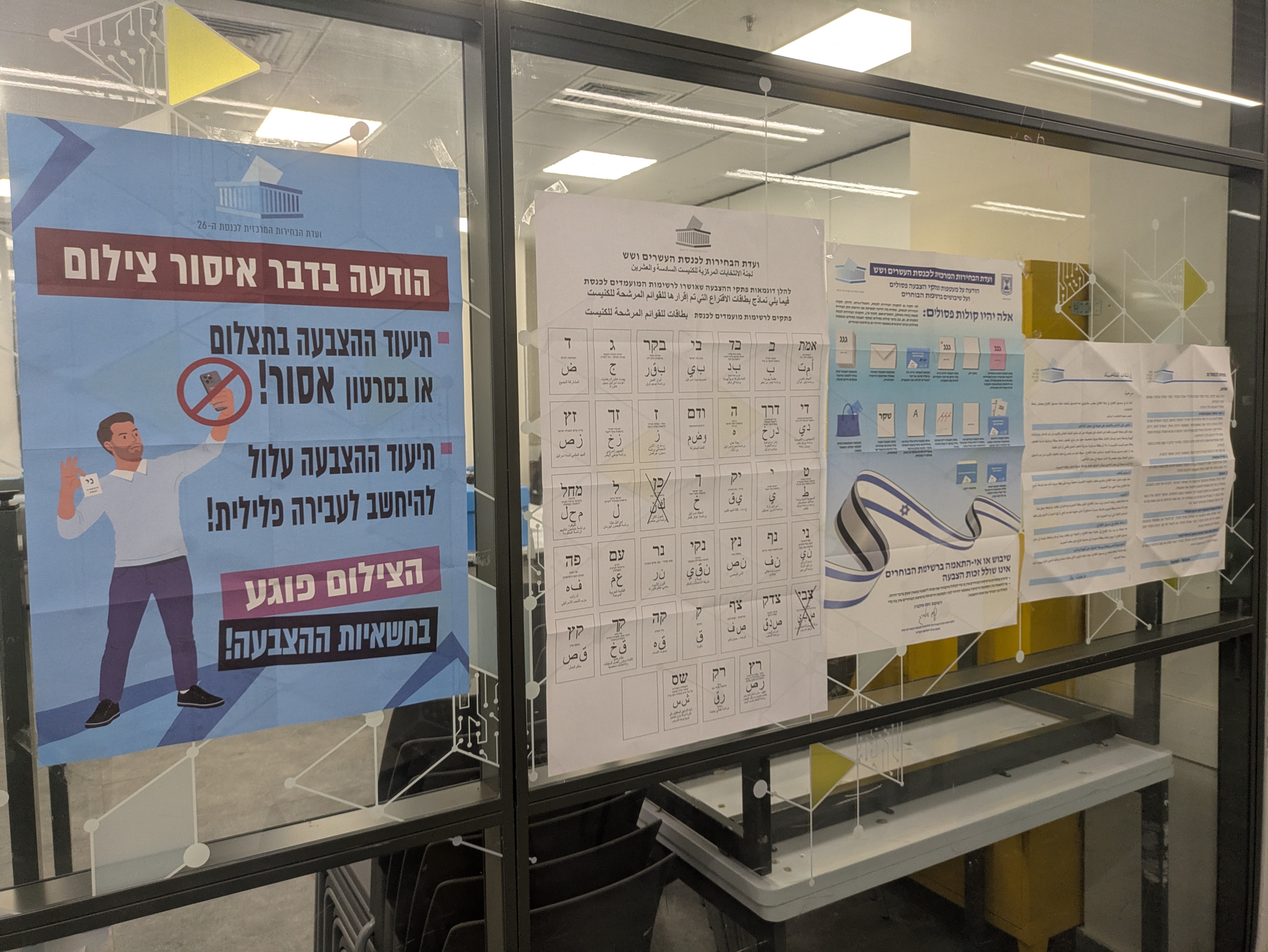
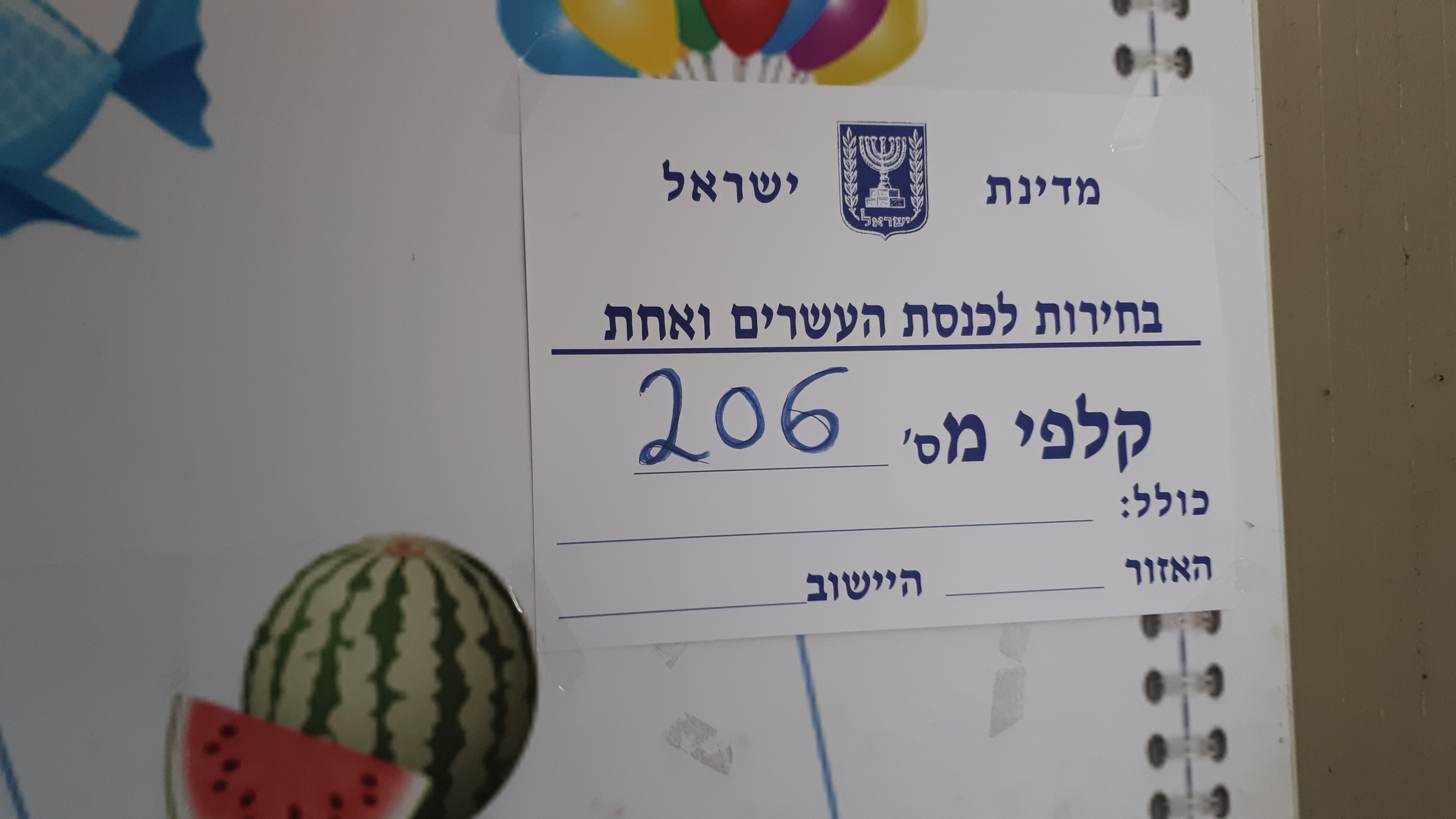
Compared Associated Press reporting on coalition options with The Times of Israel’s account of the Central Elections Committee’s final seat allocations. The committee portal displayed a test-environment notice and stale timestamp during this check, so seat totals were cross-checked against both reports. The committee says it will submit results to President Isaac Herzog on Nov. 4 after any inquiries; the Knesset is due to convene Nov. 10. The coalition arithmetic does not make Arab-led parties a unified or guaranteed partner. The lead photo shows a polling station during the Oct. 27 election; the inline image is an explicitly dated 2019 archive image.
No bloc has the 61 seats needed to govern
Israel’s final election seat allocations left Prime Minister Benjamin Netanyahu’s bloc with 53 seats in the 120-member Knesset, eight short of the 61 needed for a majority. The main opposition grouping has 48 seats, while Arab-led parties have 19, according to the Central Elections Committee tally published Thursday night and reported by The Times of Israel.
The figures confirm a sharp setback for Netanyahu’s current camp, which held 68 seats in the outgoing parliament. He remains prime minister while parties negotiate. Likud, his party, won the most seats overall at 27, but no single party comes close to a governing majority.
The 19 Arab-led seats are not a ready-made coalition
A combined opposition and Arab-led vote would exceed the majority threshold, but that arithmetic does not make a coalition certain. The Joint List won 11 seats and Ra’am won eight; they are separate parties, not a single bloc. Avigdor Lieberman, whose Yisrael Beytenu party won seven seats, ruled out joining a government with Arab-led parties, the Associated Press reported.
That leaves politicians weighing options they campaigned against: seeking outside support from Arab-led members, trying to assemble a narrower coalition, or negotiating a unity arrangement that includes Netanyahu. Each path would require parties with substantial policy differences to agree on a government programme.
Formal certification and government formation come next
The election committee says it will formally submit the results to President Isaac Herzog on Nov. 4 after handling any inquiries or possible errors. The new Knesset is due to be sworn in on Nov. 10. Herzog will then ask a politician to try to form a government, with the choice shaped by the parties’ recommendations and their prospects of assembling 61 seats.
If attempts to form a coalition fail, Israel could face another election early next year, AP reported. Until a new government is formed, Netanyahu stays in office; the vote has changed parliament’s balance, but it has not yet changed who leads the government.
Sources
2 references
- Associated PressDifficult negotiations lie ahead in Israel after Netanyahu’s bloc lost its parliamentary majorityIndependent reporting on seat totals, coalition possibilities and the president’s next steps · 2026-10-30
- The Times of IsraelCentral Elections Committee publishes final election results, Knesset to be sworn in Nov. 10Party-by-party seat allocations and the committee’s timetable for formal submission · 2026-10-30