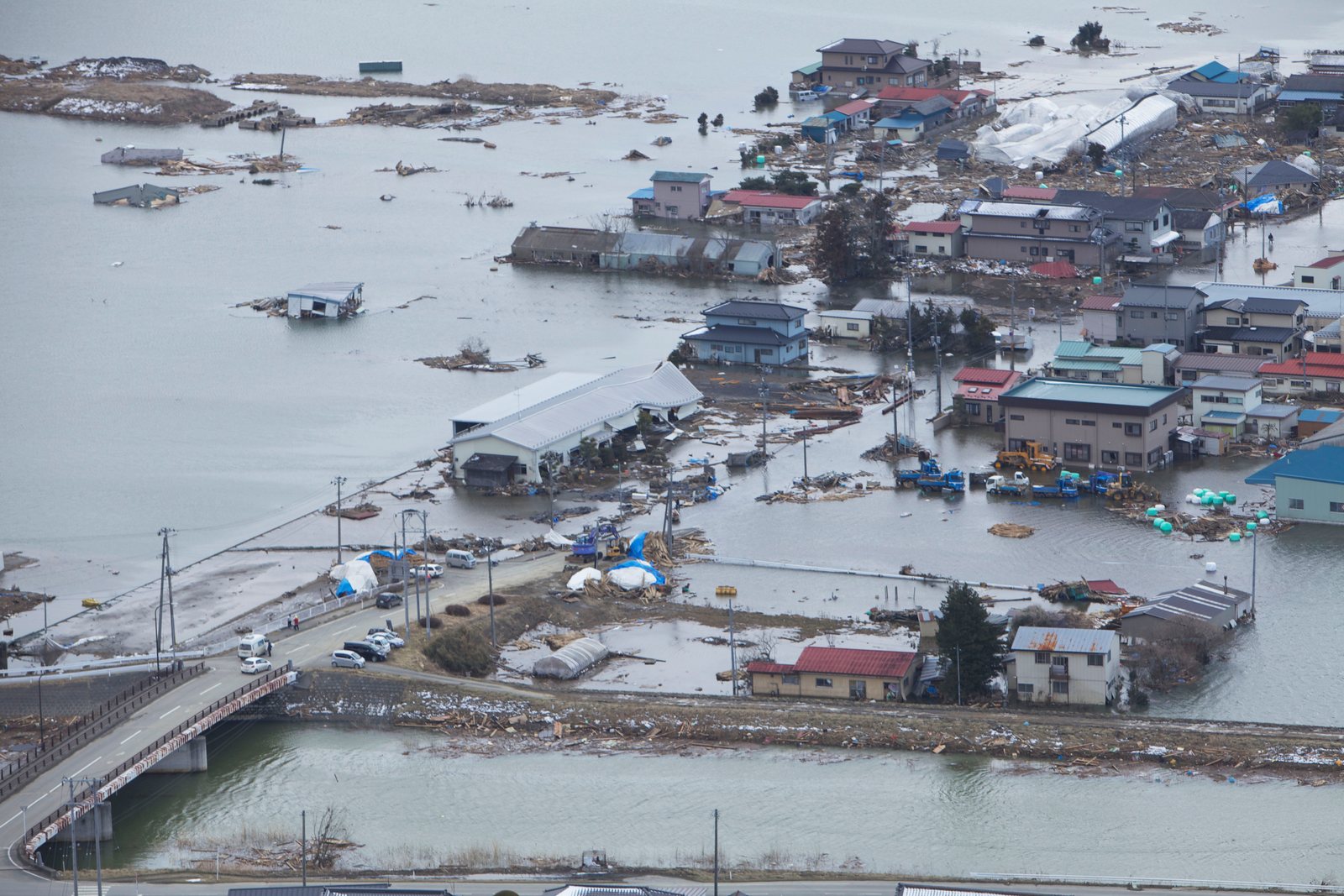
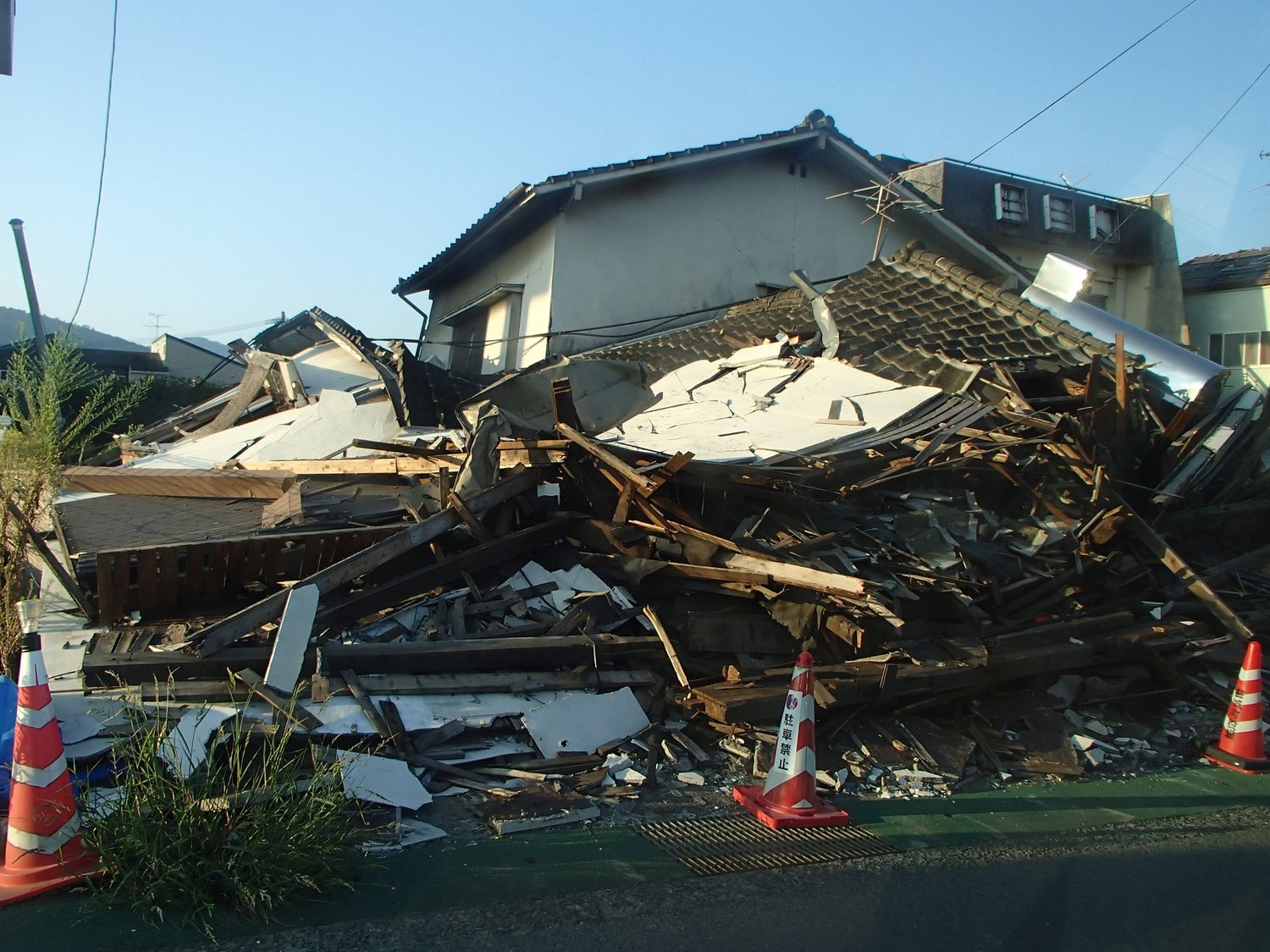
The Associated Press reported directly on the agency’s Nov. 2 launch, its remit and staffing, and the preparedness requests issued by Reconstruction Minister Goshi Hosono. The Japanese government’s 2026 Disaster Management White Paper gives the Nankai Trough maximum-class damage scenario; it is a planning scenario, not a prediction of when an earthquake will strike. The Prime Minister’s Office launch-page URL appeared in its indexed actions listing but returned 404 when checked directly, so launch details are attributed to AP. The two images are dated archive context only: a U.S. Marine Corps aerial photograph from March 18, 2011, and a photograph of earthquake damage in Mashiki from 2016. Neither depicts the new agency or a current disaster. The lead image is a U.S. federal government work in the public domain; the inline photo is CC BY 2.0. Both were proportionally resized and re-encoded for the site, without cropping or content edits; credits and rights links appear in the captions.
A standing body for planning and response
Japan opened its National Disaster Management Agency on Nov. 2, creating a permanent national body to coordinate disaster preparedness, emergency response and reconstruction. Prime Minister Sanae Takaichi heads the agency, while Reconstruction Minister Goshi Hosono manages it, the Associated Press reported.
The agency has more than 350 staff. Its creation follows years in which disaster coordination was assembled across ministries when a major emergency struck. Japan has no ability to forecast the timing of a particular major earthquake, but officials say the new body is intended to join prevention, response and recovery planning before the next crisis.
The Nankai scenario is a planning case, not a forecast
The government’s 2026 White Paper models a maximum-class Nankai Trough earthquake, a very large undersea fault zone off southwestern Japan. It estimates as many as 298,000 deaths from shaking and tsunami, plus 26,000 to 52,000 disaster-related deaths; up to 2.35 million buildings could collapse or burn and asset damage could reach ¥224.9 trillion.
The Cabinet Office says these figures describe a maximum-scale scenario for planning. They do not mean that an earthquake of that scale is certain, or that officials can say when one will happen. The scenario is meant to help governments estimate the scale of possible damage and the resources needed to respond.
Officials press households to prepare
On launch day, Hosono urged municipalities and residents to check buildings’ earthquake resistance, secure furniture, review evacuation plans and keep at least three days of water and portable toilets, AP reported. The agency also aims to improve evacuation centers with cleaner toilets, hot meals, bathing facilities and beds, rather than relying on crowded gymnasiums with limited privacy and supplies.
That work will depend on local governments and households as well as the new central agency. AP reported that Hosono cited gaps in training among municipal officials and in evacuation plans for older people and residents with disabilities who may need assistance.
Sources
2 references
- The Associated PressJapan launches a new national agency to deal with disastersReported the agency’s launch, 350-plus staff, remit, leadership, household preparedness requests and government earthquake-risk estimates. · 2026-11-02
- Cabinet Office of Japan2026 White Paper on Disaster Management: Nankai Trough damage scenarioPrimary source: the maximum-class scenario estimates up to 298,000 deaths, 26,000–52,000 disaster-related deaths, 2.35 million buildings collapsed or burned, and ¥224.9 trillion in asset damage; it explicitly says the scenario does not mean such a quake will necessarily occur next. · 2026-06-01