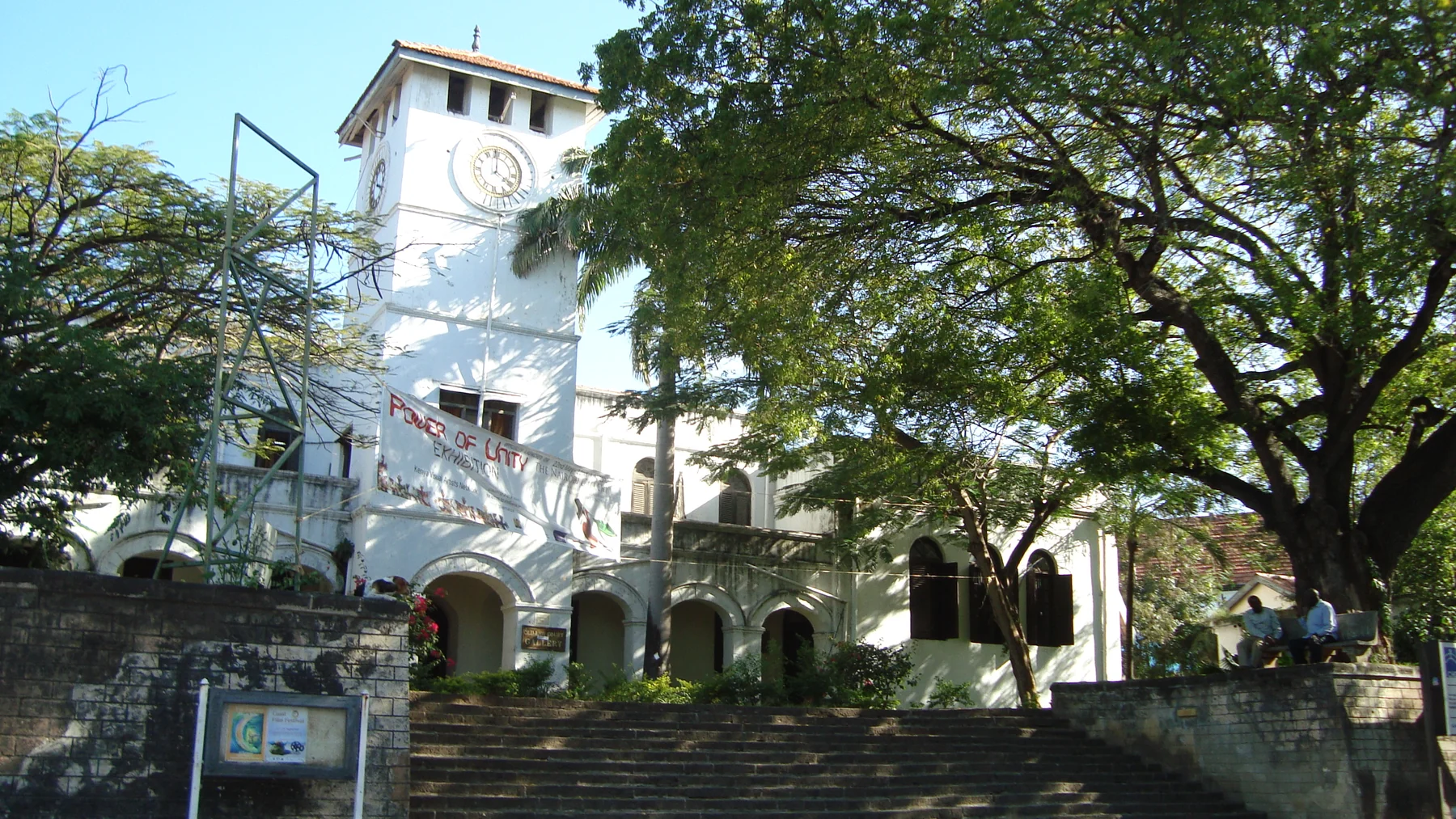
The Nov. 6 sentencing is independently reported by Reuters and the Associated Press. Both report a 200-year sentence over 191 murders; AP specifies 183 deaths by starvation and eight direct homicides, and reports counsel said Mackenzie had appealed. The Kenya Judiciary’s Oct. 19 media summary is a primary source for the convictions and 191 victims, but not for the later sentence; the sentencing judgment itself was not read for this report. Reuters attributes the figure of 448 bodies found at Shakahola to the Kenya National Commission on Human Rights; AP separately reports that more than 60 victims had been identified and reburied. These wider recovery figures are not the number of murders in this trial. A bounded search of original event photographs found AP and Reuters images behind licensing controls; no reuse grant was verified. The two images are contextual archive photographs under CC BY-SA: the Mombasa building is the former law courts, converted to an art gallery, not the High Court where Mackenzie was sentenced; the river photograph is location context at Shakahola, not the burial sites or trial. Originals are retained under public/newsroom/source-originals/shakahola-sentencing-20261108; derivatives were center-cropped to 16:9, resized to 1,800 × 1,013 and converted to WebP with metadata removed. Each adaptation is shared under the original image’s CC BY-SA licence.
Two consecutive terms make up the sentence
A court in Kenya’s coastal city of Mombasa sentenced Paul Nthenge Mackenzie to a total of 200 years in prison on Nov. 6 for the murders of 191 followers at Shakahola, according to Reuters and the Associated Press. The High Court imposed two consecutive 100-year terms: one for murders linked to starvation and one for eight people killed directly, AP reported.
Consecutive terms are served one after the other rather than at the same time. The sentence followed an Oct. 19 conviction of Mackenzie and 28 co-defendants. The trial’s 191 victims comprised 190 children and one adult, according to the court summary and the two news reports.
The trial count is not the total number of bodies found
The 191 murder convictions relate to the victims considered in this case. They should not be confused with the larger number of bodies later recovered from the forest. Reuters reported that the Kenya National Commission on Human Rights had said 448 bodies were found in the Shakahola area; AP said more than 60 victims had been identified and reburied by the time of its report.
A separate case involving deaths at another site remained pending, Reuters reported. Those allegations are distinct from the murders adjudicated in the Shakahola trial and should not be treated as findings in this sentence.

Mackenzie denies the killings; counsel says an appeal is under way
Mackenzie denied murdering followers during the proceedings, Reuters and AP reported. AP quoted his lawyer, Lawrence Obonyo, as saying that an appeal had already been launched. The reports reviewed do not include the written sentencing judgment or an appeal filing, so the next court timetable and the grounds of appeal are not established here.
The court also sentenced 28 co-defendants, Reuters and AP reported, with terms ranging from 10 to 160 years. Their cases form part of the same prosecution, but the public reporting reviewed did not provide a full breakdown of each person’s convictions and sentence.
The case has also raised questions about oversight
The Shakahola deaths prompted scrutiny of how authorities monitored Mackenzie and his ministry. Reuters reported that officials had been aware of him since 2017 and that his church was closed in 2019. The prosecution and verdict concern criminal responsibility for the deaths; broader questions about institutional failures require their own evidence and should not be collapsed into the sentencing decision.
The convictions and sentence mark a major judicial outcome, while the reported appeal means the case remains subject to further legal proceedings. The larger recovery of bodies, many still unidentified, also shows why the 191 victims in this trial are not a complete accounting of everyone found in the area.
Sources
3 references
- ReutersKenyan court sentences cult leader to 200 years in prison for murder of 190 childrenIndependent reporting on the sentence, consecutive terms, the 191 victims, the broader Shakahola recovery, institutional oversight and a separate pending case. The 448 bodies figure is attributed to the Kenya National Commission on Human Rights. · 2026-11-06
- Associated PressKenyan cult leader gets 200 years for deaths of 191 followersIndependent report from the Mombasa High Court, specifying 183 starvation deaths and eight direct homicides, the co-defendants’ sentences, and counsel’s statement that Mackenzie had appealed. · 2026-11-06
- Kenya JudiciaryMedia summary: Shakahola judgmentPrimary court summary of the Oct. 19 convictions and findings concerning 191 murders. It predates and does not describe the Nov. 6 sentencing. · 2026-10-19