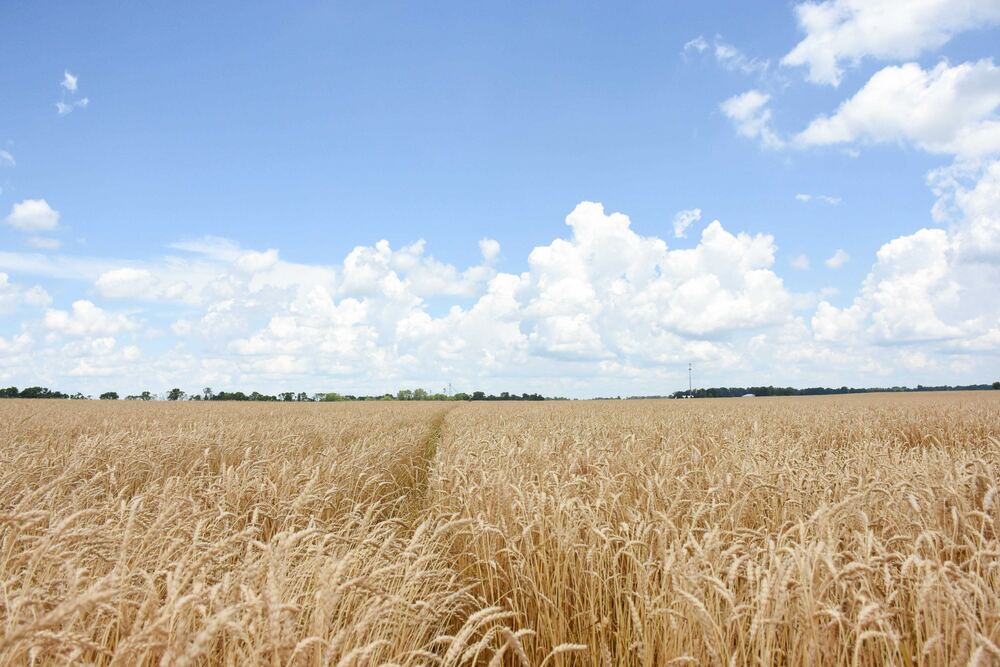
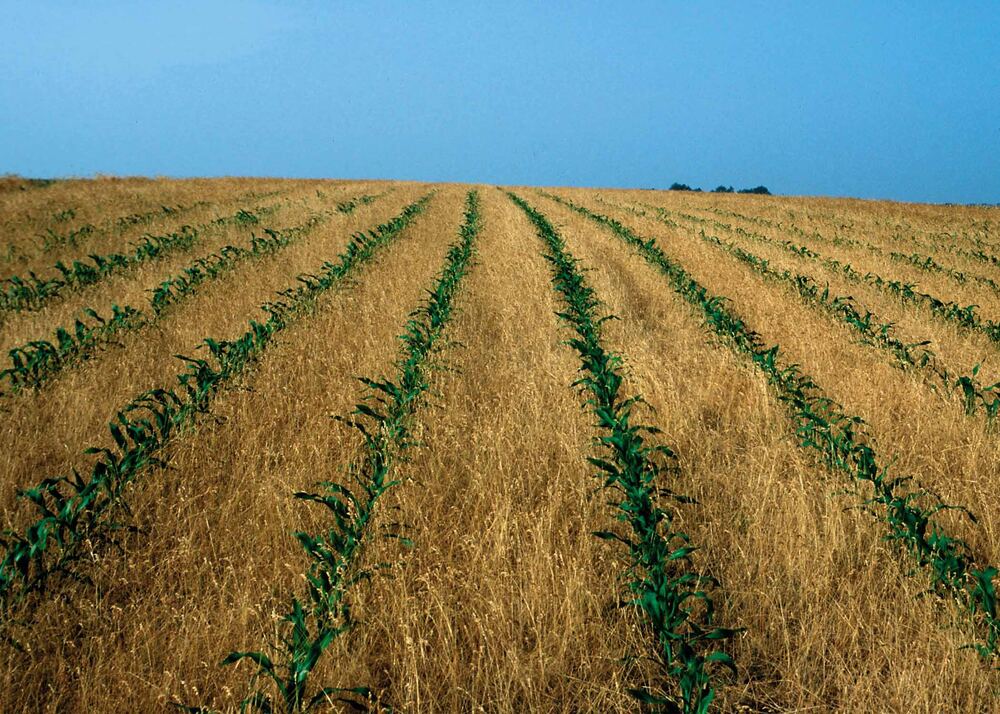
The OECD’s 2026 Agricultural Policy Monitoring and Evaluation report is the primary source for its estimates: 56 countries, more than $950 billion in total support in 2025, and the productivity and general-services figures. “Total support” includes transfers created by policies that raise domestic prices as well as budgetary payments, so it is not a measure of government spending alone. Reuters independently reported the report’s release and quoted OECD Secretary-General Mathias Cormann; recommendations and claims about policy effects are attributed to the OECD, not presented as an independent evaluation. The photographs are dated USDA archive images from Indiana (June 28, 2021) and Iowa (2011); neither depicts the report’s release or a specific country program. Both are U.S. federal government works in the public domain; no crop or retouching was applied, and each was proportionally resized and re-encoded for web use.
Support rose to a new high
Government policies transferred more than $950 billion to agriculture in 2025, a record for the 56 countries covered by a new OECD report. The total was $121 billion, or nearly 15%, above 2023, the organisation said on Monday.
The OECD’s measure is broader than direct public spending. It includes budgetary payments and transfers created when policies hold domestic prices above world levels, shifting costs to consumers. Support in the covered countries rose from 17.6% to 19.1% of the value of agricultural production between 2023 and 2025.
The mix differed across economies: the report attributes much of the increase in emerging economies to higher market-price support, while the rise in OECD member countries came mainly from budgetary payments, including disaster assistance.
Long-term services lost ground relative to output
The report’s concern is not simply the amount of assistance but where it goes. Spending on “general services” — such as irrigation and other infrastructure, agricultural research, innovation and knowledge systems — averaged $118 billion a year in 2023–25. Yet that spending fell from 4.6% to 2.4% of production value between 2000–02 and 2023–25.
The OECD also estimates that global agricultural total-factor productivity growth slowed from 1.8% a year in 1991–2000 to 0.8% in 2014–23. Total-factor productivity measures how efficiently land, labour, capital and other inputs are combined; the report links the slowdown with weaker investment in public goods, but does not claim that support levels alone caused it.
The policy choice is between relief and preparedness
Governments have responded to repeated shocks, including extreme weather and geopolitical disruption, with emergency payments and price measures. The OECD says such support can help producers through immediate crises but may distort production and trade or weaken incentives to adapt, depending on how it is designed.
It recommends shifting more assistance toward targeted risk management, research, infrastructure and innovation. Those are the report’s policy prescriptions, not adopted commitments by the countries it covers. The data describe 2025 support and do not forecast how much governments will spend in 2026.
Sources
2 references
- OECDAgricultural Policy Monitoring and Evaluation 2026: Enhancing resilience in a world of interconnected risksPrimary report and executive summary for the 56-country support estimates, support composition, general-services investment and productivity trends. · 2026-11-02
- ReutersCrisis-driven farming aid overlooks investment, OECD saysIndependent report on the OECD findings and its public recommendations; Reuters quotes the OECD secretary-general. · 2026-11-02