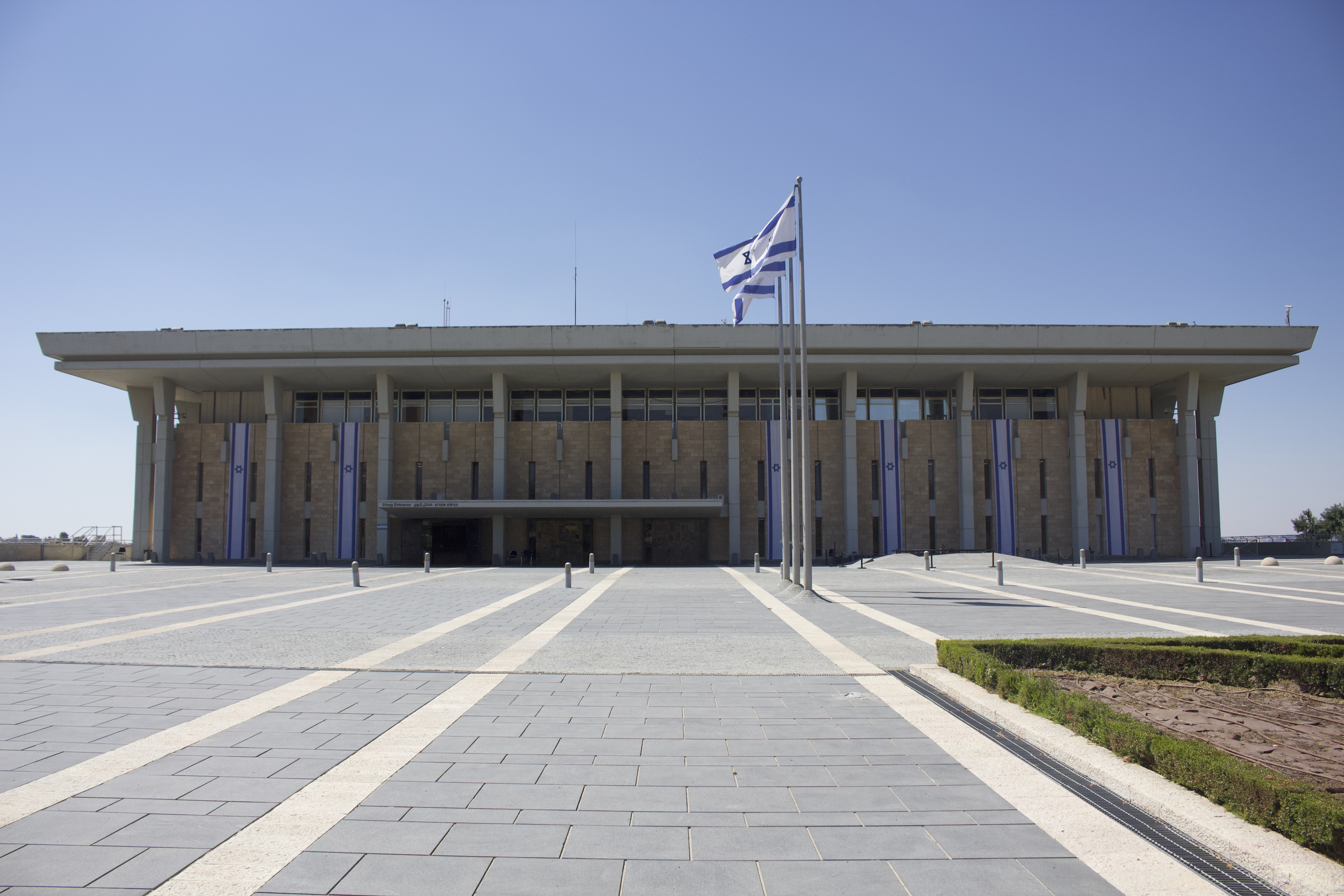
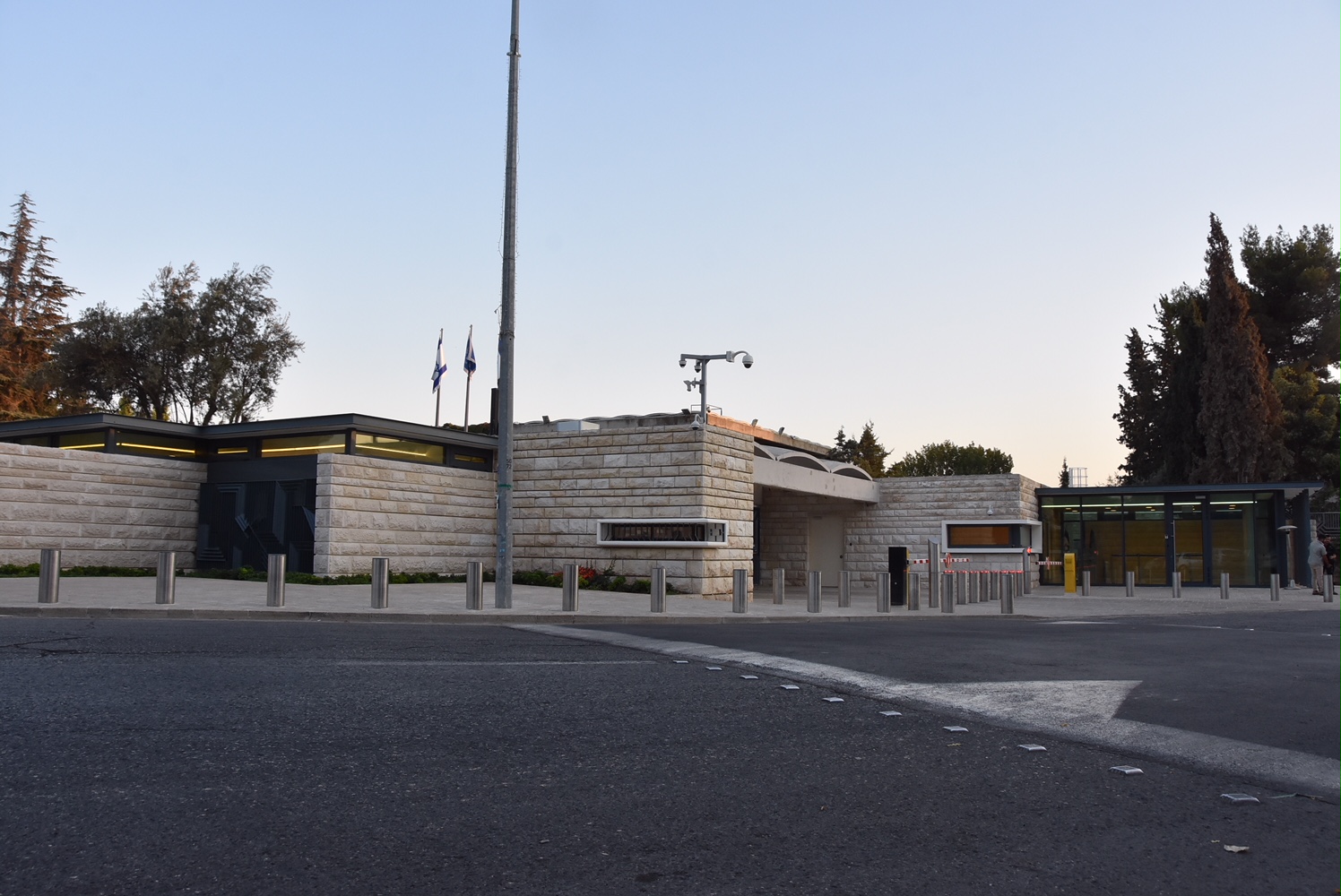
The President’s Office’s Nov. 7 statement is the primary source for Herzog’s intention, the 67/46/7 recommendation totals, the scheduled Sunday ceremony and the 28-day period with a possible 14-day extension. It records an announced intention; it does not say a coalition had been agreed. AP independently reports the election’s seat arithmetic and the obstacles facing each coalition route. Recommendations are endorsements, not proof of a cabinet majority; AP says Arab-led parties may support Eisenkot from outside a government and reports resistance within his prospective bloc. No signed coalition agreement was located in the sources reviewed. A bounded actual-event image search found the President’s Office photograph credited to Arnon Bossani without a verified reuse licence, while AP and AFP images were offered for licensing. Both images used here are archival context: the Knesset exterior photographed July 3, 2022, and the President’s Residence gates photographed Oct. 29, 2017. Neither depicts the current coalition consultations.
Herzog announces his choice after party consultations
Israel’s President Isaac Herzog said Saturday he would give Gadi Eisenkot the first chance to form a government, after consultations with parties elected to the Knesset. The president’s office said factions representing 67 lawmakers recommended the leader of the Yashar party, compared with 46 who recommended Prime Minister Benjamin Netanyahu; factions representing seven lawmakers named no candidate.
Herzog’s office scheduled a formal mandate ceremony for 5 p.m. Sunday, Nov. 8, at the President’s Residence in Jerusalem. The announcement was his stated intention; the formal task is what starts the coalition-building clock.
Why 67 endorsements still do not settle the majority
The Knesset has 120 seats, and a government normally needs support from at least 61. The election on Oct. 27 left no bloc with that number: AP reported 53 seats for Netanyahu’s coalition, 48 for the opposition bloc led by Eisenkot and 19 for Arab-led parties.
The 67 lawmakers who recommended Eisenkot therefore should not be read as a confirmed governing coalition. The total includes Arab-led parties that, AP reported, were prepared to support him from outside a cabinet. That could help him win votes, but it leaves unresolved who would join the government and whether his partners would accept the arrangement.
Coalition options carry different political costs
AP identified three broad routes: a unity arrangement with Netanyahu, outside support from Arab-led parties, or an agreement with ultra-Orthodox parties over military-service exemptions. Each presents a challenge for Eisenkot’s bloc. Several of its members oppose relying on Arab-led parties, while Eisenkot and his partners made equal military service a campaign issue and ultra-Orthodox parties have sought to preserve exemptions for religious students.
The president’s Nov. 5 statement also warned that mutual vetoes between and within the blocs made it unclear who could form a stable government. That leaves the recommendation tally as an opening move, not a verdict on which coalition can survive.
A fixed window begins with the formal mandate
Under the timetable set out by the President’s Office, Eisenkot would have 28 days after receiving the task to form a government. Herzog may grant up to 14 additional days. Netanyahu remains prime minister in a caretaker capacity while the coalition talks proceed, AP reported.
Sources
2 references
- President of IsraelPresident Herzog Concludes Consultations and Announces He Will Task Gadi Eisenkot With Forming a GovernmentPrimary statement. Records Herzog’s intention to task Eisenkot, the 67/46/7 faction recommendation totals, the planned Nov. 8 ceremony at 17:00 and the statutory 28-day period with a possible 14-day extension. · 2026-11-07
- The Associated PressNetanyahu rival given first chance at forming new governmentIndependent reporting on Herzog’s choice, the Knesset seat totals, possible coalition paths and political obstacles; distinguishes the nomination from a guarantee that Eisenkot will become prime minister. · 2026-11-08