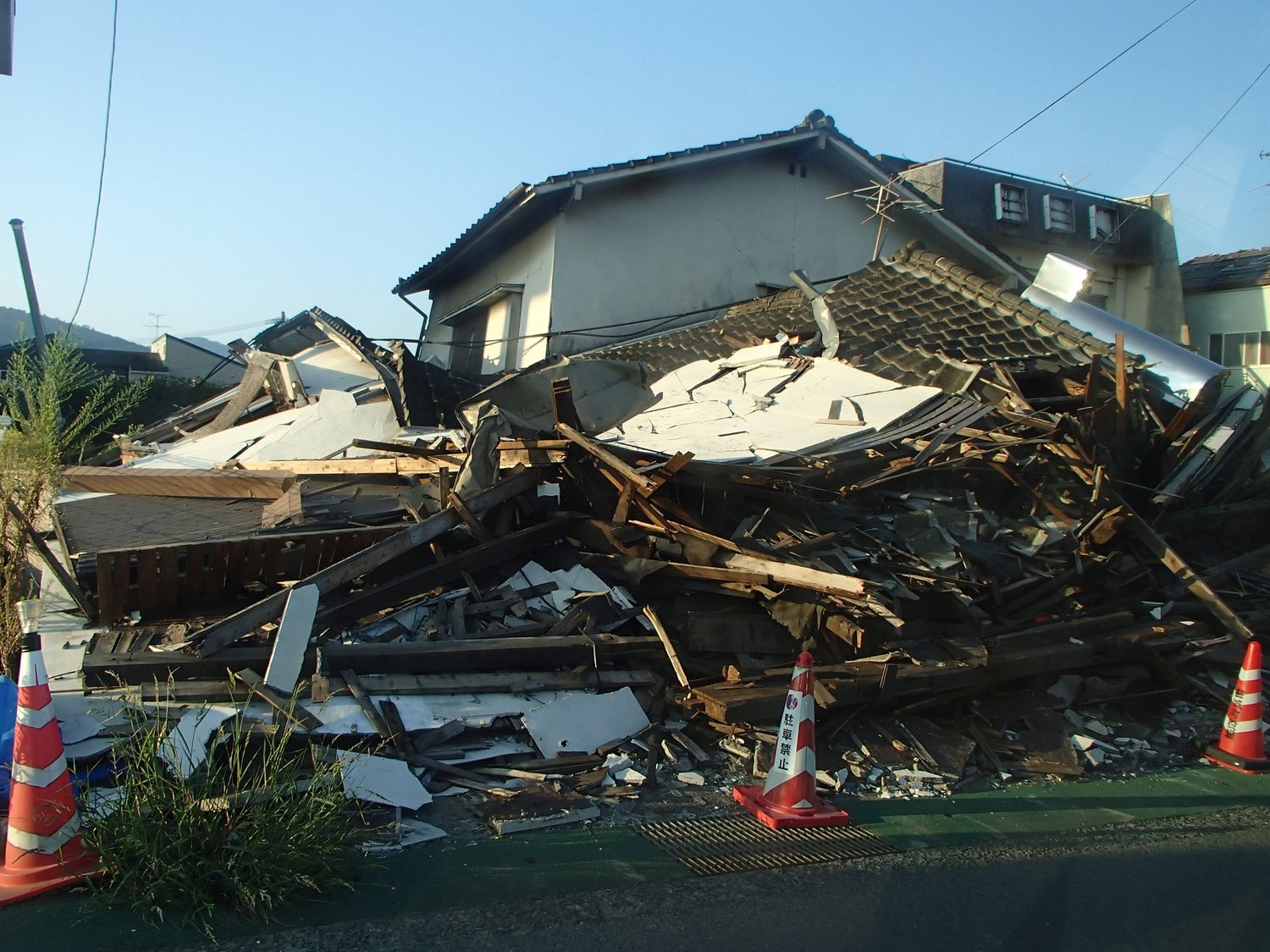
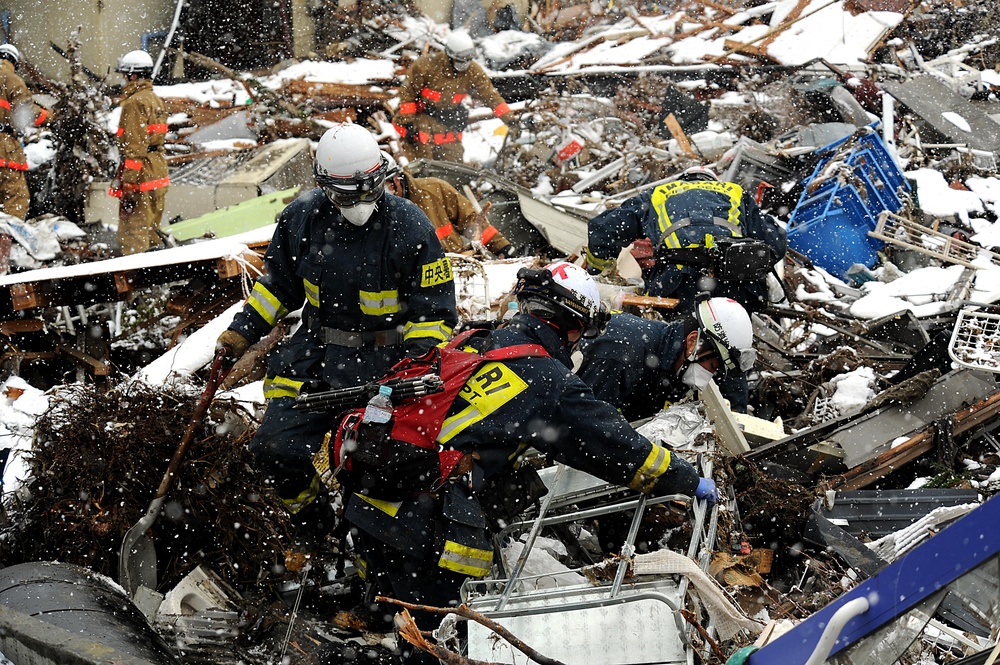
Japan’s Meteorological Agency provides the preliminary magnitude, depth, local shaking, tsunami assessment and one-week safety advisory; it also says the quake does not indicate a special change in plate locking along the Nankai Trough. Aichi Prefecture’s first damage bulletin is explicitly timed 8:30 a.m. JST and lists 16 injuries in Aichi; AP and Jiji/Nippon.com report broader totals of 22 and 21 respectively, so this article attributes the figures and does not present one as a settled national count. Actual-event AP/Kyodo photos were marked for licensing, with no reuse rights established here. Both images are clearly labeled archive context: a 2016 Kumamoto earthquake-damaged home and 2011 Tohoku search-and-rescue work. Their captions include dates, creators, source links and reuse terms; the visible site files are previously prepared proportional derivatives, not images of the Nov. 8 quake.
Strong shaking across central Japan
A preliminary magnitude-5.7 earthquake struck western Shizuoka Prefecture at 1:04 a.m. Sunday, Japan’s Meteorological Agency said. The focus was about 41 kilometers underground. The strongest shaking, JMA intensity 5-upper, was recorded in Chita in neighboring Aichi Prefecture. Japan’s intensity scale describes shaking at individual locations, while magnitude describes the size of the earthquake.
The agency said there was no tsunami concern. Its first advisory reported one later quake at intensity 2 by 2:35 a.m. and warned that rockfalls or slope failures could become more likely, particularly if rain follows the shaking.
Injury counts differ as checks continue
Aichi Prefecture’s first damage bulletin, issued at 8:30 a.m. local time, listed one serious and 15 slight injuries in the prefecture. It also recorded two homes with partial damage and temporary rail suspensions on several regional lines. The bulletin reported no damage to power, gas, telephone or roads at that time.
The Associated Press, citing local media, reported at least 22 people injured, while Jiji Press, published by Nippon.com, reported 21. The figures cover reports from different authorities and were not a final national count.
A caution, not a prediction
JMA asked people in the affected area to remain alert for about a week for another quake with shaking as strong as intensity 5-upper. It said past cases suggest such a similarly strong event follows a major earthquake in roughly one or two cases out of ten, with elevated attention especially over the next two to three days. The advisory is a risk precaution, not a forecast that another quake will occur.
The quake was within the area considered in Nankai Trough earthquake planning. JMA said its size did not indicate a special change in the locked state of the plates along the trough and said monitoring would continue. The statement does not rule out future Nankai earthquakes; it distinguishes this event from evidence of a changed plate condition.
Sources
6 references
- Japan Meteorological AgencyEarthquake in western Shizuoka Prefecture at 1:04 a.m. on Nov. 8Primary release: preliminary magnitude 5.7, 41-kilometer depth, maximum intensity 5-upper in Chita, no tsunami concern, one-week caution and the agency’s assessment of the Nankai Trough relationship. · 2026-11-08
- Aichi Prefecture Disaster Response HeadquartersDamage report No. 1 for the Nov. 8 western Shizuoka earthquakePrimary 8:30 a.m. JST bulletin: one serious and 15 slight injuries in Aichi, rail service suspensions and no reported damage to electricity, gas, telephone or roads at that time. · 2026-11-08
- The Associated PressStrong earthquake shakes central Japan, shattering store windows and injuring at least 22Independent reporting on local-media injury counts, damage, transport precautions and the JMA warning; AP notes that injury totals came from local media. · 2026-11-08
- Nippon.com / Jiji PressStrong quake jolts Aichi Prefecture in central JapanIndependent Japanese reporting citing JMA and prefectural sources; reports 21 injuries and no tsunami. · 2026-11-08
- Wikimedia CommonsDestroyed house by the 2016 Kumamoto earthquake — archive-context photographPhotograph by Hajime NAKANO, CC BY 2.0; an older earthquake in another Japanese prefecture, not the Nov. 8 event. · 2016-08-22
- Defense Visual Information Distribution Service (DVIDS)Operation Tomodachi search and rescue in Unosumai — archive-context photographPhotograph by Master Sgt. Jeremy Lock / 1st Combat Camera Squadron; U.S. government work in the public domain, subject to DVIDS privacy, publicity, trademark and non-endorsement restrictions. · 2011-03-17