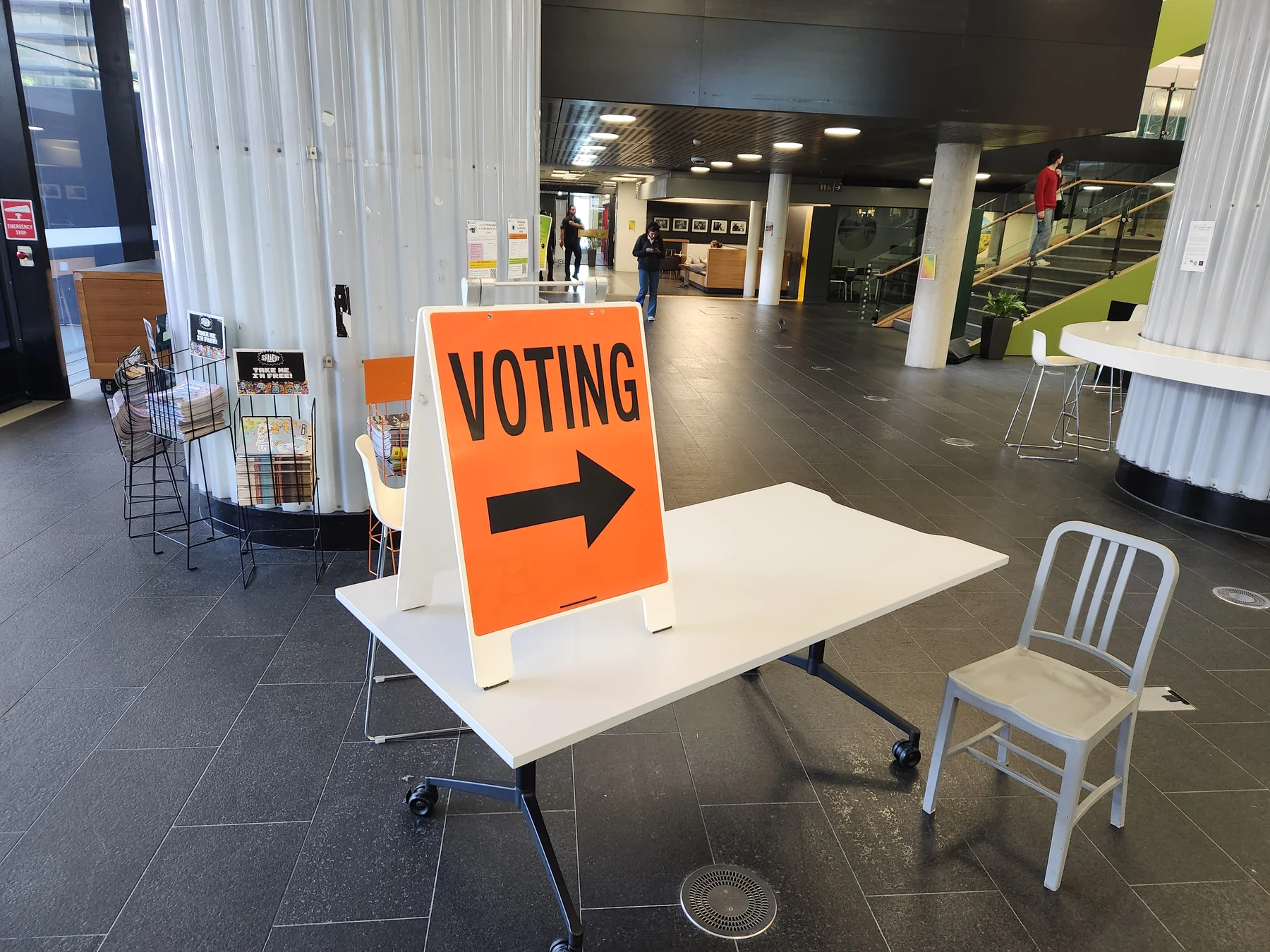
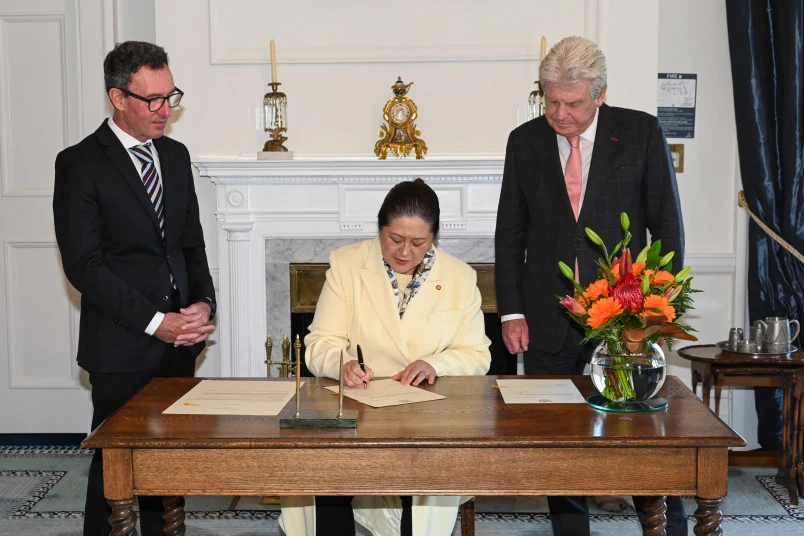
The Electoral Commission’s preliminary release and results table establish the projected seats, party-vote totals, estimated special-vote count and Nov. 27 date for official results. AP and Reuters independently report that government formation remains unsettled. A bounded search found current election-night agency photos offered under paid licences; the two images here are dated contextual photographs, not pictures of the vote count.
A majority by one seat
New Zealand’s preliminary general-election count projects 67 seats for governing parties National, ACT New Zealand and New Zealand First in a 131-seat Parliament. That is one seat above the 66 needed for a majority, but it is not a final result.
The Electoral Commission’s table gives National 42 seats, ACT 13 and New Zealand First 12. The Commission says the figures are indicative and will change after the official count.
The party-vote lead is narrower still
Labour narrowly led the party vote, with 710,330 votes, or 29.36%, against National’s 706,680 votes, or 29.21%. The preliminary projection nevertheless gives Labour 36 seats to National’s 42.
New Zealand uses mixed-member proportional representation, or MMP. Voters cast one vote for a local electorate candidate and another for a party. The Electoral Commission says electorate winners take seats first, with remaining seats allocated from party lists according to party-vote share. The party-vote leader therefore does not automatically become prime minister or hold the most projected seats.
Nearly 400,000 special votes remain
The Commission estimates 399,365 special votes, including 96,947 overseas and dictation votes. That is about 14% of its estimated 2,831,768 total votes; both figures are estimates and may change.
The official count began on Nov. 8. It includes checking voter rolls, recounting ordinary votes and examining eligible special ballots. The Commission has scheduled the official result for Friday, Nov. 27.
Government talks wait on the final count
Reuters reports that Prime Minister Christopher Luxon and Labour leader Chris Hipkins have said they will wait for the official count before starting coalition discussions. Luxon’s National-led government remains in caretaker office while a new government is formed.
Under the current 131-seat projection, the bloc would fall below the 66-seat majority threshold only if it lost at least two seats. The final allocation may change as special votes are counted. The preliminary count sets the starting point for negotiations; it does not settle who will govern.
Sources
7 references
- Electoral Commission of New Zealand2026 General Election preliminary resultsPrimary release: preliminary party-vote results, projected seat allocation, estimated special votes, turnout estimate and date for official results. The Commission says the figures may change. · 2026-11-07
- Electoral Commission of New Zealand2026 General Election — Overall ResultsOfficial preliminary results table; explicitly says it is not the formal declaration of results. · 2026-11-07
- The Associated PressNew Zealanders won’t know for weeks who won the election as neither side secures clear victoryIndependent reporting on the narrow projected majority, special votes, possible coalition paths and caretaker government. · 2026-11-08
- ReutersExplainer: What happens next after New Zealand’s vote?Independent report confirming the 67-seat projection, estimated 399,365 special votes, Nov. 27 final-results date and caretaker status. · 2026-11-07
- Electoral Commission of New ZealandWhat happens in a general election?Official explanation of New Zealand’s MMP system, electorate and party votes, list-seat allocation, and how parties form a government. · Accessed 8 Nov. 2026
- Wikimedia CommonsVoting sign at Victoria University of Wellington — archive-context photographPhotograph by Panamitsu, CC BY-SA 4.0. Original: https://upload.wikimedia.org/wikipedia/commons/1/1a/Voting_sign_Victoria_University_of_Wellington_2026.jpg. Used as dated archive context. · 2026-10-29
- Government House, Department of the Prime Minister and CabinetSigning of the Writ for the 2026 General Election — archive-context photographPhotograph of the Governor-General signing the election writ; the page labels its image “No Rights Reserved (CC0).” It shows the election’s formal start, not election night. · 2026-10-04