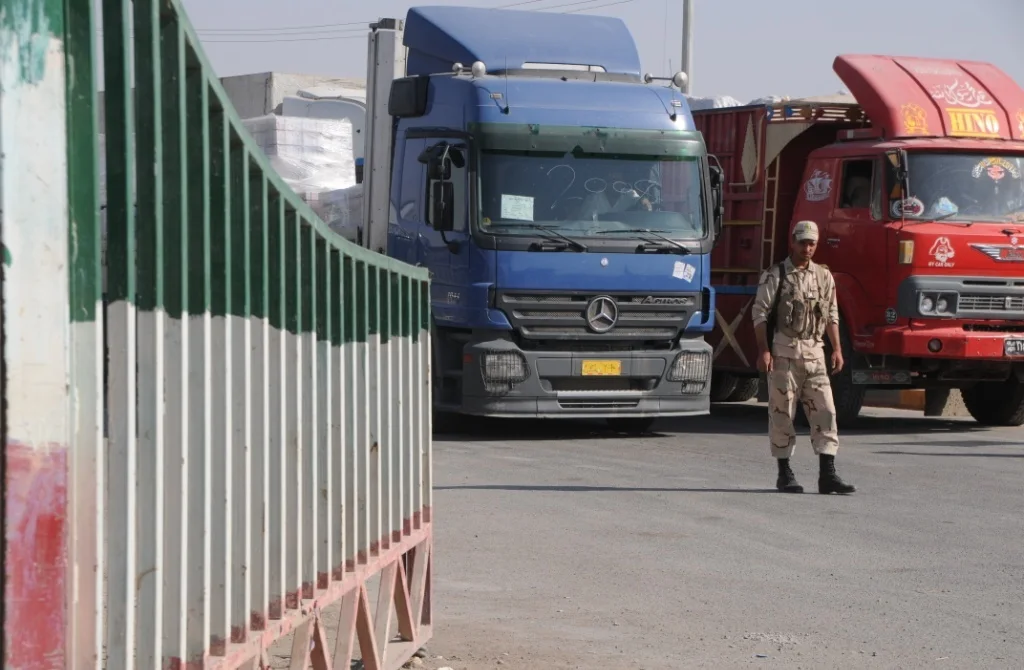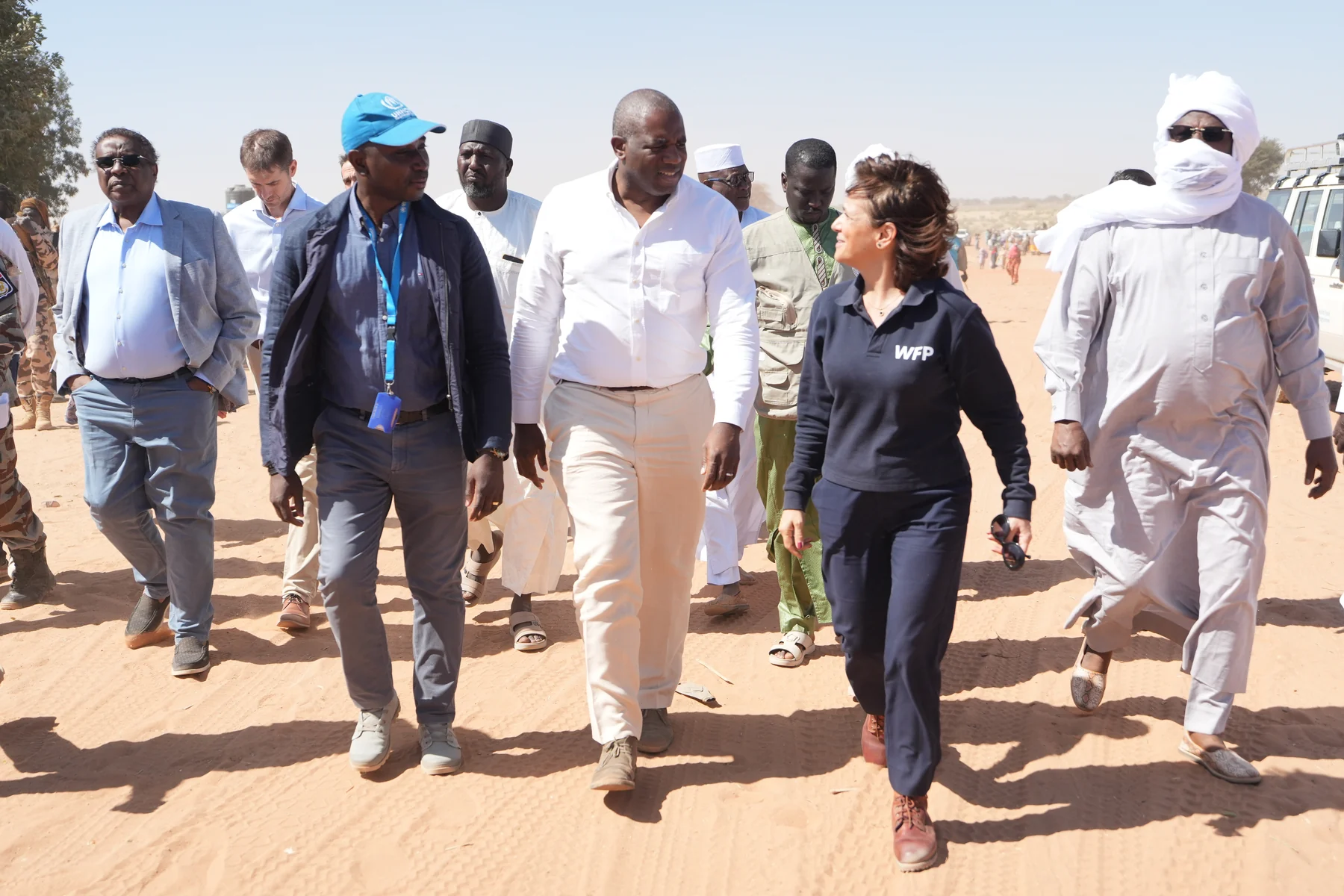
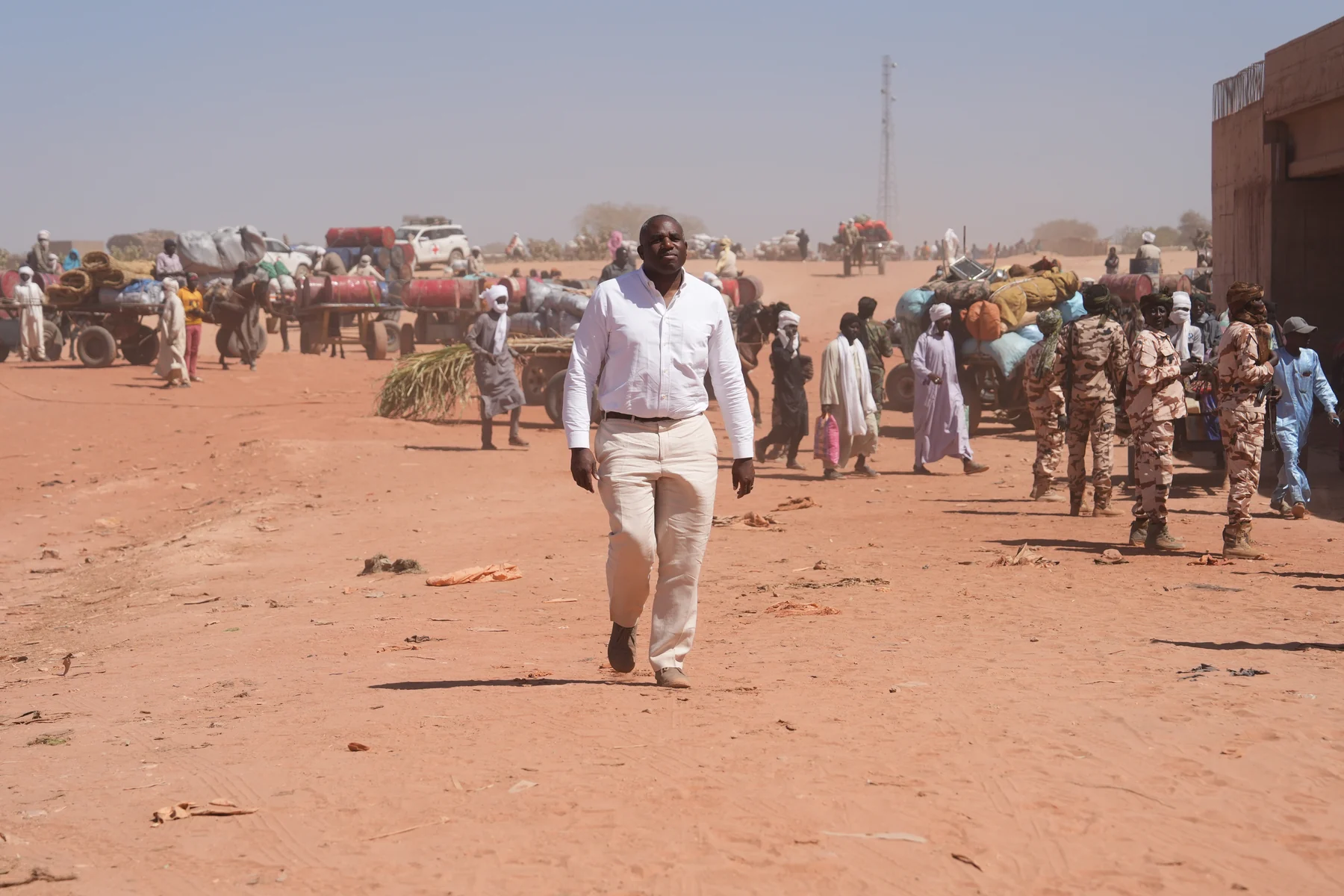
The Nov. 6 UN Geneva account is the primary source for the joint UNHCR/IOM warning, Mohamed Refaat’s remarks on the final 16 trucks and empty warehouses, the 2026 plan’s funding level, and Abubakarr Jalloh’s comments on women, children and rainfall. Reuters’ Nov. 6 report independently adds reporting context but draws the central need and coverage figures from the same agency warning; they are agency estimates and operational statements, not an independent census. Actual-event news photographs found in the bounded search were offered under agency licensing without a verified reuse grant. The two images here are different archival photographs by FCDO/Russell Watkins of an official visit to Adré, Chad, on Jan. 24, 2025; neither shows the Nov. 6 appeal or current aid distribution.
The last stocked trucks have reached Darfur
The UN refugee agency and the International Organization for Migration warned on Friday, Nov. 6, that 15.4 million people in Sudan urgently need shelter and basic household items, while funding shortages leave aid agencies able to assist only about one in 10 people in need.
Mohamed Refaat, IOM’s chief of mission in Sudan, said a 16-truck delivery reached Darfur on Thursday, Nov. 5, carrying the last supplies in the agency’s stocks. He said IOM warehouses were now empty. Refaat also said the agency had distributed more than 40,000 tonnes of relief assistance during 2026 before its stocks ran out.
The warning points to a supply problem as well as a funding gap: aid teams report having used the emergency goods already on hand, while millions remain in need. The agencies said more flexible funding was needed to replenish supplies and reach people affected by the war.
A narrow response plan has been cut further
Sudan’s 2026 Humanitarian Needs and Response Plan requires $2.9 billion and had received 47% of that amount by Nov. 6, according to the UN briefing. Even before additional reductions, the plan was designed to assist 20.4 million of the 33.7 million people identified as needing humanitarian help across the country.
The one-in-ten figure describes what agencies say they can currently assist among people needing shelter; it is not a count of everyone reached by the wider humanitarian response. The 15.4 million shelter estimate also refers to a specific need, while the 33.7 million figure covers broader humanitarian needs.
Displacement and weather add pressure on families
The war between Sudan’s army and the paramilitary Rapid Support Forces began in April 2023. Shifting front lines continue to force people from their homes, while damaged or looted houses leave some unable to return even after reaching their areas of origin, the UN agencies said.
Abubakarr Jalloh, UNHCR’s deputy representative in Sudan, said three in four people displaced inside the country are women and children. He also linked below-average rainfall this year to weaker harvests in Darfur, Kordofan and other areas affected by fighting. Food prices, which would usually ease after harvest, remained high, he said, leaving families to weigh food against items such as blankets and shelter materials.
The figures are agency estimates, not a household census
The 15.4 million figure and the one-in-ten capacity estimate come from the agencies’ Nov. 6 joint warning. Reuters reported the appeal and its context, but its figures trace to the same statement rather than a separate measurement. The public material reviewed does not provide a household-level count of those without shelter or independently audited warehouse inventories.
The immediate concern described by IOM and UNHCR is that dwindling stocks will leave families without basic cover and household goods as displacement continues. The agencies warned that emergency supplies would need replenishing before more people could be reached.
Sources
2 references
- United Nations Office at Geneva (UNHCR and IOM)Sudan war update – UNHCR, IOMPrimary agency briefing and joint statement. Reports the 15.4 million shelter need, current ability to assist around one in ten, the last 16 IOM stock trucks reaching Darfur, empty warehouses, 2026 plan funding and attributed context on displacement and rainfall. · 2026-11-06
- ReutersMillions of displaced Sudanese risk losing shelter as funds run low, UN warnsIndependent reporting on the warning and humanitarian context. Its central shelter-need and coverage figures derive from the same UNHCR/IOM statement, so it is not a separate measurement of those numbers. · 2026-11-06